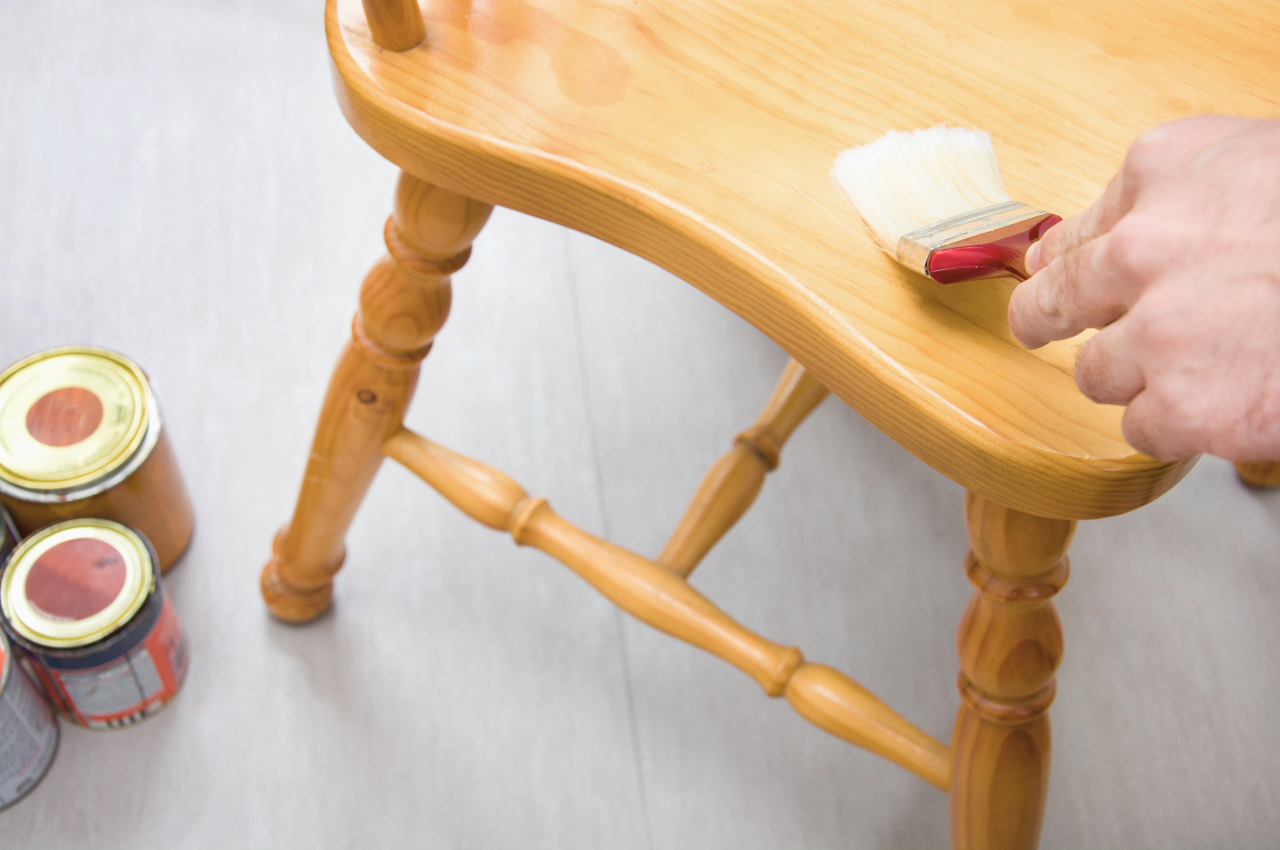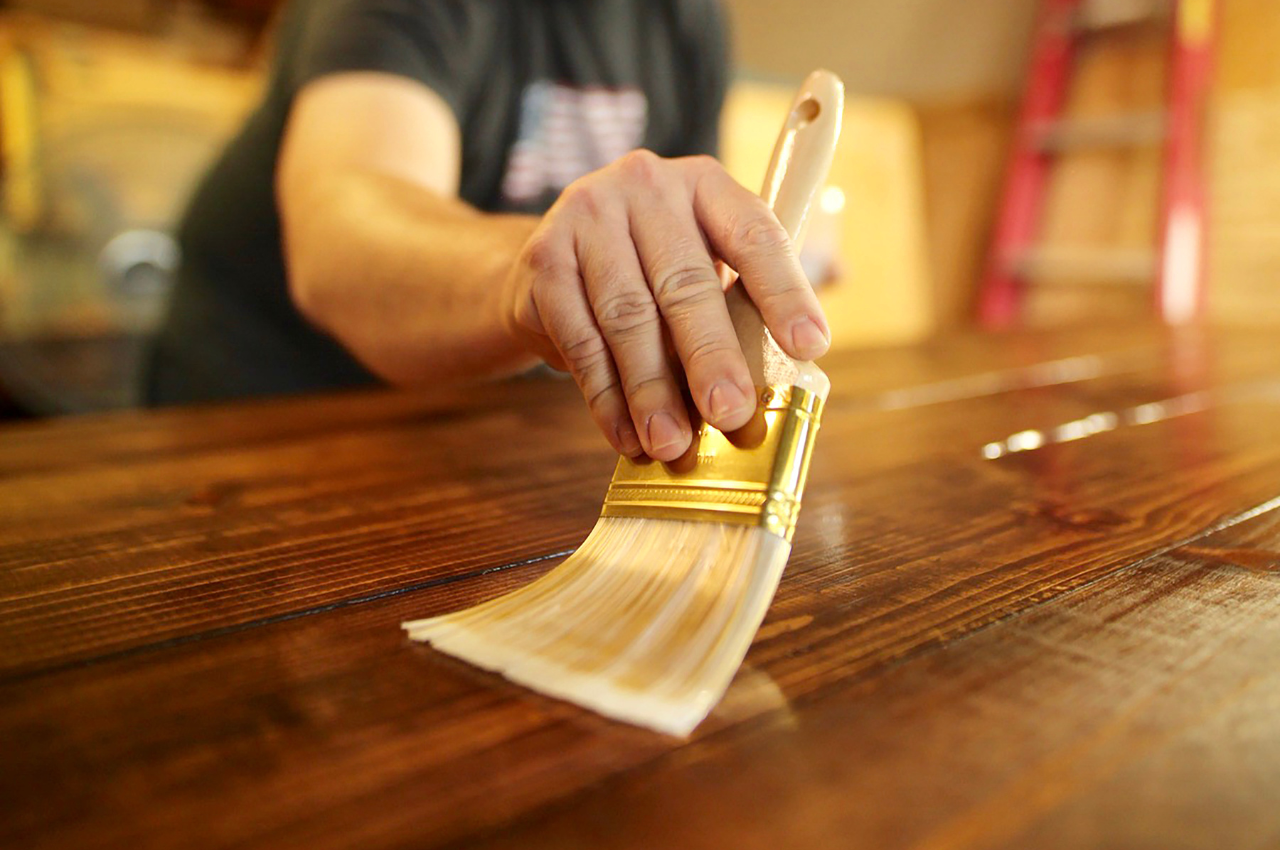
You’ve found the perfect wooden dining table. The grain is beautiful, the proportions are just right, but you notice the finish looks almost plasticky under the light. Or maybe you’re eyeing a mid-century modern sideboard with a soft matte, subtle satin sheen, and you wonder how it’ll hold up to daily use. The difference between those two looks often comes down to two choices: oil finish or polyurethane.
Not all wood furniture is finished the same way, and the distinction matters more than most people realize when furnishing a home. The finish determines how a piece looks under your home’s lighting and whether it’ll still be beautiful five to ten years from now. Knowing the difference between an oil and polyurethane finish helps you spot quality, ask the right questions when choosing furniture, and bring a piece that fits not just your space, but the way you actually live in it.
What Is an Oil Finish?
Before we go further, let’s get the terminology straight because “oil finish” is one of those terms that get thrown around loosely.
For this post, when we say oil finish, we’re referring to pure, natural oils, specifically tung oil and linseed oil, in their most natural form, without metallic driers or synthetic resins. We want to be clear here because “oil-based” also appears on polyurethane cans, which can be confusing sometimes.
So, what’s in a natural oil finish?
Tung Oil
Tung oil comes from the seeds of the Tung tree and has been used as a wood finish for centuries. In its raw form, tung oil polymerizes on contact with air, meaning oxygen triggers a chemical reaction that gradually hardens the oil into a water-resistant film. Pure tung oil can take several days for each coat to cure fully, and multiple coats are usually required.
There is a quicker-drying alternative called polymerized tung oil, which doesn’t require metallic driers or synthetic ingredients. This version is created by pre-heating the raw oil to partially trigger the polymerization process before it’s applied to wood. As a result, polymerized tung oil is thicker, dries faster, and is more durable than its raw counterpart.
A word of caution: tung oil products are rarely what they seem these days. It’s very common for tung oil to be mixed with varnish or polyurethane, and labels seldom indicate the product’s actual purity or composition. It’s worth researching the brand before buying. Better yet, source your piece from a reputable furniture brand or local artisan who can tell you exactly what’s on their wood.
Linseed Oil
Linseed oil comes from the seeds of the flax plant. Raw linseed oil is one of the slowest-drying finishes you’ll encounter. It can take weeks to cure and tends to stay tacky if applied too thickly. Polymerized linseed oil solves this in a similar way to Tung oil. Heating the oil under controlled conditions can result in a finish that dries faster and builds a harder film.
It’s worth knowing, however, that linseed oil, as you’ll find it on most shelves, is rarely in its natural state. Traditionally, it was boiled to speed up the process; hence, the common name “boiled linseed oil.” These days, boiling has largely been changed by the addition of metallic driers, making most commercial linseed oil products an industrially modified finish.
At T.Y. Fine Furniture, we use flaxseed oil instead, the food-grade, unaltered form of the same plant. It’s the version we trust to be the safest for a material as beautiful as solid wood.
One important safety note, regardless of which form you use. Linseed oil-soaked rags can spontaneously combust as the oil oxidizes and generates heat during curing. This can be managed by spreading rags flat to dry outdoors or submerging them in water in a metal container before disposal. That said, the use of linseed oil is best left to experts.
Danish Oil
It’s also worth mentioning Danish oil, a popular hybrid product containing tung oil or polymerized linseed oil. Most commercial Danish oils have synthetic ingredients, and since there’s no standard formulation, the composition can vary by brand. Some high-quality versions minimize harsh chemicals, resulting in lower VOC emissions while providing enhanced protection, faster drying times, and a natural matte finish similar to that of pure tung or linseed oil.
How Oil Finish Looks and Feels on Wood
Oil finishes work beautifully on solid wood, especially for works of artisan craftsmanship like fine furniture. Because oil penetrates the wood rather than sitting on it, the result is a soft sheen that appears natural on the material. It highlights the wood grain without overemphasizing it with a gloss or a plastic-like layer.
When done well, the application process can be wonderfully forgiving. There are no brush marks, lap lines, or bubbles to worry about. You wipe it on, let it soak in, then wipe off the excess.
Oil Finish Durability and Maintenance
Here's where you may observe some trade-offs. Oil finishes can protect wood surfaces up to a certain extent, but water rings, heat marks, and scratches can eventually appear. Curing time is also something to plan around to maximize the protection from an oil finish. Raw linseed oil, in particular, can take days or even weeks to fully cure. Tung oil is faster but still requires patience.
Because an oil finish seeps into wood rather than staying on top of it, you'll need to reapply every one to two years to keep wood furniture surfaces looking their best. The good news is that caring for oil-finished furniture is easier than it sounds. Simply wipe on a fresh coat when the surface starts to look dry. Depending on the hardwood used, that's once or twice a year at most.
Where oil finish truly stands out, though, is in how easy it is to repair. Scratches and small dents that would require a full sand-down and refinish on a polyurethane-coated piece can often be repaired through “spot” cleaning. You typically only need to focus on the affected part, and when you reapply the oil, it blends seamlessly without leaving patches of uneven color or uneven layers of hard finish.
Regular use of our balm adds another layer of protection. It conditions the wood naturally and helps the surface resist ring marks from forming in the first place. And if an old ring has already appeared, a light application is often all it takes to lift it entirely.

Oil Finish Summary
|
Oil Finish Pros - Natural, matte appearance that enhances wood grain - Feels like real wood to the touch - Seamless application results, no brush marks or lap lines - Simple to refresh and repair |
Oil Finish Cons - Lower resistance to water, stains, and scratches - Requires re-application every 1 to 2 years - Slow curing time, especially raw linseed oil |
What’s a Polyurethane Finish?
A polyurethane finish is a plastic polymer formulated as a liquid coating that cures into a hard, protective film on a wood surface, providing resistance against moisture and abrasion. There are two main types: oil-based and water-based. They differ significantly in how they look, how they’re applied, and how they affect your health and environment.
Oil-Based Polyurethane
Appearance and Application
Oil-based polyurethane imparts a distinct amber or yellowish tint to the wood, a characteristic that deepens and intensifies over time as the finish ages and is exposed to light. On darker woods like white oak or cherry, many people love this warm, rich effect. On lighter woods like maple, though, that yellowing can become a problem over time.
The application is slow and deliberate. Oil-based poly has a 5-hour wait between coats and a 12-hour wait after the last coat, which can extend a project over several days. Cleanup requires mineral spirits or paint thinner, and the fumes are potent enough to warrant a respirator.
Durability and Maintenance
Oil-based polyurethane has a reputation for toughness among finishes. It produces a slightly thicker film per coat, and the cross-linked resin is naturally flexible, which means it absorbs impact well and resists chipping on surfaces that flex or expand with humidity changes. You'll typically need two to three coats to build up proper protection.
Water-Based Polyurethane
Appearance and Application
Water-based polyurethanes are completely clear and won’t yellow over time, making them ideal for lighter woods, painted finishes, or any piece where you want the color to stay exactly as it is.
The application experience is notably more pleasant. Water-based polyurethane has almost no smell. It dries in two to four hours between coats, so you can often apply multiple coats in a single day. The trade-off is that it requires more coats to achieve the same level of protection as oil-based polyurethane.
Durability and Maintenance
Modern water-based polyurethane has come a long way. Many formulations now incorporate certain additives that significantly boost scratch resistance. For most wood furniture applications, it provides excellent, long-lasting protection, and its lower VOC content means it's better for indoor air quality.
So, Which is Better for Wood Furniture?
Honestly, it depends on what you’re aiming for.
If your priority is maximum protection for a high-use surface, a polyurethane finish can address this. Between the two types, water-based polyurethane is increasingly the more popular choice because of its lower VOC emissions. It offers almost the same level of protection as the oil-based one, doesn’t develop an amber-like color over time, and is significantly safer for indoor spaces.
However, if your priority is authenticity, beauty, and a connection to natural wood, an oil finish like Tung or Linseed is the best choice.
Here’s where we stand: we believe furniture should be honest. We value health and safety for both people and the environment.

It’s important to us that a material as precious as natural hardwood be given a chance to age gracefully rather than be trapped beneath a plastic shell. For these reasons, oil finish is our default preference, with the understanding that it results in a slower process and requires a bit more care and maintenance. These are but minute sacrifices for a greater reward: furniture that’s naturally beautiful and alive in a way that no synthetic coating can replicate.
This is a standard we take seriously enough to have built something around it. T.Y. Fine Furniture founder Tarik Yousef partnered with his father, Dr. Ahmed Yousef, a microbiologist at The Ohio State University, to develop the signature wood finish. It’s organic and food-grade, created specifically for wood furniture that ages beautifully and lasts for generations.