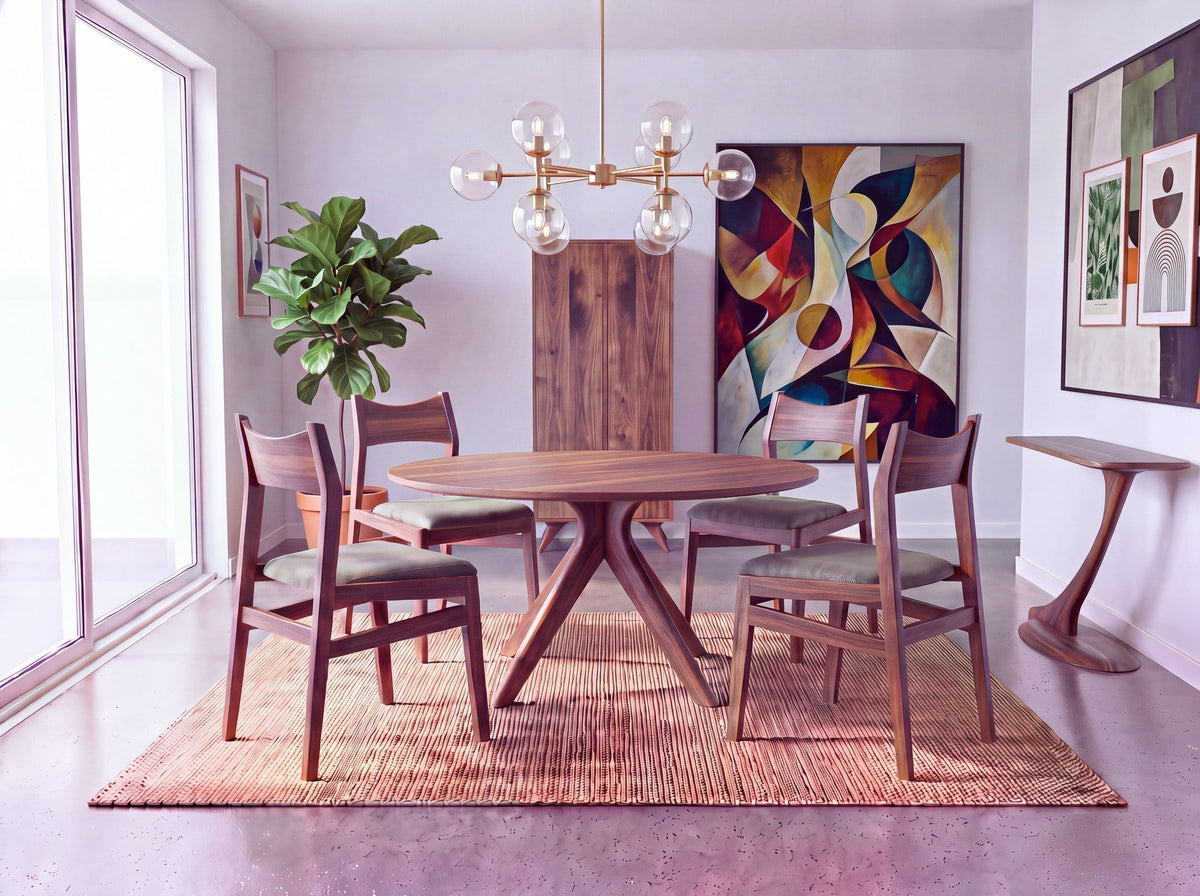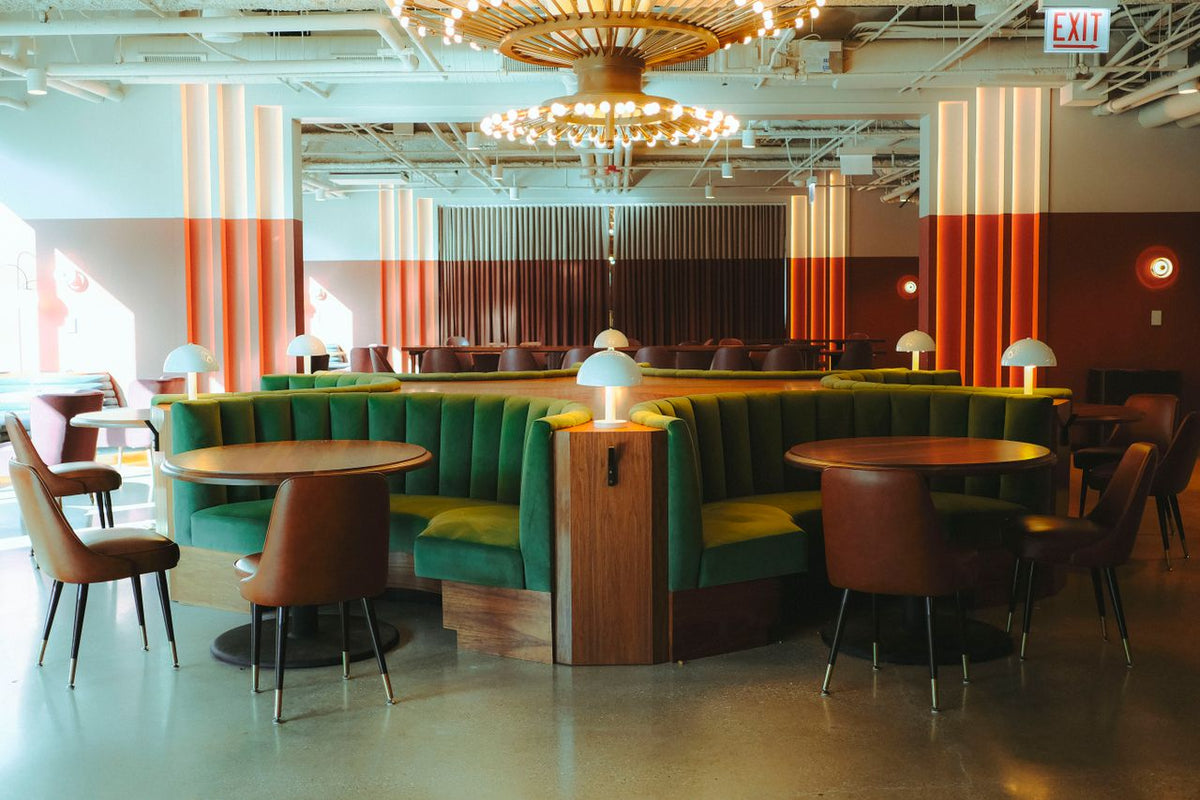
Interior designers in Columbus, Ohio don’t have to look far for custom furniture. There are plenty of custom furniture makers across the state, which is good news when a client has very specific needs for their home or commercial space.
T.Y. Fine Furniture has been building custom solid wood furniture in Columbus since 2004, and we’ve worked with homeowners and business owners alike along the way. If you’re new to sourcing custom furniture, this guide draws on our two decades of experience to help you get started–covering what to ask, what to expect during the build, and how our Trade Program works.
Why Work With a Local Furniture Maker
Interior designers partnering with local custom furniture makers gain one main advantage: direct access. For instance, if a client changes their mind about furniture size or built-ins, or you need to double-check the material used, you simply call the shop and get an answer the same day from the team building the piece. No need to navigate customer support portals or wait days for a response from the manufacturer through a distributor.
You can also inspect the work in person before committing. You and your client can visit our showroom and workshop, check the hardwood we use, and evaluate our joinery firsthand. We build everything in our 30,000-square-foot Columbus workshop with a team of ten skilled artisans. We don't drop-ship or resell imports, so the quality you inspect in our shop is exactly what arrives on site.
Logistics are straightforward as well. For local projects, delivering furniture entails a short drive from our warehouse rather than a cross-country freight shipment with unpredictable transit delays. Installing custom built-ins is much easier, too. With our workshop located nearby, our team can handle site delivery, fitting, and installation directly.
Vet Your Local Custom Furniture Maker
Ohio’s furniture industry is quite strong, and with many workshops operating in Columbus alone, interior designers have access to a wide network of custom furniture makers. However, quality and craftsmanship vary from one workshop to the next. This is why properly vetting your source is very important.
Where the risk comes from
You pay before you see the product. Custom orders usually need a deposit, often half, and they’re generally non-returnable because the piece was made to your specs. If the maker misses the date or the quality is off, you carry the problem.
The risk lands on you, not just the client. A designer who specifies a table that arrives late or with a bad finish takes the hit on the relationship. Trade work is repeat work, so one bad experience with a furniture maker can cost you a client.
Terms like “handmade,” “solid wood,” and “made in Ohio” are loose. A piece can have parts with veneer or an engineered core and still be sold as solid wood. Some shops build everything in-house, and others outsource parts or the whole piece. Even the term “handmade” should be approached with caution because it does not necessarily guarantee good quality.
Visit the Workshop Before You Request a Quote
The fastest way to distinguish a real furniture maker from a reseller is to visit the showroom or workshop. A website shows what a shop wants you to believe, while the showroom floor, better yet the workshop, shows you what’s really true.
What to look for:
In-house or outsourced? Ask which steps happen under one roof: frame building, upholstery, finishing, and quality control. Outsourced parts aren't automatically a problem, but you should know which parts they are and who is accountable.
Material and Craftsmanship. Look for kiln-dried hardwood and traditional joinery such as mortise-and-tenon or dovetail joints rather than stapled particleboard. Check the corners, edges, drawer boxes, and undersides. A shop that builds in-house will be happy to show you and thoroughly explain how these connections work. Ask how long the wood is seasoned, where the shop sources it, and whether all components are solid wood.
Construction Capability. Check whether the shop handles the techniques your designs call for, especially for upholstery or specialty finishes.
Ask for Proof: Local References and Past Projects
A strong portfolio is a good starting point, but references and independent reviews can reveal more about the shop. Do your research and, whenever possible, speak directly with clients, businesses, and fellow interior designers who have commissioned custom pieces from the furniture maker you plan to work with.
When you connect with a reference, ask:
→ Did the lead time quoted at order match the actual delivery date?
→ How did the shop handle a problem, such as a fabric flaw, a sizing error, or damage in transit?
→ Was the finished piece true to the approved sample?
→ Would you order again from this shop?
Communication and Paperwork
A shop’s reliability shows in how the team answers your questions. A good shop answers clearly and quickly and does not hesitate to put important details into writing. Treat the quote stage as a preview: if a shop is slow, vague, or hard to reach before it has your business, expect the same after the deposit is paid.
Pay attention to how the shop handles inquiries.
Judge a custom workshop by how it handles early inquiries. Prompt, thorough answers are strong indicators of a reliable, well-managed business that will keep you informed throughout the build.
→ Is there one point of contact who knows your project?
→ Are the answers specific and detailed?
→ Are revisions documented, and how do I check them?
→ Are local delivery and white-glove installation included or billed separately?
→ What is the lead time? Can you provide a detailed timeline from quote and approval to production and delivery?
→ What if the client changes a dimension after approval?
→ Is there a rush option, and what does it cost?
COM (customer’s own material)
Ask if the shop allows COM, which gives you the option of using materials beyond those included in the standard offering. This is common for upholstered furniture and built-ins.
Ask the shop:
→ Who calculates the measurement, and who confirms it? (It should account for pattern repeat, railroading, and cutting waste.)
→ Who is responsible if a flaw shows up after cutting?
→ When does the fabric need to arrive to meet my delivery date?
Compliance and Paperwork
For commercial projects, ask what documentation the shop can help provide to meet local code and fire-safety requirements. On the administrative side, confirm warranty terms, formal written quotes, and trade account requirements–such as submitting your resale or tax-exemption certificate. Getting these details in writing up front ensures transparent pricing, defines responsibilities, and sets clear expectations for both you and your client.
Send with every quote request
→ Dimensions and a drawing or reference image
→ Frame, finish, and hardware preferences
→ COM or fabric selection, with measurements if known
→ Quantity and install location
→ Target install date
→ Project type (residential or commercial) and any compliance needs
Designer Trade Program at T.Y. Fine Furniture
The Designer Trade Program is for interior designers, set designers, decorators, and stagers who buy furniture for clients.
Here is an overview of what the trade program offers:
- ✦ 10% commission on completed orders you bring in, paid monthly.
- ✦ 2% annual bonus on yearly net sales above $99,000.
- ✦ Order tracking and status updates, so you can answer your client's "where is it" without calling us.
- ✦ Storage at $45 per item per month for pieces we hold for you.
- ✦ Local delivery at $175 per delivery plus $50 per item, for deliveries within 30 miles of our warehouse.
To learn more about the program, check our Designer Program page.
If you are interested in exploring other partnership programs, check our Partnerships page.
The best way to understand how we operate is to visit us. Our showrooms are open Tuesday through Saturday, 11 am to 6 pm. TYFF founder, Tarik Yousef, oversees the partner programs himself, so he's the best person to speak with if you are interested. Call 614-230-2477 or use the contact form to set an appointment.
Featured Photo by Sydney Sang from Pexels