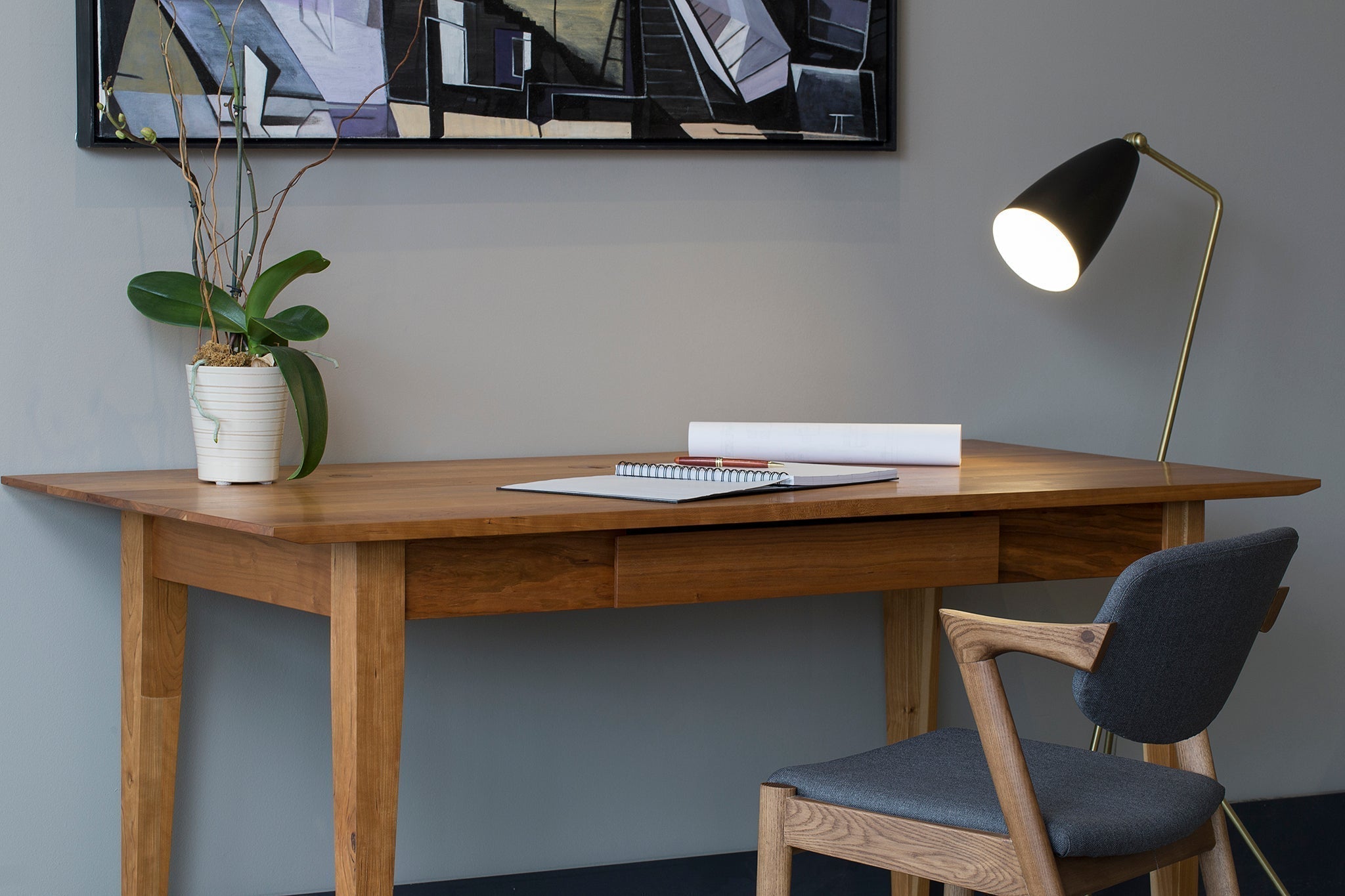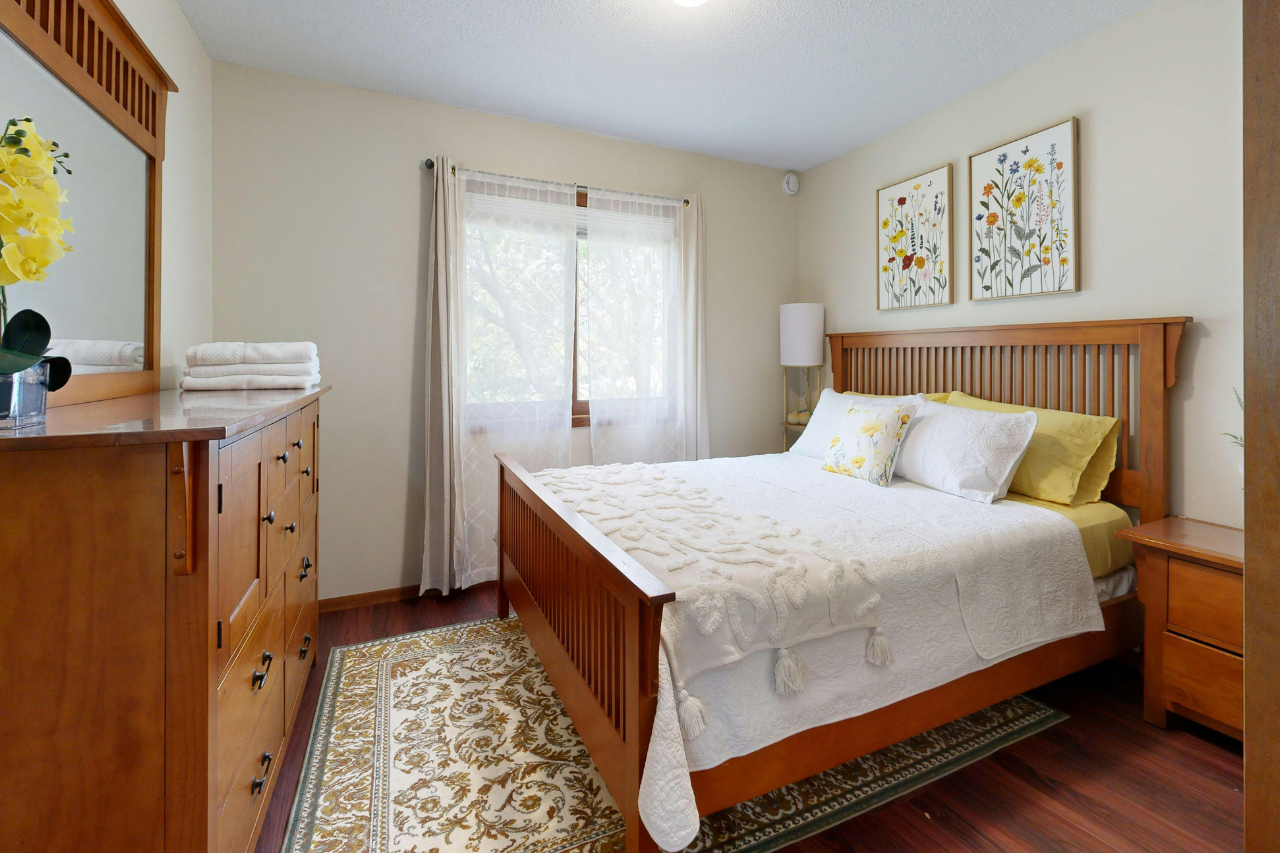
Have you ever looked for a dining table or bed frame made of solid oak or cherry? If so, chances are you’ve come across the terms Craftsman or Mission style furniture. The two often pop up in searches for high-quality, solid wood furniture, alongside Shaker furniture—and we can see why. All three styles celebrate honest materials, fine craftsmanship, and timeless design.
While Craftsman and Mission furniture share many similarities, they are not exactly the same thing. Here’s a closer look at what defines these styles and what sets them apart.
What is Craftsman Furniture?
To understand how Craftsman furniture came to be, we have to explore the Arts and Crafts movement for a bit. It began in Britain during the late 19th century before spreading to the United States. The movement emerged as a response to the changes brought about by the Industrial Revolution.
At the time, furniture was becoming cheaper and more accessible through mass production in factories. While this allowed more households to furnish their homes, something was lost: authenticity and human touch.
The Arts and Crafts movement pushed back against rapid industrialization, favoring honest craftsmanship and small-scale workshop production. In furniture, the movement embraced simple, functional designs that highlight the beauty of natural materials, rejecting the ornate Victorian style that often relied on elaborate carvings, heavy embellishment, and, sometimes, veneers that concealed cheaper materials beneath.
In the United States, one of the most influential figures associated with this movement was Gustav Stickley, a furniture maker and designer. Through The Craftsman magazine, Stickley shared his furniture designs and encouraged readers to embrace well-made, functional homes and furnishings. His designs eventually became what we may now recognize as Craftsman furniture.
What is Mission Furniture?
Mission furniture originated around the same time as Craftsman furniture, and the two styles are very closely related. They share a common philosophy of intentional craftsmanship, simple forms, and functional design, which is why they are often used interchangeably, sometimes alongside Shaker furniture as well.
But where does the name “mission” come from? It’s a reference to the Spanish mission of California, though most Mission-style furniture bears minimal resemblance to the actual furnishings there. The first pieces to carry the name were likely made in New York City in the 1890s, inspired by the wood furniture associated with those missions, more a nod to their spirit than a direct imitation.
The style became known for its sturdy construction and clean lines, free of excessive ornamentation, qualities that aligned with the ideals of the Arts and Crafts movement. Because of this, Mission is sometimes considered a subset or offshoot of Craftsman furniture. While all Mission furniture can be considered part of the broader Craftsman tradition, not all Craftsman furniture is Mission style. Interestingly, much of Gustav Stickley’s furniture would later become associated with Mission style furniture, even though Stickley himself reportedly dismissed the term.
Today, Mission furniture remains one of the most recognizable expressions of the Arts and Crafts movement. Its clean geometry and solid construction continue to appeal to homeowners who appreciate timeless, handcrafted, fine furniture.

While Shaker furniture is distinct from both Craftsman and Mission styles, it shares many of the same enduring values: simplicity, thoughtful craftsmanship, honest construction, and timeless design. Shop the Shaker Collection →
Features of Craftsman and Mission Furniture
Because Craftsman and Mission furniture are so closely related, it makes sense to begin with what they share. Both styles developed from the same design philosophy and often use many of the same materials, construction techniques, and visual principles. Once you understand what they have in common, the subtle differences between them become much easier to spot.
✱ Celebration of Craftsmanship
Both Craftsman and Mission furniture were born from a desire to bring authenticity back into furniture-making. During a time when factory-made furniture was becoming increasingly common, these design ideas emphasized handcrafted quality and visible construction. Instead of hiding joints and other structural elements, many pieces proudly showcase them.
✱ Solid Wood Construction
Another defining characteristic of both styles is the use of solid wood. Oak, particularly quarter-sawn oak, became especially popular because of its durability and prominent grain pattern. Rather than painting or disguising the material, Craftsman and Mission furniture highlight the wood itself. Rich stains helped highlight the natural texture and character of the wood.
This appreciation for natural materials is one reason these styles remain so appealing today, especially among buyers looking for heirloom-quality furniture.
✱ Simple, Functional Design
Both styles emerged during a broader design transition, one that gradually moved away from the ornate aesthetics of the years prior, toward cleaner, more functional forms that would eventually influence modern design.
You’ll often see:
- Straight lines
- Flat panels
- Rectangular silhouettes
- Minimal decoration
- Balanced proportions
The Difference
While the two styles share many similarities, Mission-style furniture is generally more rigid and minimalist. The furniture is generally clean and simple, with straight vertical and horizontal slats, and heavy-set proportions. Many Mission pieces have a distinct “pure” quality, designed above all to emphasize sturdy construction and let the wood, specifically quarter-sawn white oak, speak for itself.
Craftsman furniture, meanwhile, tends to be slightly more expressive in its designs. It values simplicity and functionality at its core, but the style often incorporates a broader wood selection (aside from oak, also cherry, walnut, or maple) and more subtle details that celebrate the maker’s craft. Craftsman pieces also blend traditional forms with emerging modern influences, making the style more versatile and flexible.
|
Craftsman Furniture |
Mission Furniture |
|
|
Design Philosophy |
Simplicity, functionality, and honest craftsmanship rooted in the Arts and Crafts movement |
Same core values, expressed through a stricter, more geometric aesthetic |
|
Overall Appearance |
Warm and minimal, with slightly more variation and artistic flexibility |
Clean and minimal, with a more linear, structured, and grounded presence |
|
Signature Details |
Exposed fine construction details like mortise-and-tenon joinery, simple brass or iron hardware |
Straight vertical and horizontal slats, flat panels, thick rectangular forms, and wide proportions |
|
Typical Wood Species |
Cherry, oak, maple, and walnut |
Most commonly quarter-sawn white oak |
|
Ornamentation |
Minimal and purposeful, with subtle details that celebrate the maker's craft |
Highly restrained, focusing mainly on the wood and overall craftsmanship |