There’s a reason certain furniture styles endure long after the era they emerged from. Shaker and modern furniture are both excellent examples of this. Although they developed at different times, they embody similar values about what good design should look like. Understanding where each one comes from, what they share, and where they differ can help you figure out which style belongs in your home…or how to bring both together thoughtfully.
What is Shaker Furniture?
It’s hard to understand Shaker furniture without first understanding the people who made it. The style, more like a craft tradition than a design movement, traces its origins to a religious community that settled in America in the late 18th century. Known as the Shakers, they lived by a principle of deliberate simplicity, removing all excess from their lives.
How they do their work is an expression of their faith, and that making something well was itself a form of devotion. That extended to how they treated their materials. The beauty of natural wood, for example, was often left unembellished by ornate carvings. In their community, waste and excess for its sake had no place, and their furniture reflected all these ideas.
Shaker furniture is typically made from local American wood like cherry and maple, often painted and stained to protect the wood or enhance the natural grain. Color choices weren’t random, as community laws strictly regulated them, and only a specific palette of blues, greens, reds, and yellows was allowed. The Shakers also believed in honest construction and relied on traditional joinery techniques. They also avoided using veneers, as this was a “deceitful” practice.

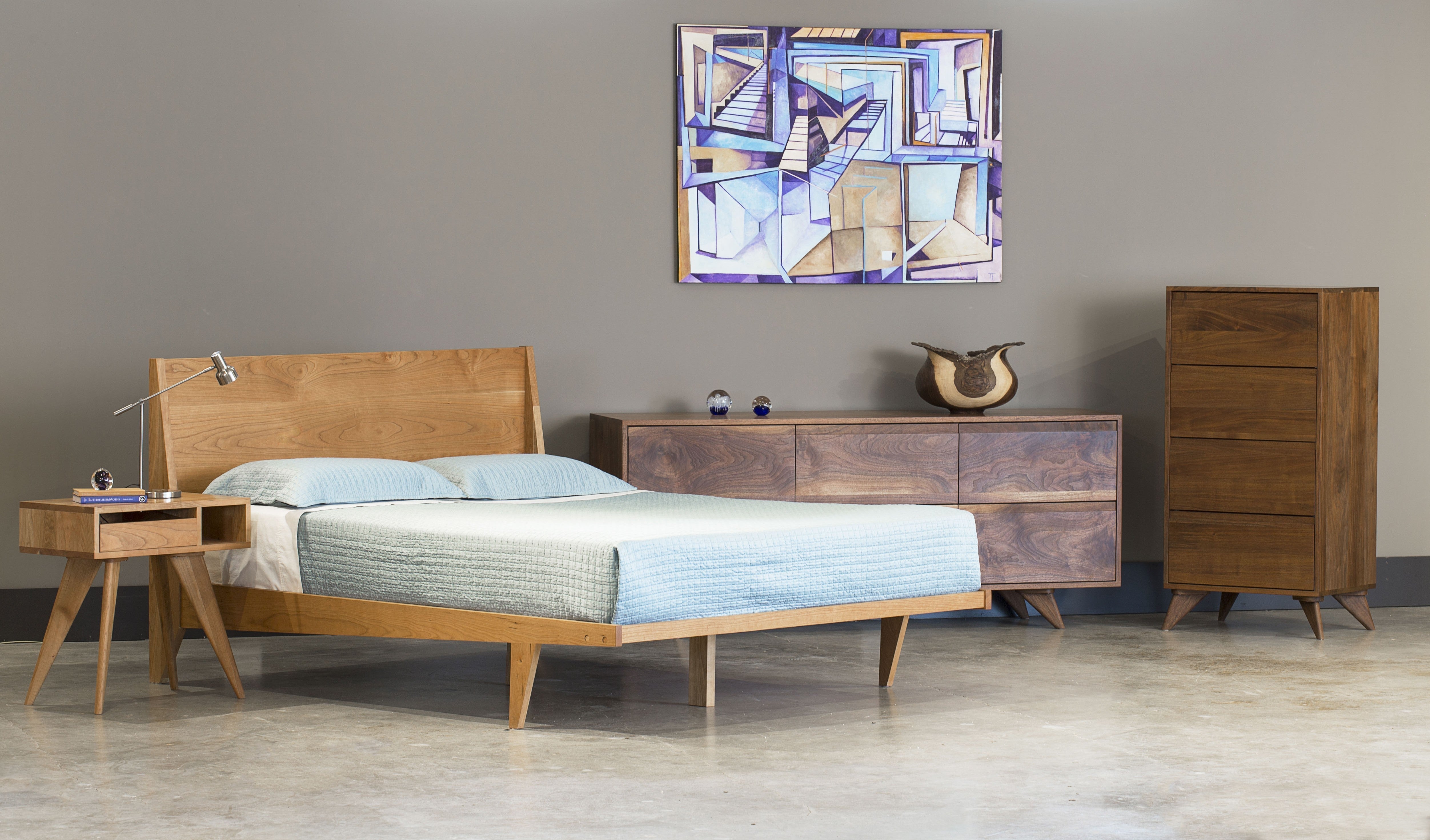
Platform Bed and Side Table from the Shaker Collection by T.Y. Fine Furniture.
Defining Traits of Shaker Furniture
Shaker furniture embodies restraint. Because the Shakers valued function and simplicity, their furniture style is defined by clean lines and subtle curves, with a strong emphasis on craftsmanship.
These are some subtle but distinctive details that further define Shaker furniture:
“Mushroom” Knobs. Instead of metal pulls and handles, Shakers used simple turned wood knobs to make furniture functional while keeping the focus on the material and craftsmanship.
The Ladder-back chair. Although not a Shaker original, this style is one of their most recognized contributions. Their version of the ladder-back chair is clean and precise, and in the joinery, you can see the level of craftsmanship that Shakers are known for.
Tapered legs. The legs in Shaker furniture tend to taper toward the base. This reduces visual weight and makes a piece actually lighter and easier to move, without having to sacrifice structural integrity.
Chair tilters. This ingenious mechanism is a Shaker innovation. The rear feet of Shaker chairs are fitted with a patented ball-and-socket joint mechanism that allows the sitter to tip the chair back without damaging its feet or scraping the floor.
What Is Modern Furniture?
When people talk about modern furniture, they’re referring to the furniture style that emerged from the early to mid-20th century design movement. It was a cultural shift that rejected the heavy ornamentation and opulence of the decades prior. Genuine exploration was at its peak, as furniture designers experimented freely with new materials, such as steel, molded plywood, and glass, while holding on to the natural through clean lines and organic forms.
In the United States, modern design also carried a distinct, postwar energy. Influenced in part by the advances in space exploration and military technology, the aesthetic found its way to commercial spaces and suburban homes in the form of light, sleek, geometric, sometimes almost futuristic pieces. Iconic designs like George Nelson’s Comprehensive Storage Unit and Coconut Chair, Harry Bertoia’s Diamond Chair, and Isamu Noguchi’s “Noguchi” Table are among the many that were created in this period.
During this time, Scandinavian design was gaining traction in the U.S. It became more popular after the Design in Scandinavia exhibit in 1954, which featured designs by Hans Wegner, Finn Juhl, and Arne Jacobsen, among others.

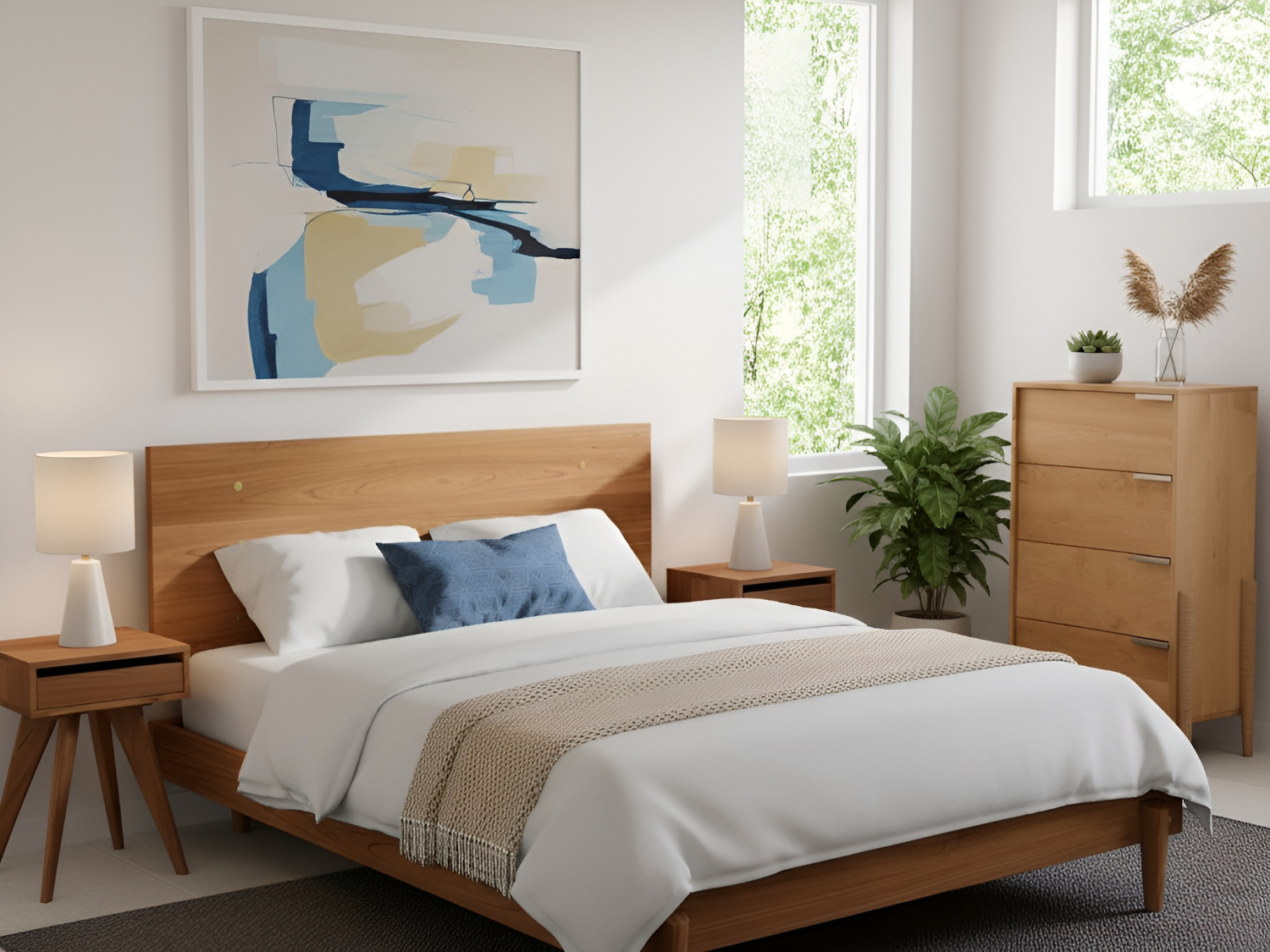
Living area with mid-century modern-inspired furniture and decor. Photo by Stephen Leonardi from Pexels.
Defining Traits of Modern Furniture
Modern furniture often incorporates materials such as metal, glass, plywood, and early plastics alongside wood. The openness to experimentation that defined mid-century modern design allowed for new forms that are sleeker, lighter, and sometimes more sculptural than traditional designs.
Key characteristics of modern furniture include:
Clean lines. Modern furniture embodies simple forms. No excess detailing and unnecessary decor. With sleek and uncluttered silhouettes, the piece’s overall shape has a more deliberate presence.
Exploration of new forms. Unlike more traditional styles, modern furniture isn’t bound by convention. Designers have explored asymmetry, sculptural shapes, and unconventional proportions, creating furniture that is genuinely distinct from the ornate pieces of the past.
Mixed materials. Modern design embraces a wider palette of materials. Natural elements like wood are often paired with industrial materials such as metal, glass, or molded plastics. This combination creates contrast and gives modern furniture its distinctive, sometimes slightly futuristic edge.
Shaker vs Modern Furniture: The Key Differences
Despite their different origins, Shaker and modern furniture share a surprising amount of common ground. Both styles prioritize function over style and avoid heavy ornamentation, instead embracing clean, uncluttered lines. When it comes to wooden pieces, you will often find similar features, such as tapered legs, gentle curves, and straightforward, practical forms.
At their best, both styles embody the idea that good design doesn’t need excess. Beauty comes from proportion, material, and purpose. However, the differences are apparent, especially when you look at the materials and delve into the underlying spirit of each style.
Approach to Design
Shaker furniture is guided by discipline and restraint. Despite the Shakers’ many innovative ideas, especially those for furniture, there is little room for experimentation beyond what’s necessary. In contrast, modern furniture is the result of vast exploration. Modern designers stretched what’s possible, blended different materials, and created new silhouettes. This is why modern pieces, though sleek and simple, can feel more dynamic and unconventional.
Materials and Construction
Shaker furniture is rooted in tradition. It relies almost entirely on solid wood and time-tested joinery techniques, with a focus on craftsmanship and the beauty of the material itself.
Modern furniture, by contrast, embraces a wider range of materials. Wood remains an important element, but it’s often paired with metal, glass, or engineered materials. This creates a different visual effect, sometimes sleeker, sometimes more industrial. Even with the introduction of new materials, modern furniture from the mid-century retains a sense of intention. These pieces were thoughtfully designed and well-constructed, which truly sets them apart from many of today’s mass-produced furniture.
Overall Feel
Shaker furniture carries a sense of tradition. Even in contemporary homes, it brings a grounded presence. Meanwhile, modern furniture feels more aligned with the present. It can range from understated to bold, depending on the piece, but it generally reflects a more current feel.
This distinction becomes especially visible in the details. A Shaker dresser, for example, will typically feature simple wooden knobs. A modern dresser might have brass drawer pulls that add a layer of edge to an otherwise simple shape. Same basic form, but a noticeably different personality.
Which Style to Choose, Shaker or Modern Furniture?


The truth is, you don’t have to choose. Both styles are rooted in simplicity and share enough similarities that they can complement each other well, especially if the modern pieces are made of wood. That said, if you're trying to define a direction, it helps to think about the feeling you want in a space.
If you’re drawn to craftsmanship and tradition, Shaker furniture may feel like a natural fit. It’s timeless and dependable. If you prefer a slightly more contemporary edge—clean lines with a fun edge—modern furniture might be the direction to take. It offers more variety in materials and form, which can add personality to a space. That said, they aren't mutually exclusive. You can create a balanced, layered interior by, for example, using Shaker-inspired furniture as your foundation, then introducing modern accent pieces to add visual interest.
In the end, the best spaces aren’t defined by strictly following a specific style, but by how they feel to live in. It hardly matters if you’re leaning toward Shaker, modern, or a mix of both because the goal is the same: to create a home that is entirely your own and furnish it with high-quality pieces that you deserve.