Mid-century modern and Scandinavian furniture, at a glance, are almost interchangeable. Both often feature clean lines, natural materials, and a sense of restraint. But spend a little time observing the details of each design, and the differences, no matter how subtle, become clear. What are their similarities? How do you distinguish them? Perhaps understanding where they overlap and diverge can help you furnish your home, especially if your goal is to create a home that feels cohesive.
How Modern and Scandinavian Furniture Converge
There’s a reason why mid-century modern and Scandinavian furniture share so many characteristics. Both styles emerged around the mid-20th century, during a time when the world was rapidly becoming more modern. The divide between traditional and contemporary ways of living became more pronounced, especially with the advances in technology and a changing social landscape that placed more emphasis on accessibility for the masses.
In furniture, this translated into straightforward and functional designs. There was a growing need for furniture that was simpler, more efficient to produce, and suited to modern life. As such, clean lines and sleek silhouettes replaced the heavily ornate and decorative pieces that defined earlier decades.


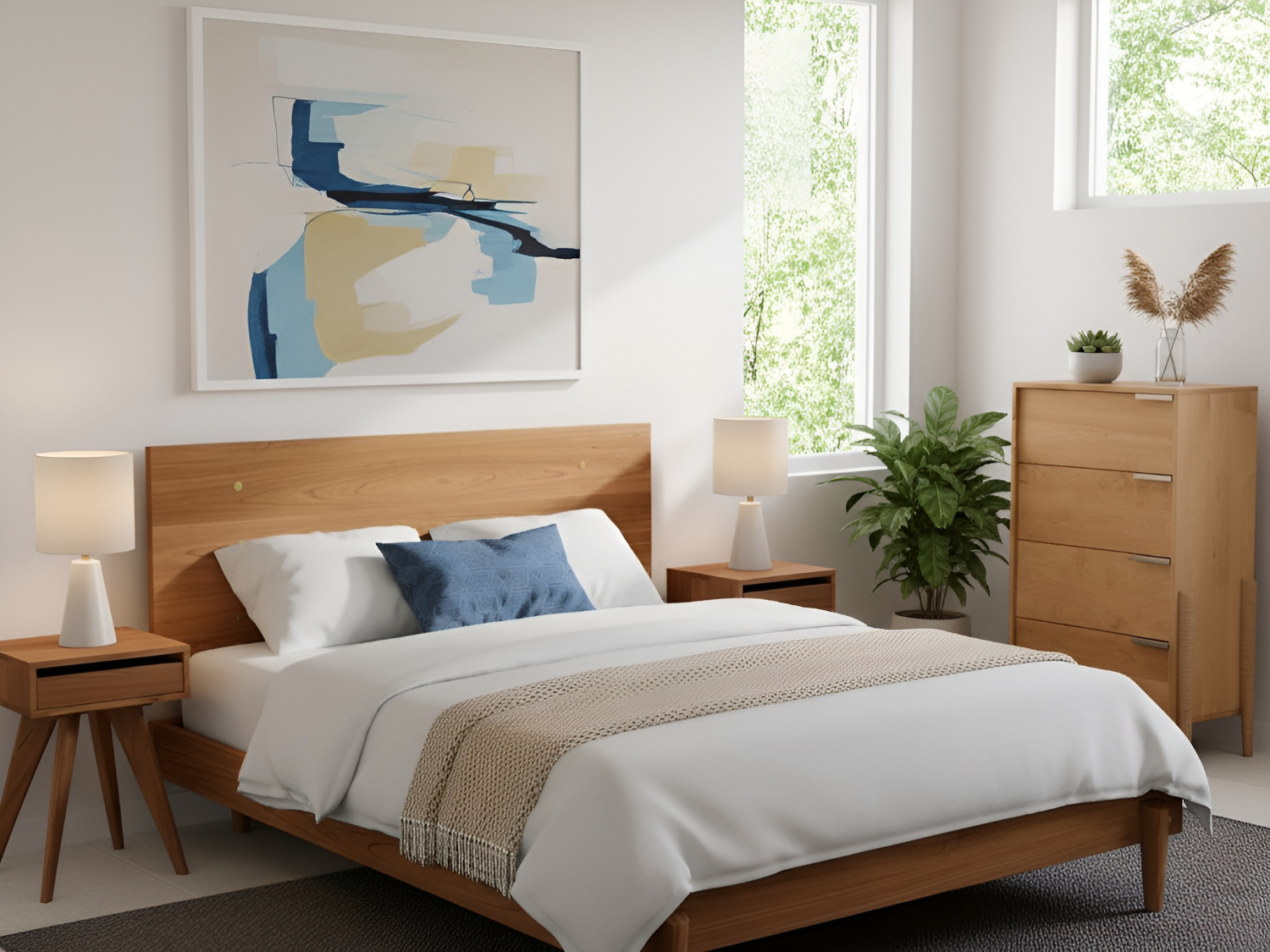
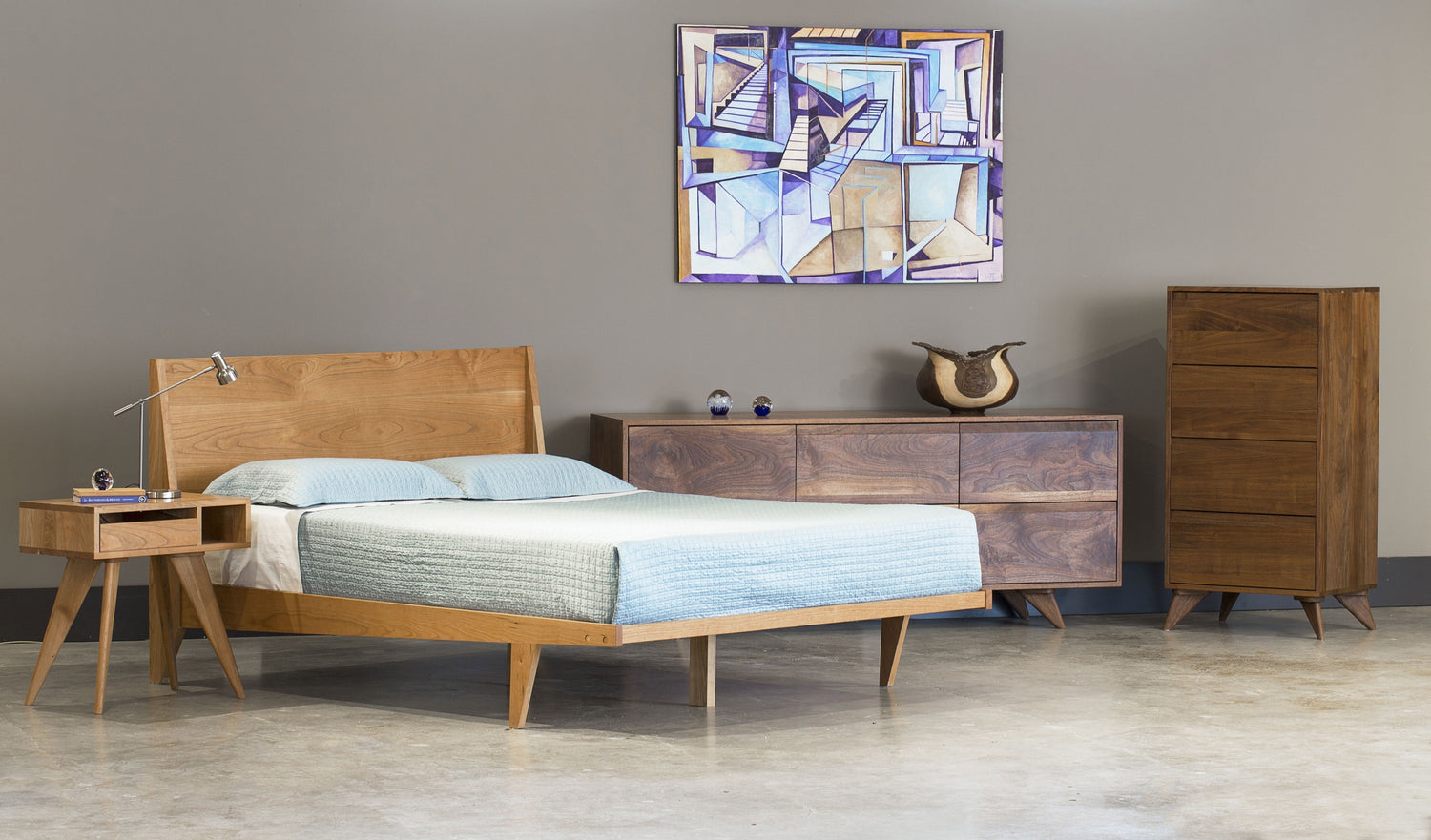
These are the Apollo Dresser in walnut (left) and hard maple (right), shown in mid-century modern and Scandinavian settings.
Scandinavian design traces its roots to the early 20th century and gained wider recognition in the 1930s through the work of designers like Alvar Aalto. It went on to influence many mid-century modern designs. Designers such as Finn Juhl, Hans Wegner, and Arne Jacobsen brought Scandinavian furniture design to a global audience, and their work remains some of the most referenced in design history. At the same time, distinctly mid-century modern designers, including Charles and Ray Eames, Eero Sarineen, and George Nelson, were redefining furniture through innovation and the use of new materials.
While a wide range of designs emerged during this period, both mid-century modern and Scandinavian furniture share a common driving force: functionality as a core principle, along with a less-is-more approach and an emphasis on craftsmanship.
The Key Differences
1. Design Approach
The limitations of what furniture could be were stretched by mid-century modern design. With technology advancing, it became possible to push the boundaries further, resulting in innovative pieces that seemed almost futuristic. At the same time, designs were also grounded, and it was common to see a deliberate blend of natural materials like wood and metal with manmade ones like glass and plastic.
Scandinavian furniture design, while also modernist in form, was largely shaped by the realities of life in the Nordic region, where winters are particularly long and cold, along with a prolonged period of limited daylight. This may have led to furniture designs that balance clean, modern forms with a sense of warmth. Natural materials were often used to help create bright, cozy, and welcoming interiors, often associated with the concept of “hygge”. It’s modern design, but with a softer, more human-centered approach.


Much of our collection draws inspiration from mid-century modern design, particularly our Apollo and Modern collections. These pieces are timeless and highly functional, reflecting the quintessential features of the style: simple forms, sleek silhouettes, and clean, refined lines.
2. Aesthetic
While individual pieces can sometimes look similar, the differences between mid-century modern and Scandinavian furniture become more apparent when viewed within a space. How furniture interacts with lighting, color palettes, and decor plays a major role in defining each style.
Both favor clean lines and simple forms, but their execution differs. Scandinavian furniture leans towards softer, more organic shapes. Curves are gentle, and silhouettes feel relaxed and approachable. Mid-century modern furniture also incorporates organic forms as well, but tends to be more experimental, often featuring bolder, geometric, and more angular shapes.
Color is another defining factor. Scandinavian design typically favors a light, neutral palette, incorporating white, soft grays, and natural wood, occasionally accented with muted colors. These lighter colors help maximize natural light and enhance the sense of openness. Mid-century modern interiors, on the other hand, are more playful with colors. Striking hues, such as mustard yellow, teal, burnt orange, and olive green, are commonly used to create contrast and visual interest.
Patterns further distinguish the two. Scandinavian textiles often feature organic motifs, typically inspired by nature and folk art. Mid-century modern patterns, meanwhile, tend to be abstract and geometric, reflecting the fascination with atomic and space-age design at the time.
3. Materials
Mid-century modern furniture embraces a wide range of materials, often blending natural and manufactured elements. Combinations of wood and metal, or glass and molded plastic, are common. This mix gives mid-century pieces a slightly industrial and futuristic feel.

Designers like Charles and Ray Eames, for example, experimented with molded fiberglass to create innovative pieces like the Eames Shell Chair.
Scandinavian furniture, by contrast, remains more grounded in natural materials. Wood takes center stage, often in lighter tones, complemented by soft textiles and leather. There is a strong emphasis on craftsmanship and the tactile quality of the material. This is especially evident in the work of designers like Hans Wegner and Alvar Aalto, whose enduring pieces highlight the beauty of natural materials.
***
Both mid-century modern and Scandinavian design have stood the test of time. Decades after they emerged, many designs from this period remain staples in today’s homes. Perhaps this is because both styles share the same driving force: to create functional furniture that improves everyday life, and that simple forms, when done well, carry so much beauty.