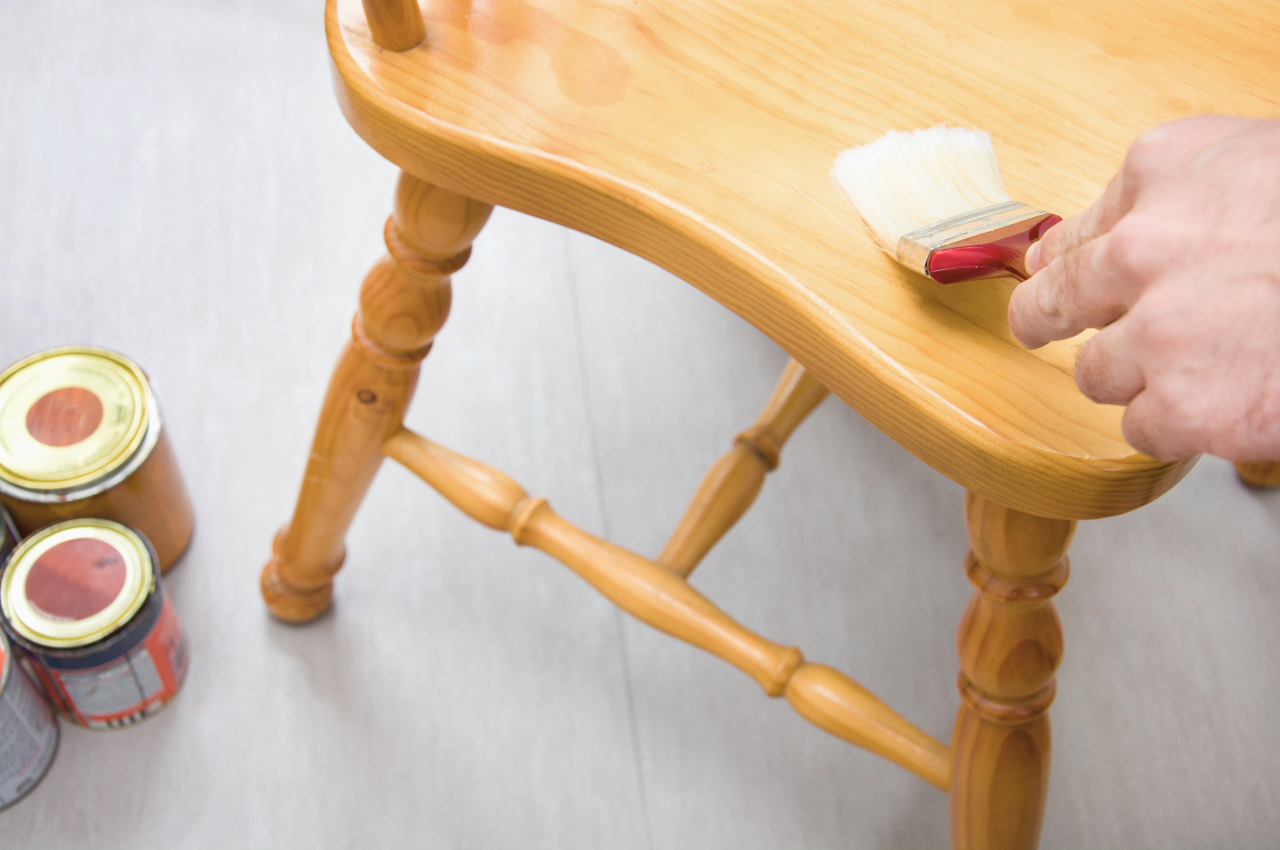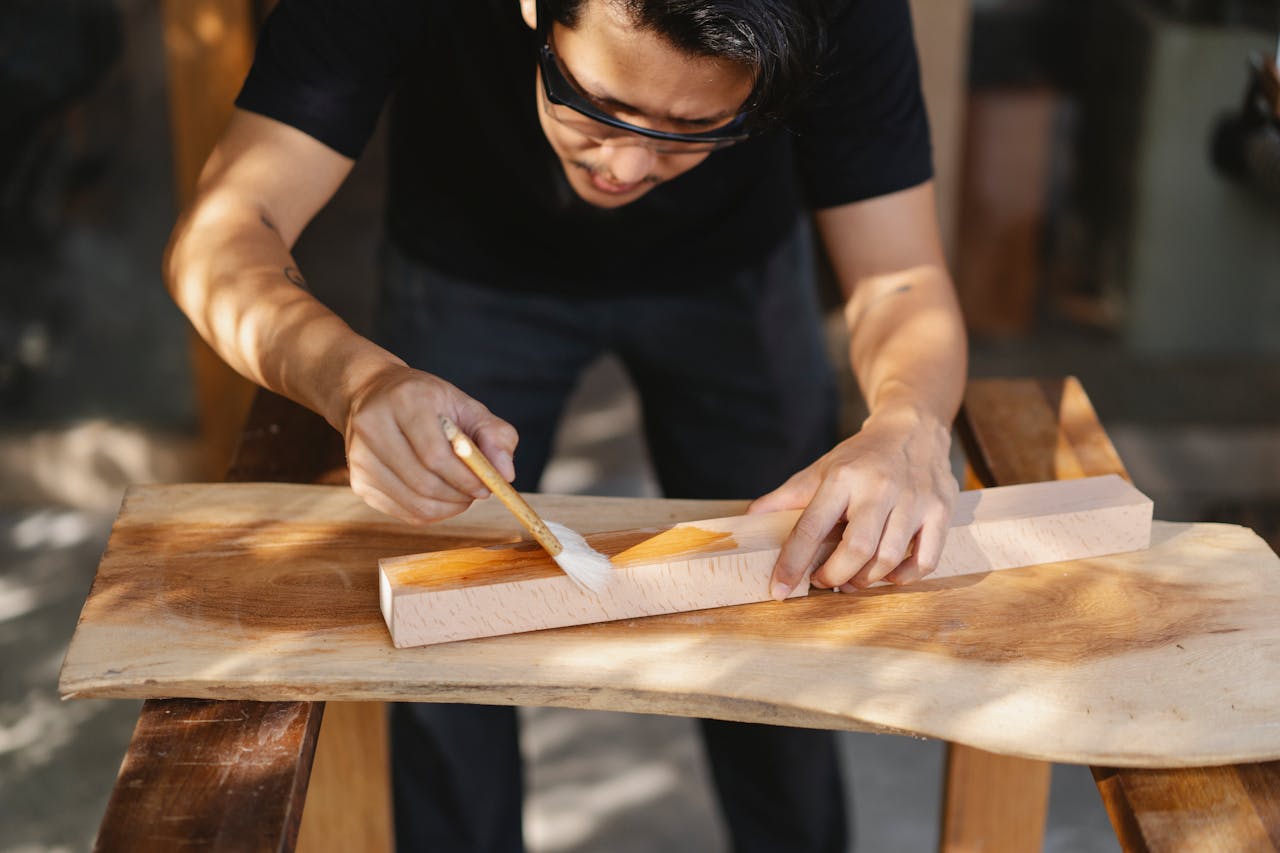
The finish is one of the most significant components in wood furniture. It’s not only for aesthetic appeal, but it also protects the wood, and its quality is partly responsible for how a piece performs and looks over time. For something with such an important role, one would expect that the wood finish be made from premium ingredients. This is hardly the case these days, in the age of mass production. Worse, it has been found that the finish is one of the most overlooked sources of harmful chemicals in furniture.
This is why non-toxic wood finishes are gaining traction as more people are leaning into safer, healthier alternatives to conventional finishes. But what exactly is in a non-toxic wood finish? Is this just hype, or does it really matter?
What Is a Non-Toxic Wood Finish?
A non-toxic wood finish is exactly what it sounds like: a finish free of ingredients that can harm your health and the environment. In practical terms, that means no petrochemicals, metallic driers, synthetic resins like polyurethane, and volatile organic compounds (VOCs) that off-gas into your home.
Most wood finishes rely on some combination of these ingredients to achieve durability, faster drying times, or a more prominent shine. They work, in the functional sense, and the results can actually be impressive. But what marketing terms and labels tend to gloss over is the impact of using these blends.
By contrast, a genuine, non-toxic finish is made from natural materials, such as plant-based oils and beeswax. It protects the wood while helping it age gracefully, rather than sealing it beneath a glossy, synthetic film. And it does so without introducing anything harmful into the air you breathe or the furniture surfaces you touch every day.
Why Non-Toxic Finishes Matter
Health and Safety
Common finishes, such as lacquers, polyurethanes, and solvent-based stains, can off-gas VOCs for weeks or even months after application. Long-term exposure to the chemicals in these finishes has been linked to serious health concerns. In a bedroom, a nursery, or any room where people spend significant time, that's worth taking seriously.
Indoor Air Quality
Most of us spend the majority of our time indoors, and the air inside our homes can potentially carry pollutants, many of them from everyday materials like furniture finishes and adhesives. A non-toxic finish contributes nothing harmful to the air. Zero VOCs means nothing off-gassing while you sleep, work, or go about your day.
Food Safety
This one matters more than most people realize. Dining tables, kitchen countertops, and cutting boards are surfaces that come into regular contact with food, hands, and mouths, especially children's. A food-grade finish is one that has been certified safe for exactly this kind of contact. Most wood finishes are not. A non-toxic, food-grade finish means you're not unknowingly introducing chemicals into meals or onto the hands of the people you love.
Environmental Responsibility
The impact of a wood finish extends beyond the corners of your home. VOC emissions contribute to air pollution, and the petrochemical ingredients in regular finishes carry an environmental cost at every stage, from production to disposal. Plant-based, organic finishes are not only a kinder choice for the planet, but also for the craftspeople who apply them every day.
Non-Toxic Wood Finishes
Tung Oil
Tung Oil is extracted from the seeds of the tung tree and has been used as a wood finish for centuries. In its pure form, tung oil polymerizes on contact with air, curing into a protective, water-resistant film deep within the wood. The finish is natural and low-sheen, ranging from a soft matte to a gentle satin depending on the number of coats applied. One important note when shopping: many products labeled "tung oil" wood finish are blended with varnish or polyurethane. If purity matters to you, it's worth verifying the actual composition before buying.
Raw Linseed Oil
Raw Linseed Oil is derived from the seeds of the flax plant, and is another time-honored natural finish. In its unaltered form, it offers a matte, deeply penetrating finish that nourishes wood naturally. Like tung oil, it works from the inside out. It is worth noting that most commercially available linseed oil has been heavily modified, treated with metallic driers to speed up drying time. The truly natural version, closest to what linseed oil originally was, is flaxseed oil in its food-grade form.
Beeswax
Beeswax is often used alongside oils as a surface polish and protective layer. It adds a soft sheen, conditions the wood, and creates a gentle barrier against moisture and everyday wear. Unbleached beeswax, which is the least processed form, is the most natural choice. Combining it with a penetrating oil maximizes its potential to protect furniture surfaces from daily wear and tear.
Our Organic Wood Finish
Every piece at T.Y. Fine Furniture is protected by our organic wood finish. This signature blend was developed by founder Tarik Yousef alongside his father, Dr. Ahmed Yousef, a microbiologist at The Ohio State University. It's made from food-grade certified organic oils and natural waxes, with zero VOCs, no metallic driers, no thinners, and no solvents. Even the beeswax is unbleached.
It comes in two forms: an oil blend that soaks deep into the wood grain, hardening from the inside out, and a hard wax balm for surface polishing, scratch repair, and everyday protection.

Maintenance using either the Oil Blend or Wood Balm takes about ten minutes, once or twice a year. Scratches, water rings, and minor heat marks can easily be addressed at home without a professional. And over time, the finish helps the wood surface develop a rich, natural patina, the kind that makes a piece of furniture look better with age.
If that sounds like the kind of furniture you want in your home, we'd love to show you what it looks like in person.
Featured photo by Ono Kosuki from Pexels