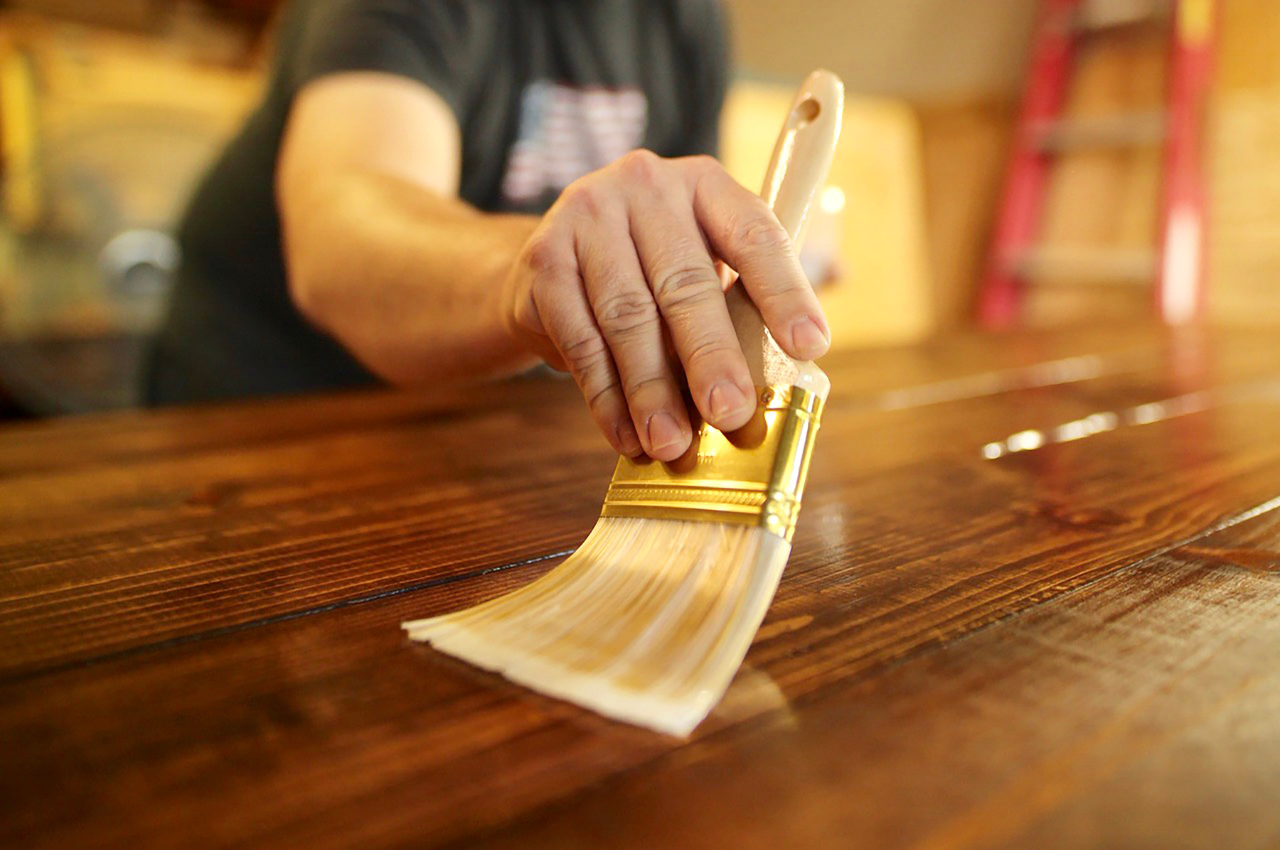
If you’ve been shopping for wood furniture or researching finishes, you’ve likely come across Danish oil and tung oil. The two are more closely related than you might think, but understanding what sets them apart can help you shop for furniture with more confidence and bring home a piece you’ll feel genuinely good about.
What Is Danish Oil?
Let’s cut right to the chase. Danish oil is not a naturally occurring oil. It’s a marketing term that may have emerged when mid-century modern Scandinavian furniture–those warm, gorgeous teak, rosewood, and oak pieces–began making its way around the world. The name was possibly a way of evoking that natural beauty, and it stuck. Today, “Danish oil” is essentially a category name for wood finish rather than a precise formula.
Danish oil is a wood finishing oil, often made of tung oil or polymerized linseed oil, blended with solvents to make it easier to apply, and varnish or resin is often added to boost hardness and water resistance. Because there’s no defined formulation, manufacturers have their own proprietary blends and percentages. A lesser quality Danish oil will primarily have metallic driers containing Volatile Organic Compounds (VOCs) and will only have about 10% pure linseed or tung. Higher-quality formulations do exist, and some brands have developed low-VOC or even solvent-free versions.
If Danish oil is something you’re drawn to, researching the brand thoroughly is always a good first step.
What Danish Oil Does Well
Danish oil has genuine appeal, and it’s easy to see why it’s widely used. It penetrates the wood rather than sitting on top of it, producing a natural, low-sheen satin finish that emphasizes the grain, typically without the plastic look of a surface coating. When applied in coats over wood, Danish oil cures to a durable finish that resists liquids well. It’s also easy to apply, and dries faster than straight oil, usually within a few hours between coats.
Maintenance is straightforward. Like most penetrating oil finishes, it can be refreshed with a light reapplication when surfaces start to look dry, and minor scratches and marks can often be spot-treated without refinishing the entire piece.
Disadvantages of Danish Oil
The formula of Danish oil varies widely from one brand to the next. For anyone who cares about what goes into their home, especially on surfaces where children eat, play, or rest, it’s worth taking a closer look at what’s actually inside the can before buying.
Most Danish oil products are built around the same base oils, tung or linseed, that you can find in their pure form. Knowing this, it’s worth asking whether the added ingredients are truly necessary, or whether a purer form of the same oil might be the better choice for your home.
What Is Tung Oil?
For this post, when we say tung oil, we mean pure tung oil. No added solvents, metallic driers, or synthetic resins. Just the oil.
Tung oil comes from the seeds of the tung tree, and it’s one of the oldest wood finishes in the world. In its raw form, it polymerizes upon contact with air. Oxygen triggers a chemical reaction that gradually hardens into a protective coating deep within the wood fibers. The result is a finish that protects from the inside out, enhancing the wood’s natural grain and warmth rather than concealing it beneath a surface layer.
What Tung Oil Does Well
Pure tung oil is one of the most honest finishes you can put on natural solid wood. It enhances the grain without altering the material’s character, leaves a subtle matte sheen, and over time builds a durable and protective surface. Because it penetrates deeply, it’s also remarkably easy to maintain. Spot repairs blend seamlessly, and a fresh coat applied when the surface looks dry is all it takes to keep things looking their best.
Disadvantages of Tung Oil
Using pure tung oil as a wood finish is a slow process. Each coat can take several days to fully cure, and multiple coats are needed to build adequate protection. It also offers less surface hardness than a varnish-blended product, meaning high-use surfaces are more susceptible to water rings and heat marks over time, though these are often easier to address than you might expect.
One thing worth knowing before you shop: tung oil products on the market are not always in their pure form. It's quite common for products labeled "tung oil" to be blended with varnish, polyurethane, or synthetic solvents, and labels don't always make this clear. If purity is important to you, it's worth researching the brand or reaching out to the manufacturer before buying.
Which Wood Finish Should You Choose?
If you’re a buyer who cares about how furniture is made, where the materials come from, what goes on the surface, and what stays in your home long after the finish has cured, pure tung oil is the more straightforward choice. It’s worth knowing that many Danish oil products are built on the same base oils anyway, so seeking out a piece finished with pure tung oil may mean you’re reaping the benefits that make these finishes worth using in the first place.
At T.Y. Fine Furniture, we use flaxseed oil, the purest form of linseed oil, derived directly from the flax plant. While both oils share the same origin, the distinction matters: over time, 'linseed oil' has become associated with heavily processed, industrially modified products that retain only a fraction of the raw oil. By choosing flaxseed oil in its truest form, we ensure the best possible finish for our solid wood pieces.
Our Organic Wood Finish
Driven by a commitment to honest materials, T.Y. Fine Furniture's founder, Tarik Yousef, partnered with his father, Dr. Ahmed Yousef, a microbiologist at The Ohio State University, to develop their signature Organic Wood Finish. The result is a food-grade formula, completely free from synthetic ingredients.

Caring for furniture finished with our Organic Wood Finish is straightforward. Scratches and small dents can often be addressed with a quick spot treatment. Moreover, routine maintenance is just as easy: simply rub the surface with our Oil Blend to keep it looking its best. The Wood Balm goes a step further. It deeply conditions the wood, builds resistance to ring marks and heat stains, and a light polish can even lift those marks entirely.
If you've never experienced furniture that feels and ages the way wood is meant to, we'd love to show you what that looks like.