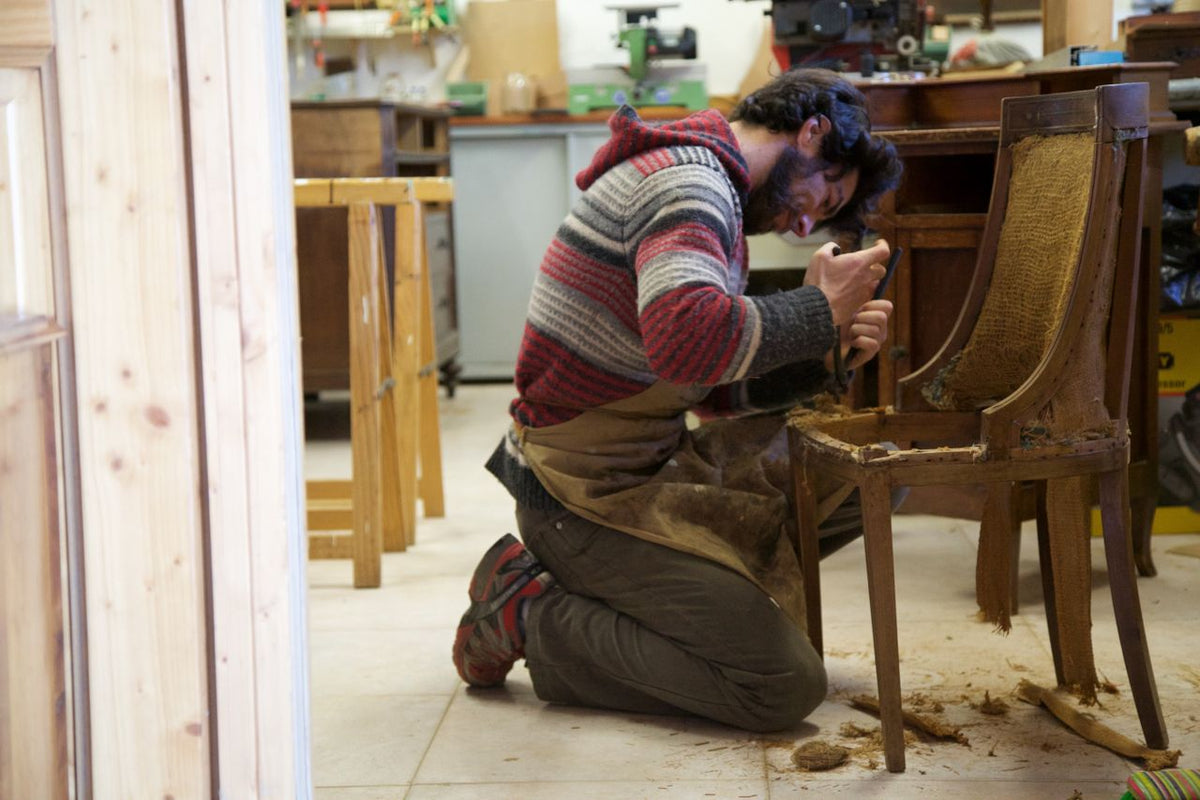
Even well-made furniture can start to show signs of wear over time. A dining chair may start to wobble, a dresser drawer may stop sliding smoothly, or a dining table may pick up a few scratches and heat marks. When that happens, you may find yourself wondering, “Can I repair this furniture myself, or should I start searching for furniture repair in Columbus?”
In this post, we’ll look at the furniture repairs you can reasonably handle at home and the situations where it makes more sense to seek professional help.
Furniture Repair vs. Furniture Restoration
The terms are often used interchangeably, but furniture repair and restoration involve different kinds of work.
Furniture Repair, which can be a DIY fix or a professional one, focuses on a specific problem so the piece is beautiful and usable again. The work is usually limited to the damaged area, for instance, repairing a drawer or touching up a scratch. Furniture Restoration involves more extensive work to bring a vintage or antique piece (or simply a sentimental one) close to its original condition or appearance, while carefully preserving most parts.
When Is Furniture Repair a DIY Job?
Our honest take is that furniture repair can easily be a DIY job when it only affects the surface. Minor scratches, scuffs, and dents can usually be buffed out and spot-refinished at home. Furniture protected with an oil-based wood finish, like ours, is by far the easiest to maintain, requiring only a few basic supplies like fine steel wool, sandpaper, and our Organic Wood Finish.
More complex repairs, discussed in more detail in the next section, should be left to professionals or the furniture makers themselves, especially if the piece is under warranty.
Damage caused by modifying or attempting to fix the furniture is often not covered, so proceed with caution.
You can usually tackle the furniture repair yourself if you're dealing with:
✦ Minor cosmetic damage. As mentioned above, these are surface scratches, shallow dents, or light water rings and heat marks.
✦ Simple, localized issues. Fixing a single loose screw, replacing a basic drawer pull, or oiling a squeaky hinge are simple enough to do.
If you're dealing with minor surface issues, check out our Furniture Repair Guide to bring back that smooth surface. Keeping a Furniture Repair Kit on hand makes it easy to fix these problems as soon as they happen.
When Should You Call a Furniture Repair Professional?
While minor surface wear is easy to handle at home, certain issues require professional restoration with specialized woodworking tools. It’s tempting to attempt the repair yourself since there are many furniture makeover videos to learn from. But sometimes, recognizing you need help early on can save you time and money…and prevent the risk of making the damage worse.
You should consult a professional repair shop or restorer when facing:
✦ Structural Damage. Cracked joints, broken legs, and any damage that causes serious instability can affect the strength and safety of a piece. These repairs often require more than simply tightening a few screws or applying new glue.
✦ Complex Color Matching. Staining, painting, or lacquering is often challenging when the existing color is aged, faded, or uneven. It often requires stripping down the entire piece, which looks easy in furniture makeover videos but may actually be more labor-intensive than you think. A professional can get a closer match without making the repaired area stand out.
✦ Missing or Custom Parts. Spindles, carved trim, and older hardware aren’t always easy to find or replace. A furniture repair professional may be able to make or source a replacement that fits the piece properly.
✦ Antiques and Heirloom Furniture. Valuable and sentimental pieces need extra care because the original parts, perhaps even including the patina, are essential to their historical value. A DIY repair gone wrong can cause lasting damage or reduce its value.
Trust your gut. If you find yourself reaching for your phone and searching for “furniture repair in Columbus,” that may be a good sign that the job is better left to an experienced hand.
Common Issues with Furniture
Furniture eventually shows signs of wear over time, especially on surfaces that see heavy traffic every day. Sometimes, the issues are more structural, with joints loosening from weight and movement.
Here are some common issues you may run into.
✦ Dining Tables and Chairs. Daily use and constant movement can loosen glued joints, making chairs wobbly and tables less stable. Table surfaces can also develop scratches, dents, heat marks, and other signs of wear.
✦ Dressers and Cabinets. Drawers may become stiff, stop sliding smoothly, or fail to close fully. Worn hardware, misaligned drawer slides, or damage to the drawer box itself can all play a part. Cabinet doors can develop similar issues with loose hinges that prevent them from closing properly.
✦ Desks and Office Chairs. Desks can develop loose joints and stiff or worn drawer hardware. Office chairs may have problems with the height or tilt mechanism, broken wheels, or debris caught around the casters that keeps them from rolling freely.
✦ Bed Frames. Over time, weight and movement can cause a bed frame to creak or sag. Joints on the legs may also loosen, making the frame less stable.
Why Furniture Issues Develop
Furniture issues typically stem from two main causes: inferior materials and weak joints. Pieces made from engineered wood, such as medium-density fiberboard (MDF) or particleboard topped with veneers and plastic laminate, are most susceptible to damage.
✦ Material Deteriorates. MDF and particleboard rely on compressed wood dust and synthetic glues. Over time–and especially when exposed to moisture–these boards swell, warp, and lose their ability to hold hardware tightly.
✦ Stripped Fasteners & Loose Hardware. Cheap metal screws mounted into soft particleboard inevitably strip out under regular weight and movement. This leads to sagging cabinet doors, misaligned drawer boxes, and unstable bed legs.
✦ Surface Damage. Heavy, plastic-like polyurethane finishes look pristine initially, but they scratch, dent, and cloud when exposed to water or hot items. Because they seal the wood under a synthetic film, repairing minor damage often requires stripping the entire piece. Veneers and plastic laminate can also peel off eventually, exposing the core material underneath. When this happens, it is often challenging to reverse.
Keep in mind that high-quality solid wood furniture may take decades for it to show signs of structural issues, if at all. Check this post to learn more →
Fix minor scratches, dents, and heat marks. Get our Furniture Repair Kit →
FAQs
How much does furniture repair cost in Columbus?
Minor fixes like securing a loose joint or touching up a finish can start at $100. Complex repairs and restoration can cost anywhere from $300 to over $1,000.
Is it worth repairing old furniture?
In most cases, yes. Older furniture was often constructed with solid hardwood and traditional joinery and is inherently superior to many mass-produced pieces made from engineered wood today.
Can furniture be repaired at home?
In some cases, yes. You can easily buff out minor scratches, dents, and heat marks on unpainted furniture protected by an oil-based finish with fine steel wool and sandpaper. Simple hardware replacements and oiling hinges are simple DIY tasks you can do at home with a few tools.
Does T.Y. Fine Furniture offer furniture repair in Columbus?
We may offer furniture repair for T.Y. Fine Furniture items covered by the warranty. For inquiries, please feel free to contact us.
Featured Photo by josemiguel67bio jose miguel from Pexels