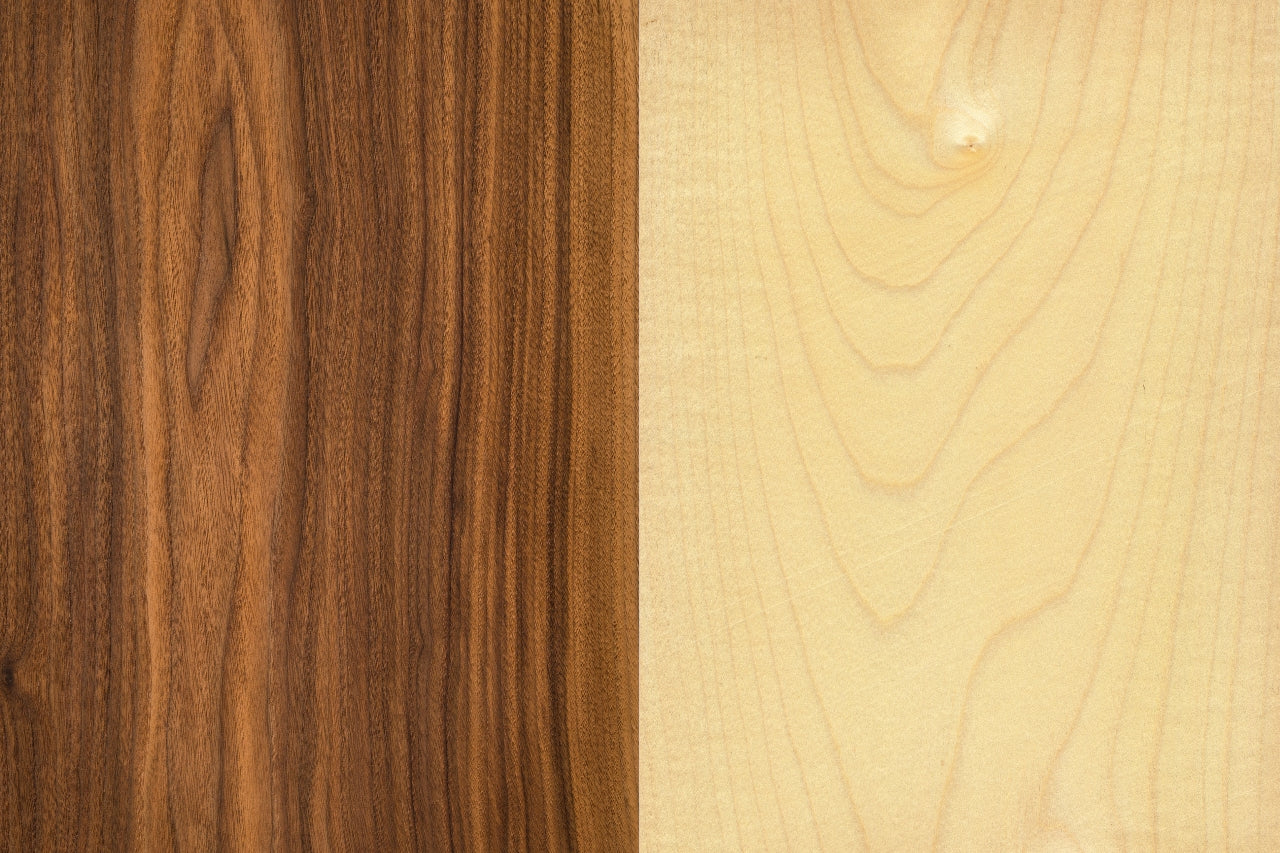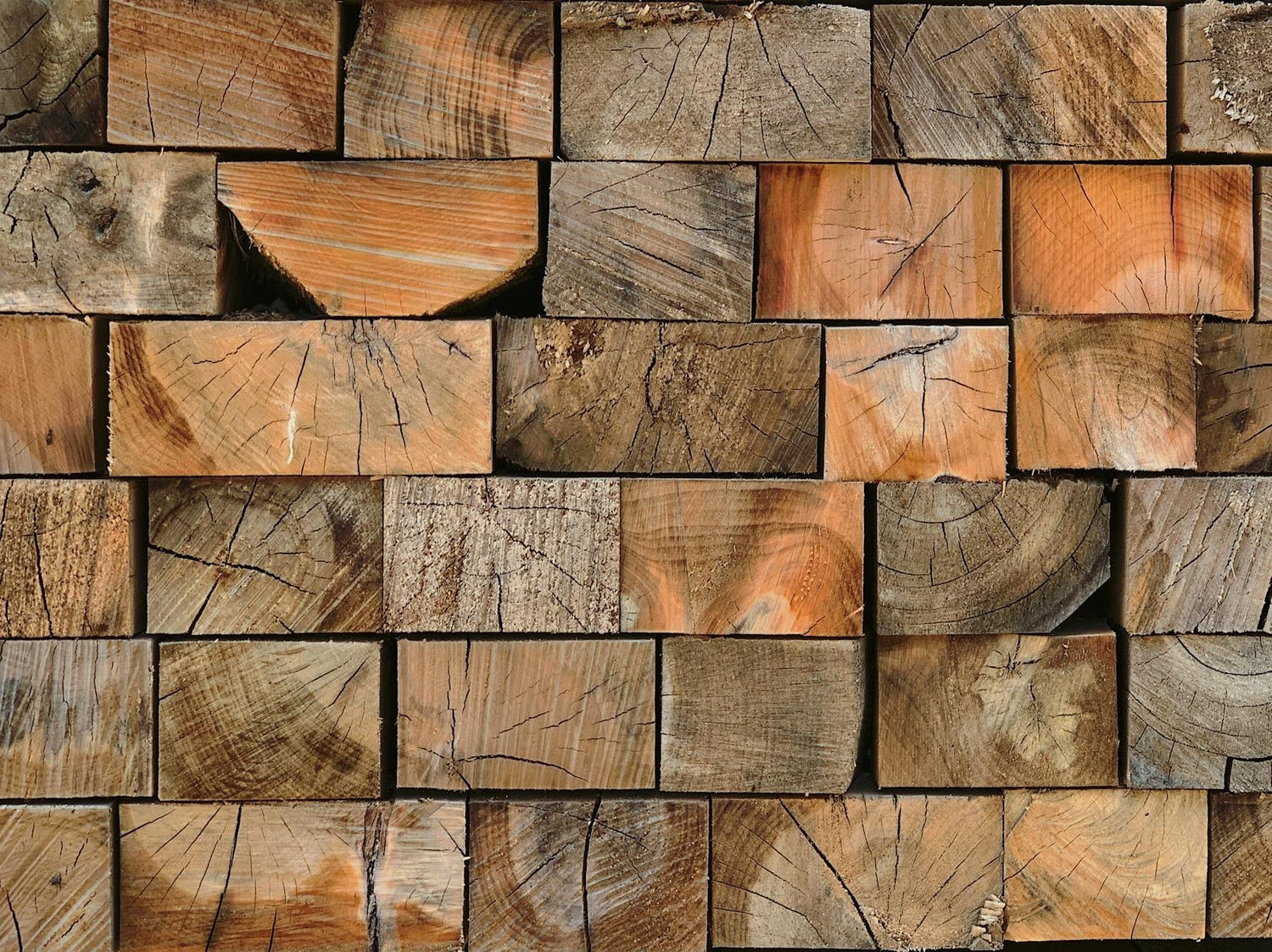
Hardwood and softwood. These two categories cover just about every type of lumber used in furniture, and at first glance, the distinction seems simple enough: hardwoods are hard, softwoods are soft.
However, is that all there is to it, and does it really matter which one your furniture is made of? The short answer is, yes, it does matter quite a bit. The type of wood you choose for wood furniture dictates everything from the durability and lifespan of a piece to how it handles daily wear and tear. But the longer answer is more nuanced, and frankly, more interesting.
In this guide, we’ll break down the features of hardwood and softwood, how they compare, and which option is the best fit for your furniture needs.
What is Hardwood?
What makes hardwood “hardwood”? The term doesn’t simply mean wood that is physically hard or dense, though many hardwoods certainly are. Botanically speaking, hardwoods are deciduous trees, which are angiosperms or flowering plants that typically shed their leaves seasonally. These trees tend to grow slowly, often taking decades to reach maturity, which allows them to develop a more complex cellular structure.
Key to this structure is the presence of vessel elements, specialized cells with large, open pores that transport water and nutrients throughout the tree. These pores partly contribute to the unique grain patterns and textures in hardwoods. Depending on the species, the grain may appear straight and uniform or develop dramatic waves and swirls.
Because hardwood trees grow slowly, their cellular structure is generally tighter and more compact. Such density is one of the defining characteristics associated with the strength, resilience, and longevity for which hardwoods are known. This is why premium furniture makers prefer hardwood, because it can withstand decades of daily use. Moreover, the material ages beautifully, often becoming more attractive as the years go by.
Common characteristics of hardwoods include:
✱ Dense cellular structure
✱ Presence of pores or vessels
✱ Often slower growing
✱ Typically more durable and long-lasting
✱ Frequently chosen for heirloom-quality furniture
✱ Wide variety of grain patterns and natural colors
That said, “hardwood” doesn’t automatically mean every species is hard. Hardness varies quite a bit from species to species. Black walnut, for instance, a prized furniture wood, actually scores softer than hard maple on the Janka hardness scale. And balsa wood, one of the softest woods there is, is technically a hardwood because it comes from a deciduous tree.
What is softwood?
Softwood, on the other hand, comes from coniferous trees, which are mostly evergreen. Conifers are gymnosperms, meaning their seeds are not enclosed in a fruit or flower but are instead exposed, often in cone form.
At the cellular level, softwoods have a simpler structure, without pores or vessels. Instead, they have tracheids, which are long, narrow cells that handle both water transport and structural support simultaneously. This makes the cellular structure more uniform and, typically, less dense than hardwood. These characteristics make softwoods easier to cut and shape, though some species can also be prone to tear-outs during the process.
Because coniferous trees generally grow and mature much faster than hardwood trees, softwoods are widely available and often more affordable. Their faster growth also makes them a major resource for construction lumber, paneling, paper production, and mass-produced furniture.
Common characteristics of softwoods include:
✱ Simpler cellular structure without pores
✱ Usually sourced from evergreen coniferous trees
✱ Faster growing
✱ Often lighter in weight
✱ Generally more affordable
✱ Popular for mass production
Though softwoods are usually lighter and less dense than hardwoods, some species are quite hard and durable. Yew, specifically Taxus baccata, for instance, is a softwood that rivals many hardwood species in terms of density.
Hardwood Lasts Generations
For high-quality, heirloom-quality furniture, hardwood is almost always the preferred choice among craftspeople and serious buyers. A well-made piece of white oak or cherry furniture doesn't just last a lifetime but more, considering that some hardwood pieces have survived for centuries, passed down through families or preserved in museums as historical artifacts. Walk into any antique shop, and you'll quickly notice that most of the furniture that stands the test of time is hardwood.
The reasons come down to a few key factors:
✱ Durability and longevity: Hardwood's dense cellular structure makes it highly resistant to everyday wear and tear. Dents, scratches, and surface damage are less likely to occur, and when they do, hardwood is often easier to sand down and refinish.
✱ Strength: Hardwood can bear significant weight and stress without warping or bowing over time, which is why it's the go-to choice for dining tables, chairs, desks, and bed frames that see heavy daily use.
✱ Workability: While hardwood can be more challenging to work with due to its density, it is often preferred by skilled and experienced craftspeople for its stability, durability, and excellent ability to hold intricate carving and precise joinery details over time.
✱ Aesthetic appeal: The rich grain patterns, warm tones, and natural beauty of hardwoods like walnut and cherry are simply hard to replicate.
Softwood, The Economical Choice
While hardwood is often associated with heirloom-quality furniture, softwood continues to play an important role in furniture making. It's easier to work with, more affordable, and well-suited for high-production manufacturing. A lot of the furniture you'll find in big-box stores today, especially painted pieces, makes excellent use of softwood species.
Here’s why softwoods are popular:
✱ Cost: Softwood trees grow faster, which means lumber is more readily available and significantly more affordable. For budget-conscious buyers or large-scale production furniture, softwood keeps costs manageable.
✱ Workability: Softwood is generally easier to cut, shape, and nail, making it a popular choice for DIY furniture projects and production carpentry. It's also more forgiving for woodworking beginners.
✱ Painted furniture: Softwood is an excellent choice for fully painted furniture. Since paint conceals the natural grain and color of the wood, there’s often little need to invest in premium hardwood species valued primarily for their visual character. Pine furniture, for example, takes paint beautifully and can look wonderfully crisp and clean in a cottage-style kitchen or a child's bedroom.
✱ Lightweight: Softwood furniture is often lighter and easier to move around, which can be a real practical advantage in certain settings.
The trade-off is that softwood is generally more susceptible to dents and scratches (since it's less dense), may not hold screws as firmly over time, and can be more prone to warping in environments with fluctuating humidity.
Hardwood vs Softwood Comparison
| Hardwood | Softwood | |
|---|---|---|
| Tree Type | Deciduous trees | Coniferous evergreen trees |
| Scientific Classification | Angiosperms | Gymnosperms |
| Cellular Structure | Contains pores/vessels | No pores, mainly tracheids |
| Growth Rate | Slower growing | Faster growing |
| Density | Typically denser | Typically lighter |
| Durability | Generally more durable | Generally less durable |
| Cost | Usually more expensive | Usually more affordable |
| Workability | Harder to machine | Easier to cut and shape |
| Best Use | Heirloom furniture, fine woodworking, high-end architectural features | Painted furniture, retail furniture, and structural framework |
| Grain Appearance | Rich, varied grain patterns | Simpler, straighter grain |
Common Hardwoods Used in Fine Furniture
1. Black Cherry (Prunus serotina)
Where it grows: Eastern United States, from southern Canada down through the Appalachians and into the Midwest.
Key traits: Black cherry is beloved for its warm, reddish-brown tones that deepen beautifully with age and exposure to light. It has a fine, straight grain with a smooth texture, making it a joy to work with. Cherry is strong, moderately hard, and takes finishes exceptionally well. It's a favorite for fine dining furniture, cabinets, and decorative pieces.
2. Black Walnut (Juglans nigra)
Where it grows: Native to the central and eastern United States, particularly abundant in the Midwest, Missouri, Indiana, and Ohio.
Key traits: Walnut is one of the most prized furniture woods in North America. Its deep chocolate-brown color, often streaked with purple or gray, gives furniture a rich, sophisticated look that's immediately recognizable. It's strong, moderately hard, and works beautifully with hand tools. Walnut is a top choice for high-end tables, chairs, and statement pieces.
3. Hard Maple (Acer saccharum)
Where it grows: Northeastern United States and southeastern Canada, the same tree that gives us maple syrup.
Key traits: Hard maple is one of the hardest and most dense domestic hardwoods available. It has a light, creamy color with a fine, consistent grain, sometimes displaying the coveted "curly" or "bird's-eye" figure. It's extremely durable and resistant to abrasion, which is why it's the standard choice for butcher blocks, flooring, and furniture that takes heavy use.
4. White Oak (Quercus alba)
Where it grows: Widely distributed across the eastern United States, from Maine to Florida and west to the Great Plains.
Key traits: White oak has been used in American furniture-making for centuries, and for good reason. It features a distinctive ray-fleck pattern when quarter-sawn, along with excellent strength and natural moisture resistance. Its tight grain makes it especially attractive with oil finishes. White oak is the backbone of classic Arts and Crafts and Mission-style furniture.

Choosing the right wood for your home is a tactile experience. Order our solid wood sample pack today to see exactly how cherry, walnut, maple, and white oak look in your room's natural light.
Common Softwoods in North America
1. Eastern White Pine (Pinus strobus)
Where it grows: Northeastern United States and southeastern Canada.
Key traits: Pine is the quintessential softwood for furniture, affordable, widely available, and easy to work with. It has a light, creamy color with warm yellow tones and a visible, open grain. Pine dents more easily than hardwoods, but it's beloved for farmhouse tables, cottage furniture, and painted pieces. Knotty pine, with its rustic character, is particularly popular in casual, country-inspired interiors.
2. Western Red Cedar (Thuja plicata)
Where it grows: Pacific Northwest and British Columbia.
Key traits: Cedar is famous for its aromatic scent and its natural oils that repel insects and resist moisture and rot. It's lightweight and easy to work with, though it can be somewhat brittle. Cedar is commonly used for hope chests, closet linings, outdoor furniture, and decorative storage pieces. Its warm reddish tones and distinctive smell make it a sensory favorite.
3. Sitka Spruce (Picea sitchensis)
Where it grows: Pacific coast of North America, from Alaska down to northern California.
Key traits: Spruce has an excellent strength-to-weight ratio and a fine, even grain. It's most famous as the wood of choice for guitar soundboards and other musical instruments, but it also appears in furniture, particularly lighter-duty pieces and painted applications. Spruce is white to pale yellow in color and takes paint and stain evenly.
4. Douglas Fir (Pseudotsuga menziesii)
Where it grows: Western North America, from British Columbia through the Pacific Northwest and into the Rocky Mountains.
Key traits: Douglas fir is one of the strongest softwoods available, with a density that approaches some hardwoods. It has a straight, pronounced grain, reddish-brown heartwood, and is known for its structural strength. While it's primarily used in construction and framing, it's increasingly popular in contemporary, industrial-style furniture where its bold grain is left on display as a design feature.
***
Both hardwood and softwood have a genuine and valued place in furniture-making. If you're investing in a piece you want to last decades, like a dining table, a bed frame, or a set of chairs that might one day belong to your kids, hardwood is worth the extra cost. If you're furnishing a first apartment, working on a DIY project, or planning to paint your furniture anyway, softwood can deliver excellent results at a fraction of the price.
Understanding the difference (and knowing what to expect) helps you shop smarter, care for your furniture better, and appreciate the craftsmanship behind the pieces you bring into your home.
Featured Photo by Leslie Saunders from Pexels