Caring for handcrafted, solid wood furniture is surprisingly simple. In fact, we’d argue that solid wood is actually low-maintenance. But like anything made to last, it still deserves a little care to look its best for years to come.
When you understand what your furniture needs (and why), the whole thing will eventually feel less like a chore and more like a natural part of caring for something truly precious. So, here’s our guide to help you get started.
Why Solid Wood Is Easy to Care For
One of the biggest misconceptions about solid wood furniture is that it’s high-maintenance. In reality, it’s one of the easiest things to care for in your home.
With mass-produced furniture made of particleboard, laminate, and veneer, the list of things that can go wrong is long. Yes, these mass-produced pieces may look great when new, and some can last for years. However, there is always the risk of veneers getting damaged and peeling, or laminate chipping and fading over time. Particleboard swells when moisture seeps through, and even disintegrates when exposed to high humidity. Once that kind of damage happens, it’s often the beginning of the end for the piece.
Solid wood doesn’t have those vulnerabilities. It’s dense, resilient, and built to handle decades, even generations, of daily use. Minor damage, like scratches and rough spots, can be repaired right at home. And rather than degrading over time, the way engineered materials do, solid wood remains stable for years. Its surface can even develop a patina, a lived-in warmth that tells the story of your home.
Easy-to-Do Routine Care
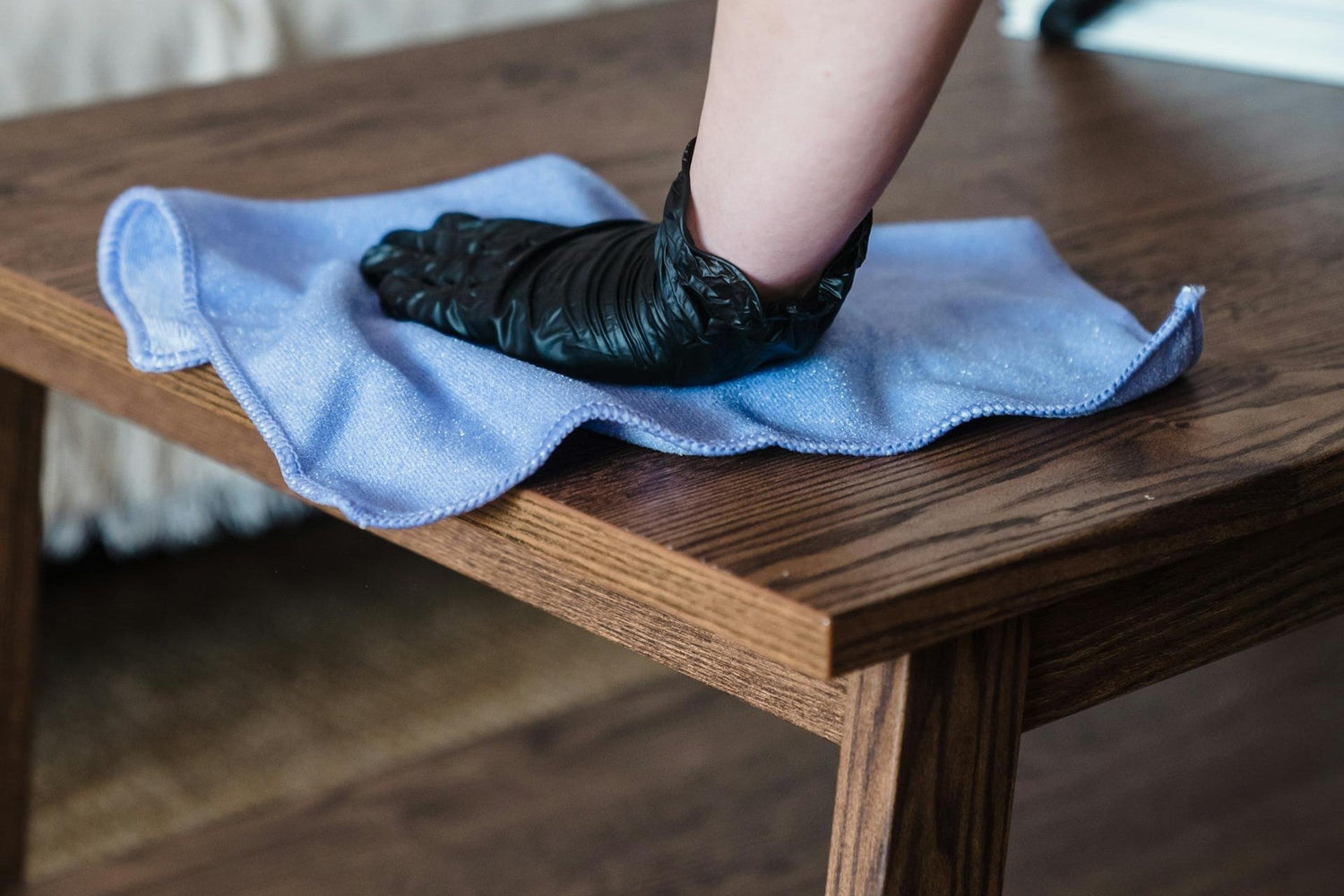
The most important part of wood care is the simplest: keeping it clean. A dry, soft cloth for dusting is your best tool. Microfiber works great, but a clean cotton rag from an old t-shirt (without large prints and buttons, which can scratch) does the job just fine. Dust the whole piece from top to bottom at least once every week—even every other week is fine, depending on traffic—to keep dust build-up from settling into the grain.
When you need a deeper clean, say, there’s sticky residue or dried-on grime, use a damp cloth and, if needed, a drop of mild soap. Wipe gently with the grain and immediately follow up with a dry cloth to remove any lingering moisture. Avoid all-purpose household cleaners, as they often contain harsh chemicals that can eat away at the finish and strip the patina.
For spills, act quickly. Wipe with a dry cloth as soon as they happen. Liquid left to sit can seep into the wood, causing watermarks or stains, so speed matters. To protect your furniture, make it a habit to use coasters and placemats to prevent moisture and heat from coming into direct contact with the wood.
A few simple habits can help your furniture stay beautiful for years:
✱ Dust regularly with a dry, soft cloth
✱ Use a damp cloth with a drop of mild soap for deep cleaning
✱ Lift objects instead of dragging them across the surface
✱ Avoid abrasive cleaners or synthetic sprays
✱ Use coasters and placemats whenever possible
Handle Minor Damage at Home
One of the advantages of solid wood furniture treated with a natural, organic finish, like our signature formula, is how easy it is to repair. Minor scratches, small dents, watermarks, and heat marks can be fixed right at home.
For light scuffs, use a #0000 steel wool or 400-grit sandpaper to gently buff the affected area. For deeper scratches, you may start with a slightly coarser grit, around 220 or 320, and work your way up to 400 for a smoother texture. Always work with the grain of the wood. Once the surface feels even again, apply a light coat of finish, using an oil or wax blend, to restore protection and blend the sanded area. The result is often seamless, and the whole process takes just a few minutes.
For small dents, where the wood fibers have been crushed but not broken, use a damp cloth and a clothes iron. Place a damp cloth over the area and press the iron (with the steam setting turned off) on it, at high heat, for a few seconds. The combination of heat and moisture coaxes the wood fibers to swell back to their original shape.
Minor Repair Checklist:
✱ Light scratches → Buff with a #0000 steel wool or 400-grt sandpaper
✱ Deeper scratches → Start with 220 to 320 grit, then finish with 400 grit
✱ Water and heat marks → Sand as you would scratches
✱ After sanding → Reapply a light coat of wood finish
✱ Small dents → Use a clothes iron at high heat on a damp cloth
Take care of your solid wood furniture. Get our Furniture Repair Kit here.
Refresh the Finish Once or Twice a Year
Even with regular care, your furniture benefits from a refresh of its protective finish about once or twice a year, or after any repair work. Think of it as a seasonal reset that keeps the wood nourished and protected.
However, keep in mind that this particular touch-up tip works best with penetrating oil-based finishes, especially those without resin or polyurethane. Unlike finishes that create a thick, glossy surface layer, oil finishes absorb into the wood grain, making spot repairs and routine maintenance much simpler.
The process is quick. First, clean the entire piece and let it dry if needed. Then, apply a coat of finish liberally with a soft cloth, following the direction of the wood grain. Let it soak in for about 30 minutes, then wipe off any excess with a clean cloth. If you want an extra-smooth feel, you can buff lightly with steel wool after the finish has cured for 24 hours. That's really the whole process. It takes only about 10 minutes of care for another several months of protection.
One important safety note: if you're using an oil-based finish, don't crumple or bunch up the used rags. An oil-based finish on used rags might combust. To prevent this, spread used rags flat on a non-combustible surface like concrete to dry before disposal.
Furniture Refresh Steps
✱ Refresh the finish 1 or 2 times a year
✱ Clean furniture with a dry cloth, damp if needed
✱ Ensure the piece is completely dry
✱ Apply the finish with a dry cloth
✱ Let it soak for at least 30 minutes
✱ Wipe away excess finish with a dry cloth
✱ Optional: Buff after 24 hours for extra smoothness
✱ Important: Spread oil-soaked rags flat to dry on concrete before disposal
Learn how to take care of your fine furniture. Check out our guide.
When to Call in a Professional
For most of the everyday wear that solid wood furniture encounters, home care is more than enough. But for more complex damages, such as deep gouges, large structural cracks, or warping from prolonged moisture exposure, it's worth consulting a professional furniture restorer. The same goes for pieces with historical or high sentimental value. A skilled restorer can address damage that goes beyond surface-level repair while preserving the integrity and character of the piece. There's no shame in knowing when a job calls for expert hands.
***
Solid wood furniture is a worthwhile investment that can last you a lifetime. A dining table or dresser made from high-quality hardwood can endure for decades, or even generations, becoming a cherished part of your home's story. All it requires in return is regular dusting, prompt attention to spills, and an occasional refresh of its finish. That sounds like a great deal!