If you've ever spent an afternoon down a Pinterest rabbit hole or scrolled through beautiful home tours online, chances are you've encountered two styles that keep popping up: minimalist design and mid-century modern. Both are timeless. Both are endlessly aspirational. And both can leave you wondering, which one is actually right for my home?
In this post, we’ll break down the key characteristics of minimalist and mid-century modern design, explore where they overlap and how they differ, to help you decide which aesthetic works best for your home and lifestyle.
Understanding Minimalism
When we hear the word “minimalist,” some of us picture a white room with almost nothing in it, maybe just a lone chair and a table with a potted succulent sitting in the middle. Although some of you might argue this is not what minimalism is about, well, this could be one interpretation of it, and it’s not entirely wrong.
Minimalism emerged in the 20th century as a gradual response to the ornate excess of earlier decades. The lavish decorations seen during the Victorian and Gilded Age periods evolved into something more streamlined and modern (though still relatively elaborate), as observed in Art Nouveau and Art Deco, eventually leading to designs that are far more simplified.
Instead of focusing on intricate ornamentation, minimalist design emphasizes reducing things to their essential form. This meant stripping away unnecessary details and allowing the viewer to focus on the object itself. In interiors, this meant emphasizing functionality and featuring clean lines, simple forms, and neutral colors throughout. And minimalist furniture, as you can imagine, is furniture pared down to basics to mainly serve its purpose, sleek and uncomplicated.
Minimalism Today
Minimalism in the 21st century has grown into a lifestyle movement. In the context of lived spaces, the emphasis has shifted towards intentional restraint and making room for what truly matters. White walls, sparse furniture, and a monochromatic palette are just one way to express it. And yes, that can read as cold and impersonal, but what the space looks like is entirely up to the one who lives in it.
A common approach in contemporary minimalist interiors is to introduce warmth through natural materials, like furniture made entirely of solid wood, pieces that celebrate the honest beauty. This may be because many modern interpretations of minimalism are influenced by Japanese design, through concepts like wabi-sabi, which is rooted in Zen Buddhism, which is about, although simplified, appreciation of simplicity, imperfection, and natural beauty.

Horizon Platform Bed and Side Table in Cherry

Essentials "Round" Side Table and Coffee Table in Walnut
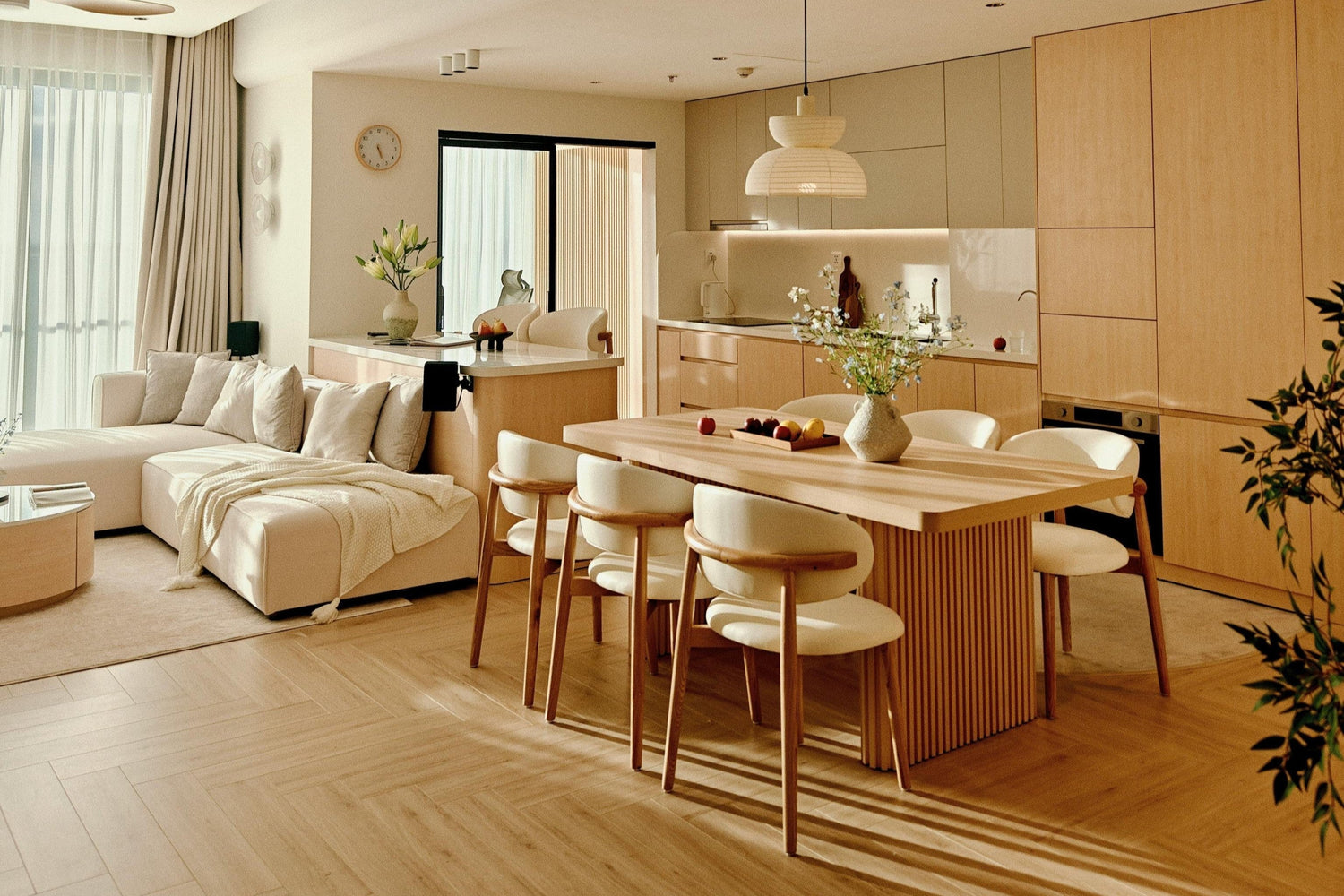
Rather than chasing deliberate, extreme austerity that minimalism can sometimes seem to demand, a warmer, more intentional interpretation celebrates calmness and authenticity. The goal is to create a visually breathable home with pockets of negative space to make it feel open. It can be expressed through a streamlined home with a soft-neutral palette. The texture and color of objects made from natural materials, such as a natural hardwood dining table, a handmade ceramic vase, or linen upholstery, add contrast.
A minimalist home typically features:
✤ Clean lines and organic forms
✤ Uncluttered layout
✤ A restrained color palette
✤ Simple and functional furniture
✤ Layered texture and accents from natural materials
✤ Meaningful objects
For design inspiration, please check our Style Guide.
Mid-Century Modern Explained
Mid-century modern design and minimalism developed from a shared root: the transition from the extravagance and opulence of earlier design movements towards a focus on simplicity and function.
As technology advanced in the mid-20th century, so did the creative possibilities in building furniture and decor. Molded plywood, fiberglass, vinyl, and plastic resin became exciting new materials, shaped into functional pieces with geometric and organic forms. In the United States, especially, mid-century modern furniture and decor carried an almost futuristic quality. Influenced partly by aerospace and military engineering, the style took on a lighter, sleeker, and more innovative look.
Yet, for all its forward-looking energy, there was a strong pull toward nature, and not just through organic shapes. Manmade materials were often juxtaposed with natural ones, and interiors, especially those influenced by Scandinavian design, placed a strong emphasis on natural light and organic warmth.
Although MCM design generally exercises restraint in the modern way, introducing accents through color is a defining trait. Bold colors such as burnt orange, teal, mustard yellow, and avocado green often appear in patterned fabrics, tiling, and art, making spaces appear more vibrant.
A mid-century modern home typically features:
✤ Clean and geometric lines
✤ Simple, organic shapes
✤ Hint of retro-futuristic details
✤ Minimal ornamentation
✤ Functional furniture
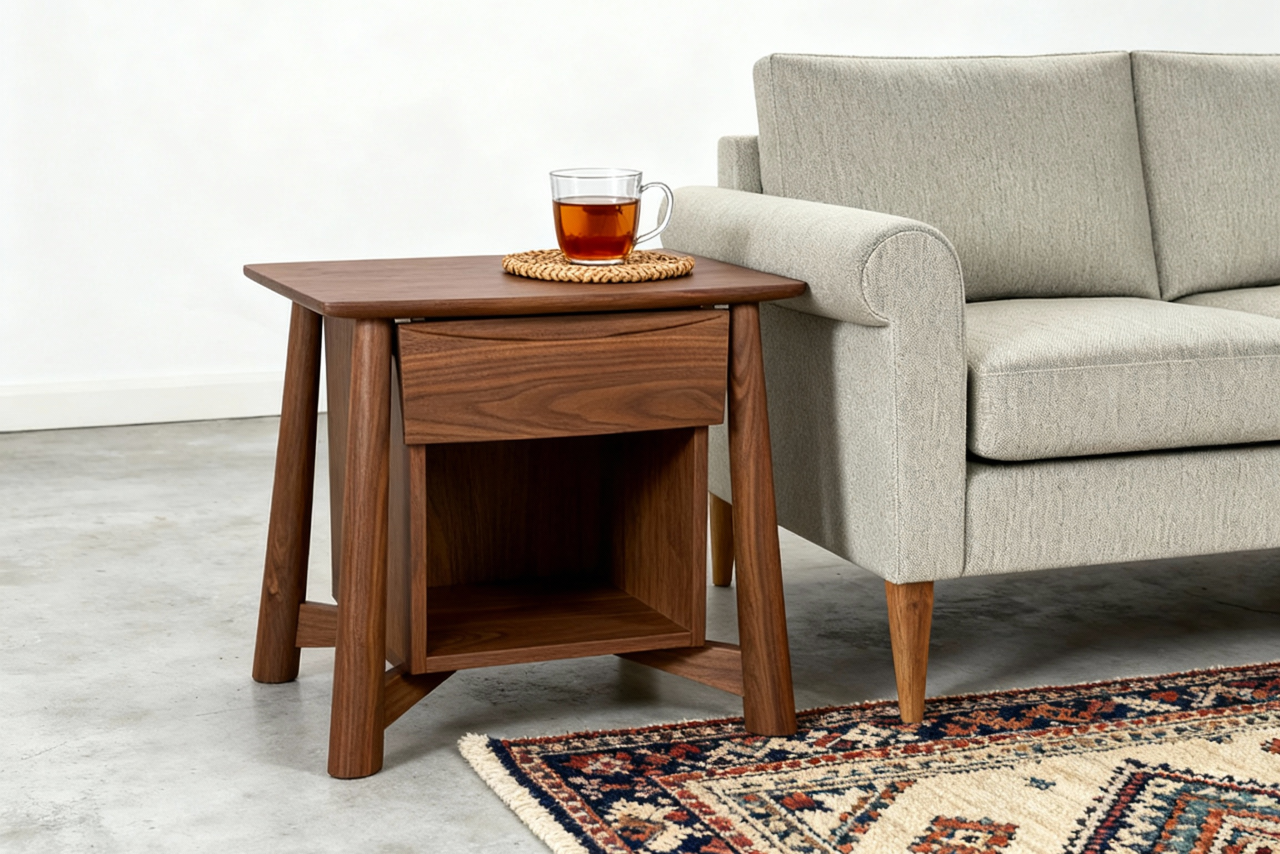
✤ Tapered legs and elevated silhouettes
✤ Bold accents and pops of color

What Minimalist and Mid-Century Modern Have in Common
Although minimalist and mid-century modern appear quite different aesthetically, they share many foundational principles, especially when it comes to furniture.
1. Function is a priority. In both minimalist and mid-century modern spaces, furniture earns its place by serving a purpose—not simply by filling empty space. A dining chair should be comfortable. A coffee table should feel useful. Storage should work efficiently.
2. Both favor clean lines. You won't find excessive carvings, ornate detailing, or heavy embellishment in either aesthetic. Instead, both celebrate straight lines, soft curves, balanced proportions, and simplicity of form.
3. Using natural materials is important. Natural materials add warmth and authenticity, preventing spaces from feeling cold, manufactured, or overly modern. Solid wood furniture, in particular, fits beautifully into both aesthetics because it brings character in a way that no synthetic material can quite replicate.
Minimalist vs Mid-Century Modern: Key Differences
1. Color Palette. Minimalist design leans hard into neutral palettes, such as creamy whites, warm grays, soft beiges, and the occasional muted tone. The color story is quiet and cohesive. Mid-century modern, on the other hand, embraces bold, saturated color accents like burnt orange, mustard yellow, olive green, and teal, with enthusiasm.
2. Pattern. Minimalism tends to keep surfaces clean and largely unadorned. MCM loves a geometric print, a textured wool throw, or a graphic tile pattern. There's a playfulness to mid-century modern that minimalism deliberately restrains.
3. Decor. Detail is another point of difference. A minimalist space has more restraint in adding decorative accents for their own sake. Mid-century modern is more open to objects that exist primarily because they're beautiful.
4. Serenity vs Warmth. This might be the most subjective distinction, but it can be observed. Minimalist spaces often feel serene and almost meditative. Mid-century modern spaces tend to feel warm, energetic, and a little nostalgic.
How to Blend Both Styles Successfully
Start with Functional Furniture
This is where the two styles meet most naturally. Choose furniture that has clean, simple lines and prioritizes function, like MCM-inspired pieces with minimal decor. A sleek walnut credenza, a low-profile sofa with tapered legs, or an Eames-style lounge chair are all pieces that feel at home in both minimalist and mid-century modern contexts. Invest in quality here. These are the pieces that will anchor your space for years.
Balance Your Color Palette
Use minimalism's neutral palette as your base layer–which includes your walls, floors, and major upholstered pieces–to create a calm and cohesive backdrop. Then, bring in mid-century modern warmth and personality through your accent pieces: a textured burnt-orange throw, a mustard-yellow vase, and patterned rugs. The neutrals keep things grounded; the accents give the space life.
Choose Natural Materials
Both styles love natural materials, so lean into this common ground. Wood (especially walnut, cherry, or oak with visible grain) works beautifully in both aesthetics. So do leather, linen, and wool. Avoid heavily synthetic or overly glossy finishes if you're going for a blend, as natural textures unify the two styles effortlessly.
Let Mid-Century Modern Be Your Statement
Perhaps the most fun approach: use minimalism as the canvas and mid-century modern as the art. A spare, neutral room becomes infinitely more interesting with a single sculptural MCM chair in a warm mustard, a vintage-inspired arc floor lamp, or a graphic mid-century print on an otherwise empty wall. The juxtaposition of bold MCM shapes against a minimalist backdrop is where this combination really comes alive, as each element gets the space to breathe and be noticed.
***
Minimalism and mid-century modern aren't opposites. They're design philosophies that, at their core, share a commitment to purposeful, beautiful, functional living. Whether you go full minimalist, embrace the warmth of MCM, or find your own blend of the two, the guiding principle is the same: choose things you love, choose things that work, and give them room to matter.
Your home should feel like you, and with these two styles as your toolkit, that's a very good place to start.
Featured Photo by Trần Tuấn Anh from Pexels