If you’ve ever searched for living room furniture and found yourself clicking between listings labeled “nightstand,” “side table,” and “end table,” wondering if they’re all the same thing with different names, you’re not alone.
The truth is, these three furniture pieces are closely related, and we definitely understand why some people often use the term interchangeably. But there are distinctions between them, however subtle, and knowing what sets each one apart can help you make a better choice for your space. Let’s break it down.
What is a Nightstand?
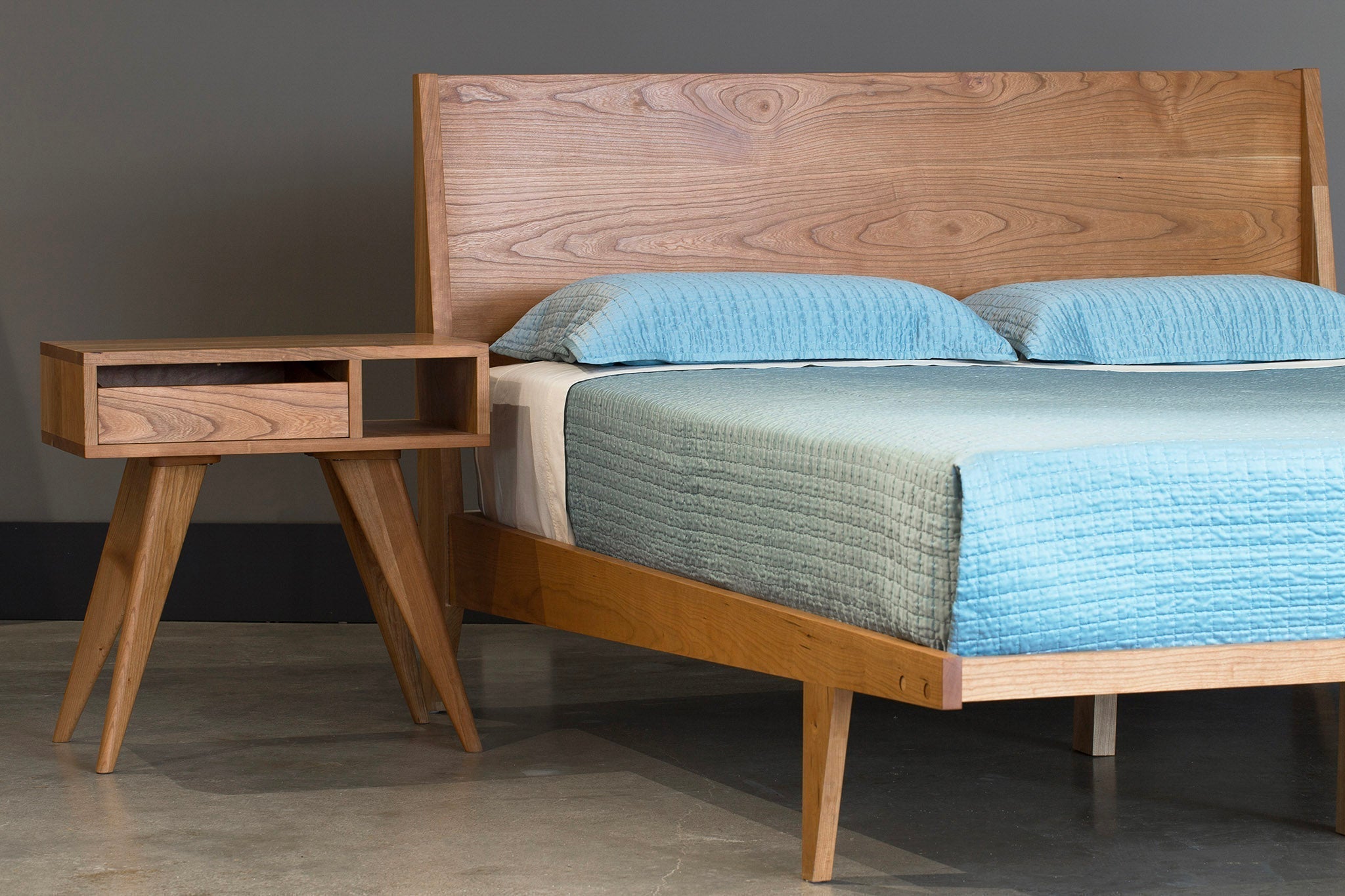
A nightstand is a small table designed specifically for the bedroom, typically placed beside the bed. Its main purpose is to keep things–which could be anything like a lamp, book, phone, or glass of water–within arm’s reach. This is why nightstands are often designed with storage in mind, featuring drawers and shelves to make items accessible yet neatly hidden when not in use.
Because nightstands flank the bed, they ideally stand at mattress height, at least, which for most standard bed frames lands somewhere between 24 and 28 inches tall.
From a design perspective, nightstands help anchor the bed as the centerpiece. Their style can vary from simple and minimal to more detailed and traditional. However they look, their function remains consistent: easy access to bedside storage.
✱ Placed beside a bed
✱ Features a drawer or shelf for storage
✱ Sized to balance with bed and mattress height
✱ Designed to store and organize essentials
✱ Stands typically between 24 and 28 inches
What is an End Table?
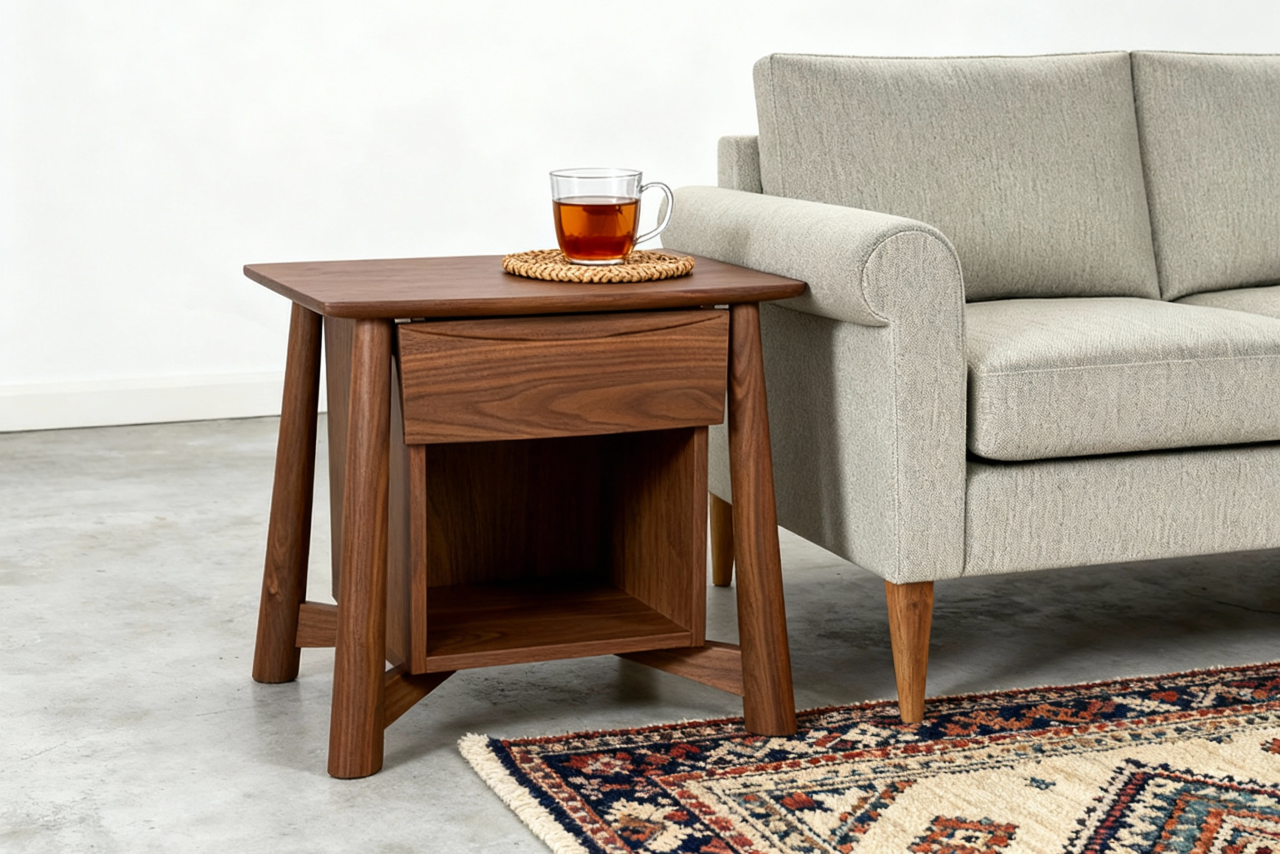
An end table is often associated with the living room. It’s placed at the “end” of the sofa or sectional, hence the name, right where the arm meets the open space. This piece typically sits at or slightly below the sofa arm’s height, around 22 to 28 inches tall.
Like side tables, end tables come in a wide range of styles, but their proportions are balanced with sofa-side use. They may or may not include storage; some feature drawers and shelves, while others are simply surface-focused. What defines them more than anything is their placement and how they work with the seating around them.
✱ Typically used in living rooms
✱ Placed beside or at the end of a sofa
✱ Sized to balance seating height
✱ May include storage
✱ Helps anchor and complete the seating area
What Is a Side Table?
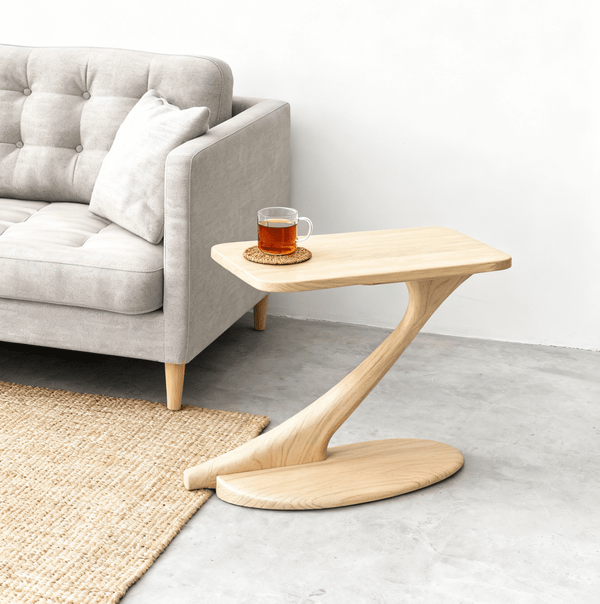
A side table. Think of it as the catch-all term for any small table designed to sit beside a larger piece of furniture, such as the sofa, an armchair, or, yes, a bed—anything that can use a functional sidekick. In this sense, you can consider a nightstand and an end table as types of side tables.
Because side tables aren’t tied to a specific use, as nightstands and end tables are, they vary widely in height, shape, and style. And they’re not always designed with storage in mind. Their purpose is less about organization and more about visual balance, though they can just as easily serve as purely accent pieces or functional, everyday furniture.

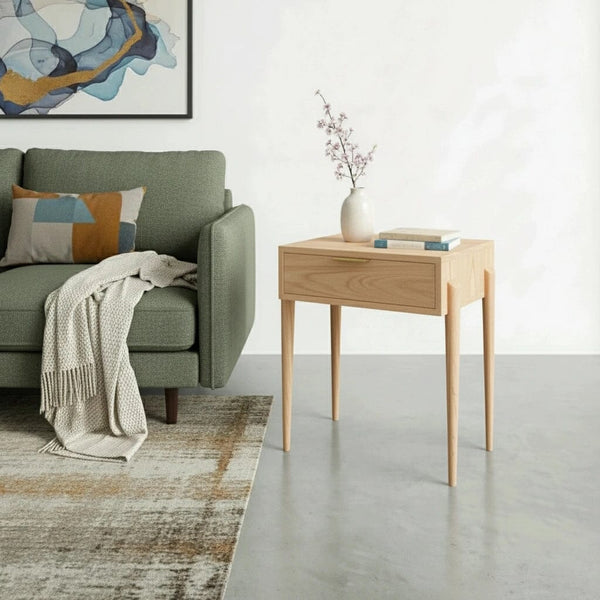
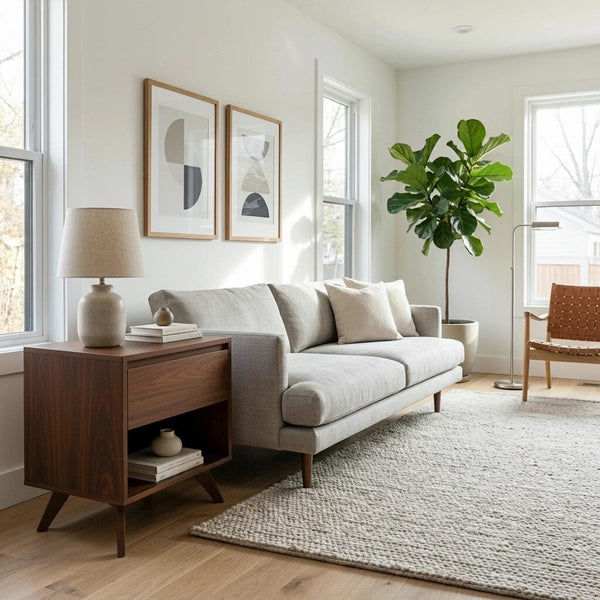


Nightstand vs Side Table vs End Table
These three pieces are more similar than they are different, and in practice, the boundaries between them are truly blurry. A side table can function as a nightstand if it’s the right height. An end table can serve as a side table in almost any context. And a nightstand, removed from the bedroom, is really just a side table with storage.
The distinction between nightstands, side tables, and end tables is often more about where you put them than how they are built.
Quick Comparison
|
Feature |
Nightstand |
Side Table |
End Table |
|
Primary Use |
Bedroom, beside the bed |
Multi-purpose, any room |
Living room, beside the sofa or chair |
|
Function |
Functional surface with storage + accessibility |
Accent, functional surface |
Functional surface with storage + accessibility |
|
Storage |
Often includes drawers or shelves |
Optional |
May include drawers or shelves |
|
Height |
Matches the mattress height |
Varies |
Matches sofa or chair height |
***
Understanding the differences between nightstands, side tables, and end tables can help you narrow down your search as you look for pieces to furnish your home. Just remember, the best piece is the one that fits your space, suits your style, and functions the way you need it to. If a nightstand works beautifully beside your sofa, use it there. If you’d rather have an accent piece for a nightstand, that works too. When it comes to choosing any one of these three pieces, there’s no need to get too caught up with the labels.