Finding a good non-toxic mattress is one of the most meaningful investments you can make for your health and well-being. While most shopping guides focus solely on finding the right firmness or relieving pressure points, optimal sleep quality involves much more. It relies just as heavily on the quality of the materials in your bed.
If you truly want a mattress for healthy rest, beyond body support, choosing natural and organic components is the next step. This guide walks you through what to look for in clean mattress construction, materials to avoid, and trustworthy organic certifications so you can choose the best non-toxic mattress for you.
What Makes a Mattress Toxic?
Many conventional mattresses are built with synthetic foams, adhesives, flame retardants, and waterproofing agents that contain Volatile Organic Compounds (VOCs). These chemicals off-gas when you remove the seal from a new mattress. Emissions are typically strongest in the first weeks after unboxing, best distinguished by that “new mattress smell.” However, low-level off-gassing can continue for much longer as the mattress components age and break down.
Some of the most dangerous toxins in mattresses are often found in adhesives that bond synthetic foams and fabric layers. These include formaldehyde, benzene, toluene, dichloromethane, and acetaldehyde. Initial exposure to these chemicals may cause sneezing and coughing. But higher concentrations of exposure can lead to more serious health issues, including cancer, kidney and liver damage, and chronic respiratory diseases.
Types of Non-Toxic Mattress Construction
1. All-Latex Mattress
These mattresses are completely built from natural latex foam and covered in organic fabric. They don’t have metal springs and contain zero synthetic foam. Derived from the sap of rubber trees, natural latex is inherently durable and has some resistance to mites and mold. The absence of synthetic foams and adhesives reduces (in the best case, eliminates) the risk of harmful chemical off-gassing.
Dunlop Latex. To make it, the liquid rubber sap is mechanically whipped into a foam, poured into a mold, and baked. Because gravity naturally pulls heavier particles to the bottom, Dunlop latex develops a denser and firmer base. The simpler, more traditional process used to produce Dunlop makes it easier for manufacturers to obtain GOLS (Global Organic Latex Standard) certification, ensuring the material has 95% or more organic raw latex.
Talalay Latex. The process starts by whipping the rubber sap into a foam, but the mold is only filled partially. It is then vacuum-sealed to allow the latex to expand throughout the mold. Next, the foam is flash-frozen to lock the shape before it is baked. The extra steps in the process help create a more consistent and softer feel in the latex. Due to a small percentage of freezing agents added to the material, the Talalay latex may not receive GOLS organic status. However, it can still be verified as non-toxic through OEKO-TEX Standard 100.
Many premium all-latex mattresses blend both by using dense Dunlop at the base for firmer support and a softer Talalay layer on top for pressure relief.
2. Wool and Innerspring Mattress
The more traditional wool and spring construction utilizes zero synthetic foam and latex whatsoever, relying strictly on natural fiber padding and innersprings. These mattresses often pair wrapped steel coils with dense batting made of wool or alpaca and organic cotton. The wool serves as a natural fire barrier, which eliminates the need for chemical flame retardants, while also providing exceptional moisture-wicking properties and breathability.
3. Hybrid Latex Mattress
A non-toxic hybrid latex mattress combines the contouring pressure relief of natural latex with the targeted spinal support provided by steel pocketed coils. The mattress features steel coils wrapped in food-grade or organic fabric pockets, topped with a comfort layer of natural latex foam. The inner coil system allows maximum airflow through the bed, making this construction excellent for edge support and temperature regulation.
How About Bio-Foam, Is It Safe?
For sleepers who prefer the familiar contouring feel of standard memory foam, bio-foam swaps out a portion of petroleum-derived components for plant-based alternatives, such as soybean, corn, and castor. Low-VOC water-based adhesives may also be used instead.
However, bio-foam is largely synthetic, with only about 5% to 20% of the material being plant-based. While not entirely organic or non-toxic, it may have lower VOC emissions compared to fully synthetic foam.
Mattress Certifications Worth Knowing
Third-party certifications provide peace of mind that the materials in your mattress meet strict environmental and purity standards:
GOTS (Global Organic Textile Standard), the world’s leading standard for organic textiles, ensures that cotton and wool components are organically grown and processed responsibly.
GOLS (Global Organic Latex Standard) verifies that the latex core contains at least 95% certified organic raw material.
GREENGUARD Gold / MADE SAFE are certifications validating that the finished product has undergone rigorous testing for low indoor chemical emissions.
OEKO-TEX STANDARD 100 is a label for textiles tested for harmful substances. It sets the benchmark for textile safety, from yarn to finished product.
Related Reading:What is Non-Toxic Furniture? →
The Ideal Firmness Level
Finding the right mattress firmness isn’t just about personal preference. It also depends on your body weight, sleeping position, and specific comfort needs. The ideal firmness cushions pressure points at your hips and shoulders while supporting your back in a neutral position.
Soft: Ideal for side sleepers and those who shift positions. A plush surface contours closely to your hips and shoulders, keeping the back naturally aligned.
Medium Soft: Best for active sleepers who want responsive cushioning. It molds to your body’s shape while offering slightly more lifting support than a soft model.
Medium Firm: Great for back sleepers, stomach sleepers, or anyone seeking added lower-back support. It provides an optimal balance of surface pressure relief and back stability.
Firm: Ideal for stomach sleepers, individuals over 200 lbs (95 kg), or anyone needing maximum back support. A firm mattress prevents deep sinking, keeping your spine in a neutral position.

Naturepedic Serenade Organic Latex Hybrid Mattress

Naturepedic Concerto Luxury Organic Pillow Top Mattress
Mattress Brands with Non-Toxic and Organic Components
While researching non-toxic mattresses online is a great starting point, hardly anything replaces experiencing a mattress in person before committing to invest in it. At our furniture stores in Columbus, Ohio, we have a display of mattresses from reputable, eco-conscious brands, Naturepedic and Berkeley Ergonomics.
Naturepedic. A pioneer in organic sleep design, Naturepedic replaces synthetic foams and chemical barriers with GOTS- and GOLS-certified organic cotton, wool, and latex. Their modular designs allow you to customize firmness levels on each side of the bed.
Berkeley Ergonomics. Combining European ergonomic design with natural materials, Berkeley Ergonomics uses flexible pocketed coils, natural Talalay latex, and pure organic wool covers. Their focus is on tailored spinal alignment and pressure relief through clean, durable craftsmanship.
Visiting our showroom allows you to compare the feel of different mattress models and firmness levels, while our team guides you in finding your ideal mattress configuration. Feel free to reach out or stop by at any of our two showrooms in Columbus, Ohio.
Non-Toxic Mattress FAQs
Do organic mattresses really make a difference?
Yes, organic components in a mattress make a difference in its quality and breathability. While the organic stamp itself is nice, the real value is in replacing synthetic, toxic materials with natural latex, wool, and organic cotton. They naturally feel cooler as you sleep, manage moisture better, and hold up for years longer than cheap synthetic materials.
How do I know if my mattress is toxic?
The most obvious sign is the harsh chemical odor released once the seal is undone. However, some harmful VOCs are almost odorless, especially those that continue to off-gas as the material ages and breaks down.
The reliable approach to avoiding toxic mattresses is knowing what to look for before you buy. For instance, real wool or wool blends instead of synthetic fabric with flame retardants, natural latex instead of polyurethane foam, and certifications like GOTS or GOLS backing up the features. Sticking with established, reputable brands also lowers your odds significantly, since they tend to be transparent about exactly what's inside.
Do foam mattresses have harmful chemicals?
Yes, conventional foam mattresses often contain harmful chemicals. Foam is usually made from polyurethane-based materials that tend to off-gas VOCs in your bedroom. To meet fire-safety standards, many foam mattresses also rely on chemical fire retardants. As the foam ages, these synthetic layers break down, all while continuing to off-gas. Mattress protectors and sheets can only shield so much.
How often should you replace a mattress?
Most mattresses need replacing every 7 to 10 years, though that range depends heavily on materials and construction quality. Conventional foam tends to break down and sag faster, while natural latex and well-built hybrid mattresses often hold their shape and support well past that window. If you're noticing sagging, waking up with new aches, or your mattress is older than a decade, it's worth evaluating.
Where can I find a non-toxic mattress in Columbus, Ohio?
T.Y. Fine Furniture is worth checking out if you’re looking for non-toxic mattresses in Columbus, Ohio. We carry mattress brands known for organic components and genuinely good craftsmanship, such as Naturepedic and Berkeley Ergonomics. We have two showrooms in the city where you can see and test the mattresses firsthand.
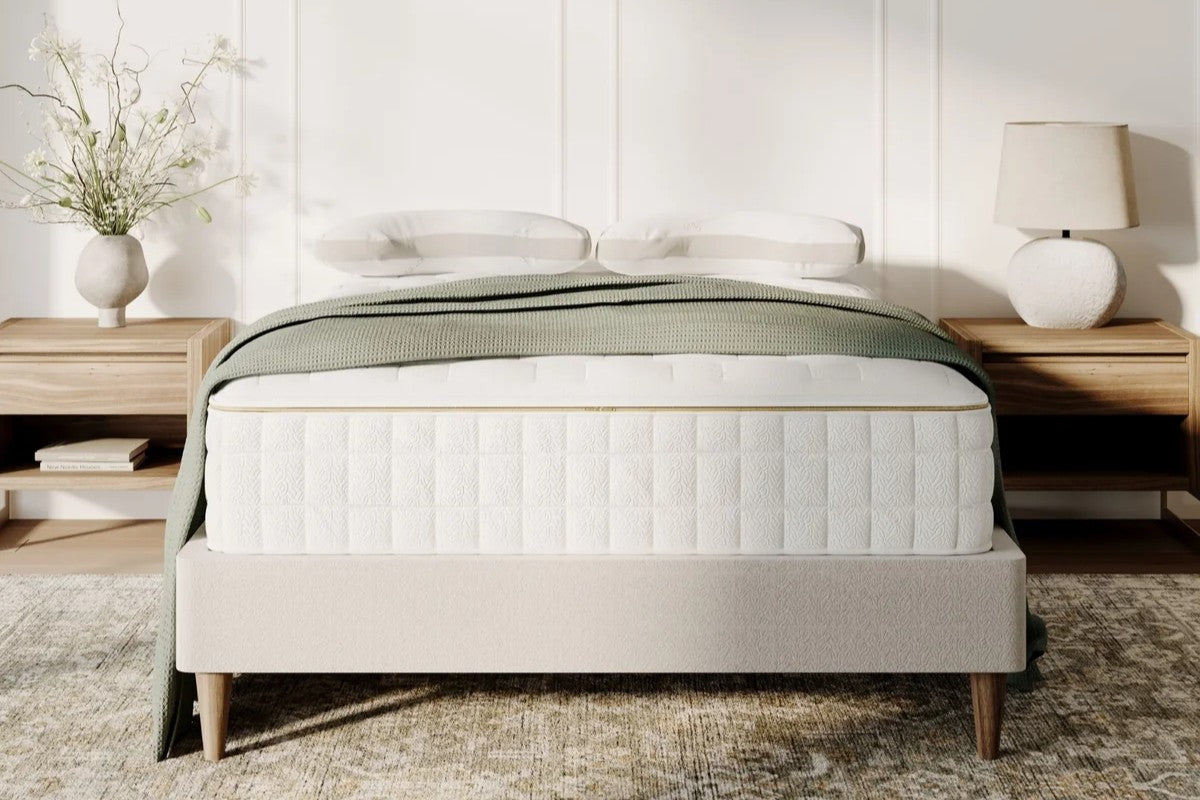
Featured Photo: Naturepedic EOS Classic Customizable Organic Mattress