Is handmade furniture worth the price? It’s the question many shoppers ask when they see the price tag on a handcrafted piece in a showroom. And it’s fair to ask.
But the same question is worth asking from the other end as well. Is the lower price of mass-produced furniture actually worth it?
The reality is that handmade and mass-produced furniture are built around very different priorities, and the price alone doesn’t tell the whole story. To determine whether handmade furniture or mass-produced options are worth the investment, it helps to look beyond the initial cost. Consider what you’re actually paying for and what that purchase may end up costing you in the years to come.
What You’re Paying for in Handmade Furniture
When you buy handmade furniture, your investment goes into quality that can only be achieved through human hands. You’re paying for the level of craftsmanship and meticulous attention to detail that’s difficult to replicate in a factory or assembly line.
Handmade furniture feels authentic. The piece is likely worked on by the same person, from cutting the rough lumber to finishing. In a world that’s increasingly automated and impersonal, it’s a joy to fill your home with things built with care.
Another thing you’re paying for is the material. High-quality, handmade furniture is typically built with hardwood, natural textiles, and special finishes—premium materials that are at par with the artistic quality invested in crafting such a piece.
The result is often furniture with:
✤ Stronger, more stable construction
✤ Tighter joinery
✤ Greater structural integrity
✤ A distinctive character that cannot be mass-produced
Built by Hand. Finished Without Compromise.
All of this is true of what we do at T.Y. Fine Furniture. While we use modern tools for heavy tasks like cutting and sanding rough lumber, much of the process is done by a single craftsman. The joints, like mortise and tenon and dovetail, are shaped entirely by hand. These techniques demand time and precision, but the reward is furniture that remains strong and stable for generations.
The hardwoods we use are locally sourced from sustainably managed forests in Ohio, often from naturally fallen trees such as white oak, walnut, cherry, and hard maple, all within 200 miles of our shop.
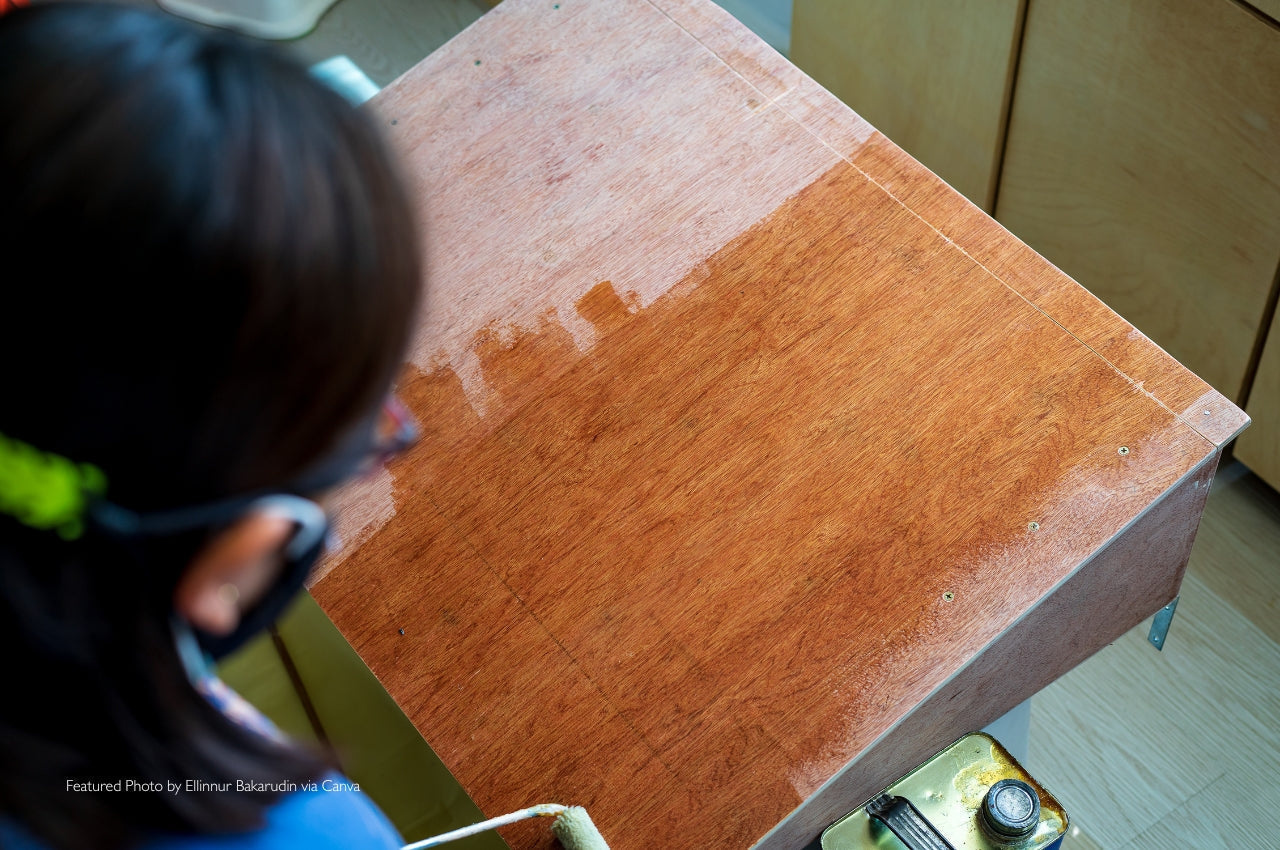
What makes our handmade furniture truly stand out is the wood finish we use. Our signature Organic Wood Finish is a zero-VOC, food-grade blend made entirely from certified organic oils and unbleached beeswax. Rather than masking the character of the wood beneath a thick, glossy coating, our finish enhances the natural wood grain with a soft, satin sheen of protection.
What You’re Paying for in Mass-Produced Furniture
What you’re paying for with mass-produced furniture, essentially, is speed and accessibility, and of course, availability. For instance, if you’re planning to furnish a bedroom, you can quickly complete that space with mass-produced items. Many pieces can be ordered online and delivered within a week, or even within the same day if you choose to pick them up from the store.
For many homeowners, this accessibility is a major advantage. The tradeoff, however, often comes down to materials and construction methods.
To keep costs low, many mass-produced furniture pieces are built using engineered wood cores like medium-density fiberboard (MDF) and particleboard, which are covered with wood veneers and plastic laminate to mimic the appearance of wood.
These materials can be functional and visually appealing, especially when new. But the compromise is longevity. Once veneers chip, laminates peel, or particleboard swells, repairs can be difficult or impossible. Moreover, mass-produced pieces are often held together by screws and brackets, which can loosen over years of use.
That doesn't mean mass-produced furniture is always poor quality. There are well-made examples on the market. But in general, these products are designed to meet a lower price point, and there are compromises in order to achieve this.
So, Is the Price Worth It?
The choice comes down to making a long-term investment versus getting a quick, temporary buy.
Mass-produced furniture isn't inherently bad, especially when you consider how it's made furniture more accessible and allowed more people to furnish their homes, even on a strict budget. There's no denying how convenient and affordable mass-produced items are.
What's troubling about it is how fast the turnover has become. It's begun to resemble fast fashion as some homeowners are constantly catching up to trendy interior styles. Moreover, some pieces are so poorly built that constant replacement is inevitable.

In a small workshop, a single piece of furniture can take days, even weeks, to complete. There is no assembly line; instead, a single craftsman works on each piece from start to finish. This is the Cantilever Coffee Table, freshly finished and left to cure.
As someone who has both handmade and mass-produced furniture at home, I have direct experience of how each lasts. Some of the pieces in my home were handcrafted by family members generations ago, including a solid wood dining table that's nearly two centuries old and a console made entirely with traditional joinery that's shy of a century. The aged patina that developed on these pieces is a tell on their age, but they haven't deteriorated in any other way and are still as functional as ever.
Meanwhile, in the years I've been working, I've already bought three desks. The first had to be replaced when it got wet, and the material inside swelled. The second had to go when the screws holding it together loosened and couldn't be tightened because the core was starting to disintegrate. My current desk is less than two years old, yet the laminate surface is already fading.
Individually, each desk was inexpensive. But when I add up the cost of all three, the amount would come close to a good-quality solid wood piece. I suspect that in another two years, I'll need to replace my current desk again. Had I bought a decent solid wood desk in the first place, I wouldn't be caught in this cycle.
Of course, this is only one person's experience. Your own journey may lead you to a different conclusion.
Questions to Ask Before You Buy
When deciding between handmade and mass-produced furniture, it may help to ask yourself these questions and answer honestly:
✤ How long do I expect this piece to last?
✤ Is this a temporary purchase or a long-term investment?
✤ Am I prioritizing upfront savings or lifetime value?
✤ Can the piece be repaired, refinished, or restored?
✤ How important are craftsmanship and natural materials to me?
✤ Would I rather replace furniture every few years or buy once and keep it for decades?
The choice between handmade vs mass-produced furniture isn't about choosing what's right or wrong. It's about understanding what you're paying for and deciding which option aligns best with your needs. For some, convenience and affordability will be the deciding factors. For others, the simple satisfaction of owning something built to last and with care will make the investment worthwhile.
Featured Photo by Ron Lach from Pexels