Choosing the right dining table doesn’t have to be complicated. With a few practical considerations and a clear sense of what you need, the entire process becomes much more straightforward. Here’s a simple guide to help you get started.
1. Identify Your Needs
Before you think about dimensions or the style, it helps to step back and honestly consider how you actually want to use your space. Your lifestyle should guide your choice, not just how you think a dining room is supposed to look.
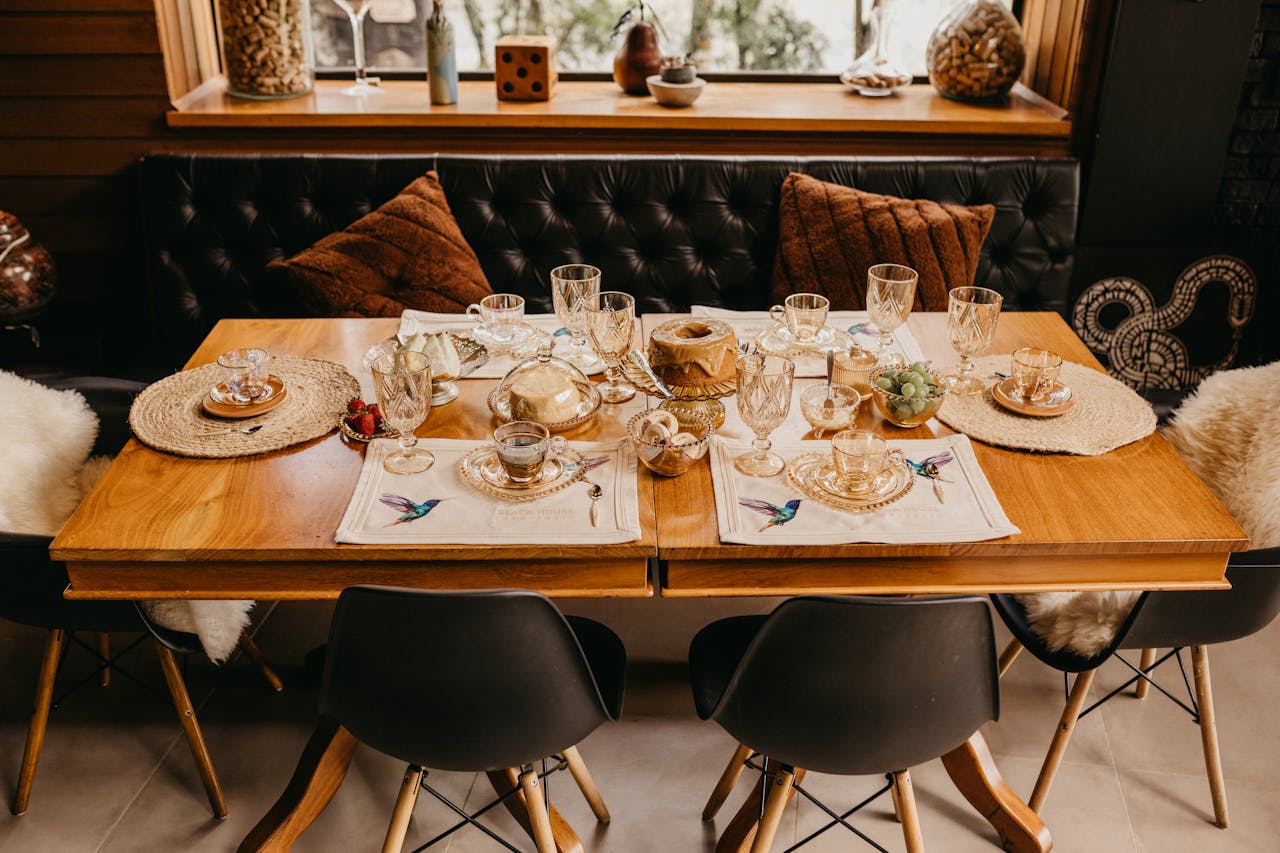
For some, a breakfast nook or a small, round table in the kitchen is more than enough. For others, the dining table must play double duty–where parents open laptops to check emails during breakfast or kids do homework after school–so a larger, more versatile table makes sense. Those who enjoy hosting may find a dedicated dining area essential, and if the space allows, it's possible to have both a dining room for guests and a more casual table in the kitchen for everyday use.
Here are a few tips:
- Think about how often you eat at home or use the dining table, or whether you have guests over regularly.
- Consider whether you truly need a large, formal dining room or if a dining nook near the kitchen will suffice.
- Don't overlook alternatives like a bar table, a small dinette table, or even the kitchen island. Sometimes, especially in compact spaces, these serve the purpose just as well, even better.
2. Measure Your Space
Once you know what you need, the next step is understanding what your space can actually accommodate. This is where a lot of people run into trouble, either by choosing a table that’s too large for a room or by underestimating how much space chairs (and moving them) require around it.
A good rule of thumb: plan for at least 3 feet of clearance between the table's edge and the wall or any other furniture. This gives people enough room to pull out the dining chairs, sit comfortably, and move through the space with ease. Three feet sounds generous, but it’s the minimum. Once chairs are pulled out and people are seated, that space quickly disappears.
Quick Tips:
- Leave at least 3 feet (or 36 inches) of clearance on all sides of the table
- Measure the table area, and factor in architectural details like windows or walkways that might affect placement.
- Account for other furniture like chairs, cabinets, and buffets.
- When in doubt, mark the table size on the floor with tape to visualize the fit.
3. Choose the Size and Shape
The size and shape of your dining table play a role in how your space feels and functions.
Round tables are ideal for smaller, cozier homes, mainly because they have no sharp corners to navigate around or bump into. They’re also a natural fit for boxy spaces where a rectangular table might seem awkward. The rounded shape introduces a sense of softness, especially when juxtaposed with a room’s structural edges. This is a quality you can appreciate in compact, open-plan spaces that might otherwise appear visually cluttered, with all the sharp angles in proximity.


Rectangular tables suit larger spaces, and they're the most versatile shape for seating more people. But if you don’t want a big table taking up space every day, an extendable table is worth considering. It offers the flexibility of having a smaller day-to-day, with the option to expand whenever needed.
Regardless of shape, allot at least 24 inches of space for each person along the table.
Quick Guide:
- Allow 24 inches per person for comfortable seating
- Maintain at least 3 feet of clearance around the table
- Consider round or square tables for smaller spaces
- Go for a round table to bring softness to tight corners
- Opt for rectangular tables in larger spaces
- Account for the fully extended leaves when considering an extendable table
4. Decide on the Type of Wood
Natural hardwood is incredibly versatile and works across a wide range of interior styles. That said, each wood species has its own character and distinct qualities that make it well-suited to certain aesthetics, though never strictly limited to them.

Cherry
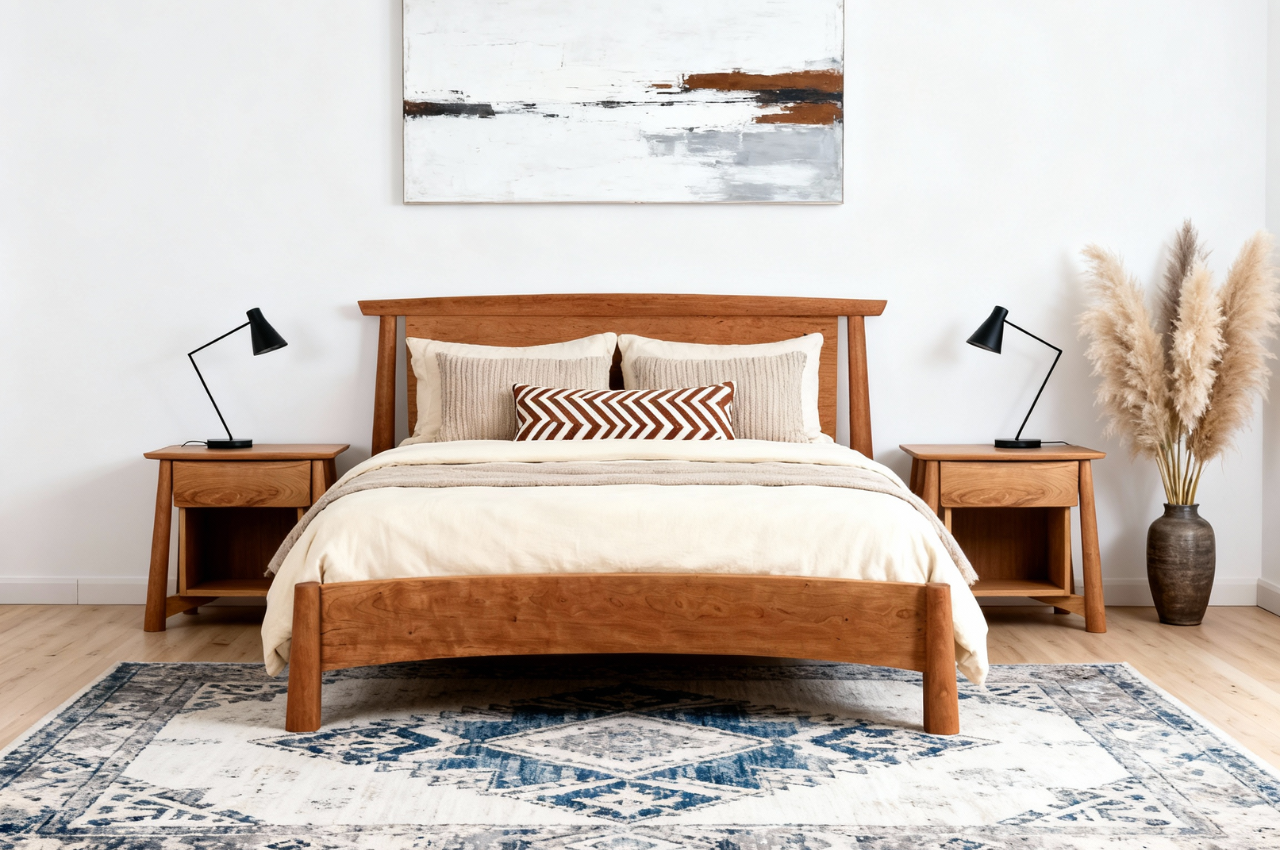
Cherry wood has a warm, reddish-brown color that deepens beautifully over time. It pairs well with traditional, transitional, Shaker revival, and mid-century modern interiors. The color adds contrast, but in a subtle, familiar way that feels natural rather than bold.

Maple
Hard maple has a light, creamy color that suits Scandinavian and contemporary minimalist spaces particularly well. It reflects and enhances natural light, giving rooms a clean, crisp, and airy feel.

Walnut
Black walnut is a rich dark brown, sometimes with honey-toned variations, occasionally displaying a dramatic grain pattern. It works beautifully in traditional, mid-century modern, and contemporary interiors, adding a deeper, more striking contrast.

White Oak
White Oak offers a neutral color, ranging from tan to light brown, sometimes with a slight olive cast. It's a go-to for modern farmhouse, Scandinavian, and contemporary minimalist interiors. Light but adds a rustic, grounded edge.
Material matters, not just for how your table looks, but for how it lasts. Because a dining table is a foundation piece that defines a space, durability is an important factor to consider, and when it comes to strength, hardly anything beats natural hardwood.
Our dining tables are handcrafted from solid wood all the way through and built using traditional joinery, which works best for long-term stability. Our selection mainly includes cherry, maple, walnut, and white oak, all domestically available and sourced within 200 miles of our shop.
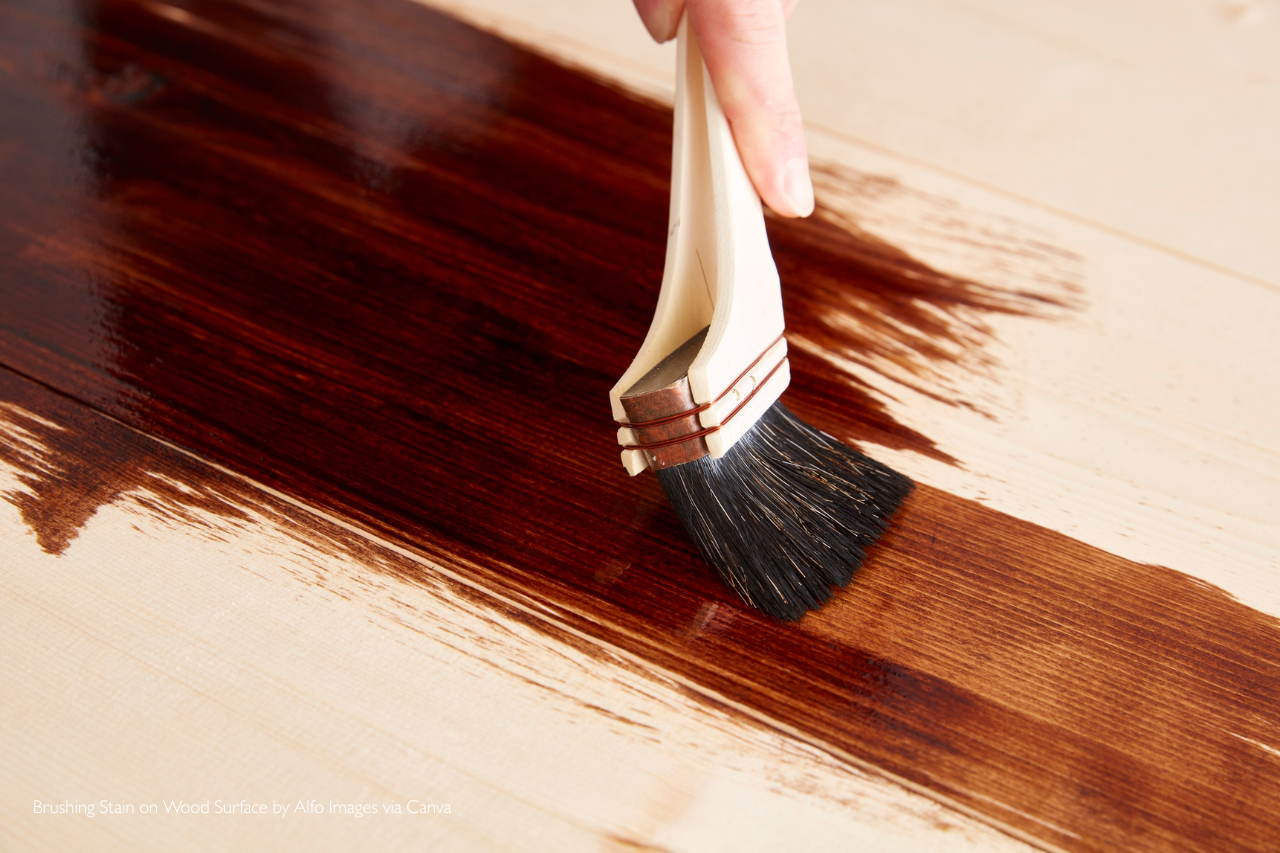
Every piece is also finished with our organic wood finish, T.Y. Fine Furniture’s own signature blend that doesn’t contain harsh, synthetic ingredients. It protects the wood while allowing it to age beautifully over time.
Additional Dining Room Tips

These dining chairs are from Stressless® in Mint Low Back.
Choosing the right dining table often comes down to proportion and intention, and small adjustments can make a meaningful difference in how a space feels.
In a large dining area, you might not need to fill the room with an oversized table. A well-proportioned piece, paired with an area rug, can define the dining zone, and complementary elements like a credenza or sideboard help complete the space while making it more functional.
For small, open-plan spaces, a round dining table, even a square one, is a practical choice. Placing a pendant light above it helps anchor the area and creates a sense of visual separation without the need for walls or dividers.
***
Your dining table is out there, and sometimes, the right choice only becomes clear once you can see the grain and feel the finish for yourself. If you’d like to experience our handcrafted solid wood dining tables in person, we invite you to visit our showroom in Columbus, Ohio. You can order a set of wood samples to find the perfect match from the comfort of home.
If you have any questions, please feel free to call us or visit the T.Y. Fine Furniture showroom in Columbus, Ohio. We’re happy to help.
Featured Photo by Jonathan Borba from Pexels