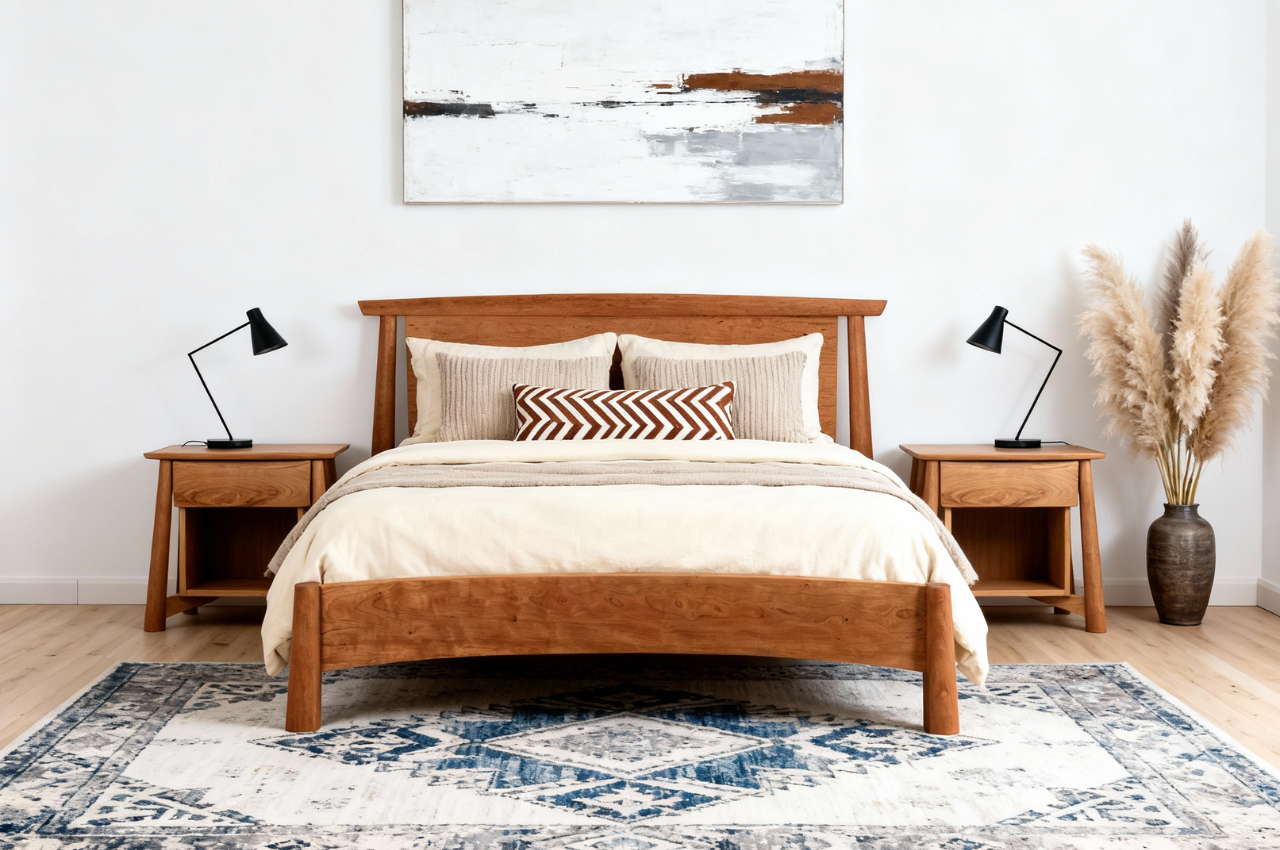
The bed frames you sleep on matter just as much as your mattress. In fact, one of the simplest ways to keep your mattress in good condition for years is to pair it with a sturdy, well-built bed frame. And when it comes to durability and long-term support, it’s hard to match the strength and stability of solid wood.
If you’re shopping for a bed frame right now, there are two main types worth understanding: platform beds and traditional bed frames. Both serve the same purpose as your sleep foundation, but each has its own distinct features. Knowing their differences can help you find the right bed for you. How do they compare, and which one makes more sense for your space and lifestyle?
Platform Bed
A platform bed is built around one defining feature: a sturdy, low-profile base that supports a mattress directly, with no need for a box spring or mattress foundation.
Instead of relying on a separate foundation, the frame itself does all the work, typically through a solid base or closely spaced slats, usually no more than two to three inches apart. This provides even, consistent support across the mattress. With this structure, a mattress can sit directly on the frame, creating a lower-profile bed with a clean, streamlined look.
Platform beds are compatible with many mattress types. Memory foam, latex, hybrid, and even innerspring mattresses can all work well, as long as the base is solid or has slats that are spaced closely enough to prevent sagging.
Key Features
✱ Built-in support system through a solid base or closely spaced slats
✱ Slats are spaced closely, not more than 3 inches apart
✱ No box spring or mattress foundation required
✱ Compatible with most mattress types
✱ Lower profile, with a clean, modern look


Traditional Bed Frame
When most people picture a traditional bed frame, they imagine a piece with a distinct presence in the bedroom, complete with a prominent headboard, a substantial footboard, and clearly defined side rails. The overall design tends to feel heavier and more familiar (that classic, statement bed frame look), with a higher profile than a platform bed.
Traditional bed frames are often built with extended ledges along the inner bed rails or with widely spaced slats. This structure can’t adequately support a mattress on its own, which is why a box spring is needed. Many of these frames are designed to accommodate the box spring, allowing it to fit within the frame’s profile, keeping it out of sight or partially concealed.

Key Features
✱ Requires a box spring for support
✱ Mostly compatible with box spring and innerspring mattresses
✱ Higher overall bed height
✱ Classic, more defined appearance
Platform Bed vs Traditional Bed Frames: Key Differences
At a glance, the biggest difference between these two types of bed frames comes down to their silhouette and how they support your mattress.
A platform bed simplifies things by eliminating the need for a box spring. The built-in support system creates a lower, more streamlined silhouette, which can make a room feel more open and modern. It may be a good choice if you prefer a bed with a sleek silhouette, or if you prefer memory foam, latex, or hybrid mattresses.
A traditional bed frame, on the other hand, is typically designed to be used with a box spring. This added layer contributes to the overall bed height and that classic, bulkier, and more structured profile. If you want an impressive statement piece in the bedroom with a cozy-vintage aesthetic, a traditional bed frame is something you might want to consider.
|
Features |
Platform Bed |
Traditional Frame |
|
Mattress Support |
Built-in slats or solid surface |
Requires a box spring |
|
Average Height |
10 to 18 inches |
20 to 30+ inches |
|
Profile |
Compact or Minimalist |
Broad or Decorative |
|
Best For |
Memory foam, Hybrid, Latex |
Innerspring, Hybrid |
One thing to note: even if you’re using a modern innerspring mattress, you don’t strictly need a traditional bed frame. Most of today’s innerspring models are designed to work perfectly with platform beds, so a box spring isn’t exactly essential anymore.
Which Bed Frame Is Right For You?
Choosing between a platform bed and a traditional bed frame comes down to how you want your space to feel and how you use it.
If you’re drawn to a clean, modern look and prefer a lower, more streamlined bed, a platform bed might be the right fit. It’s simple, practical, and works well in spaces where you want furniture to feel light and unobtrusive.
If you prefer a bit more height from a bed frame and a classic aesthetic in your space, a traditional bed frame may be a good choice. It can add a more defined presence in the room and often feels more familiar, especially if you’re used to a box spring setup.
Whichever type you end up buying, what matters most is choosing a well-built, high-quality bed frame. A solid, stable foundation not only supports your mattress properly, but also helps ensure you get comfortable sleep for years to come.

At T.Y. Fine Furniture, every bed frame is crafted from 100% natural hardwood, right down to the slats. We use solid cherry, walnut, oak, and maple—never veneers or particle board—so each piece is solid, stable, and incredibly sturdy.
Each bed frame is coated with our signature organic, food-grade wood finish, which protects the wood while helping it age beautifully over time. Handcrafted using traditional joinery, these beds are built to last a lifetime with timeless, versatile designs that stay in style through every season.