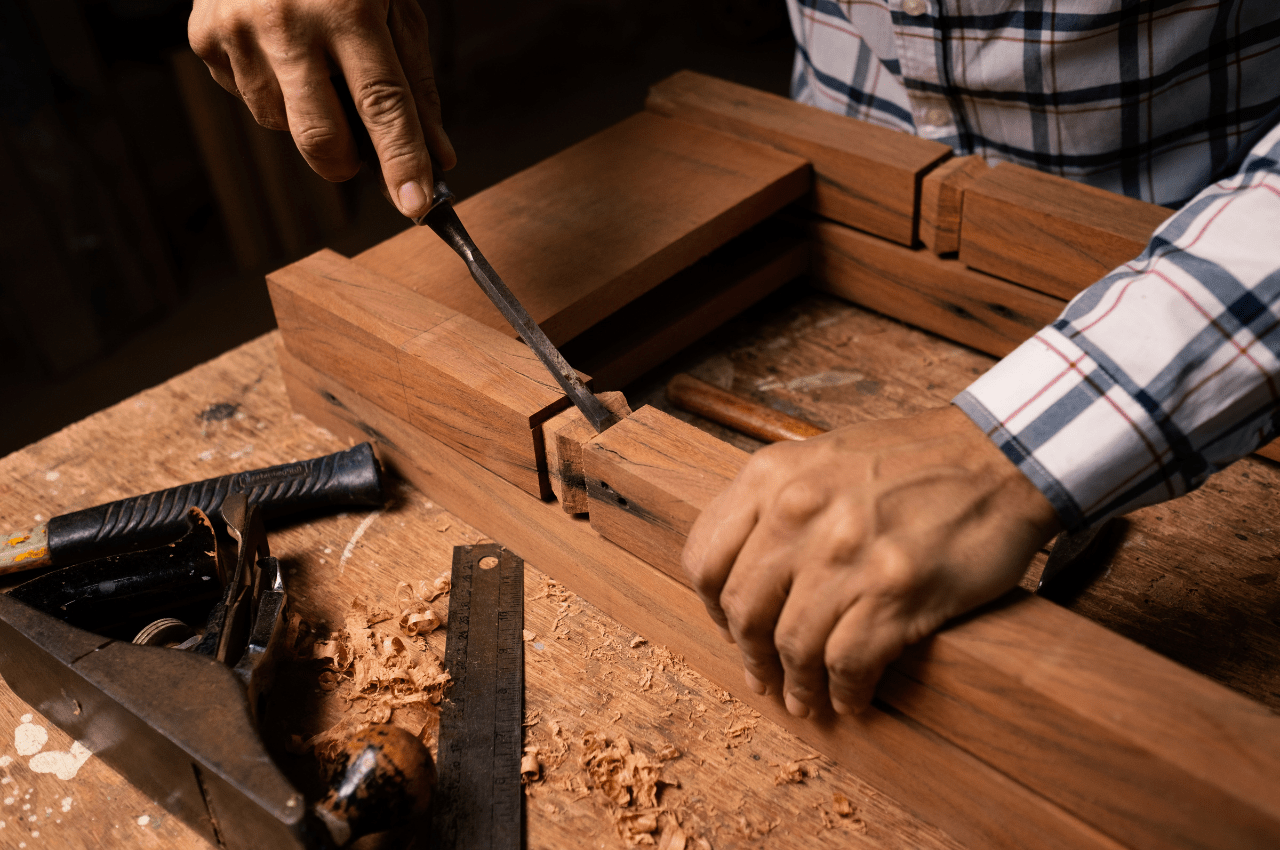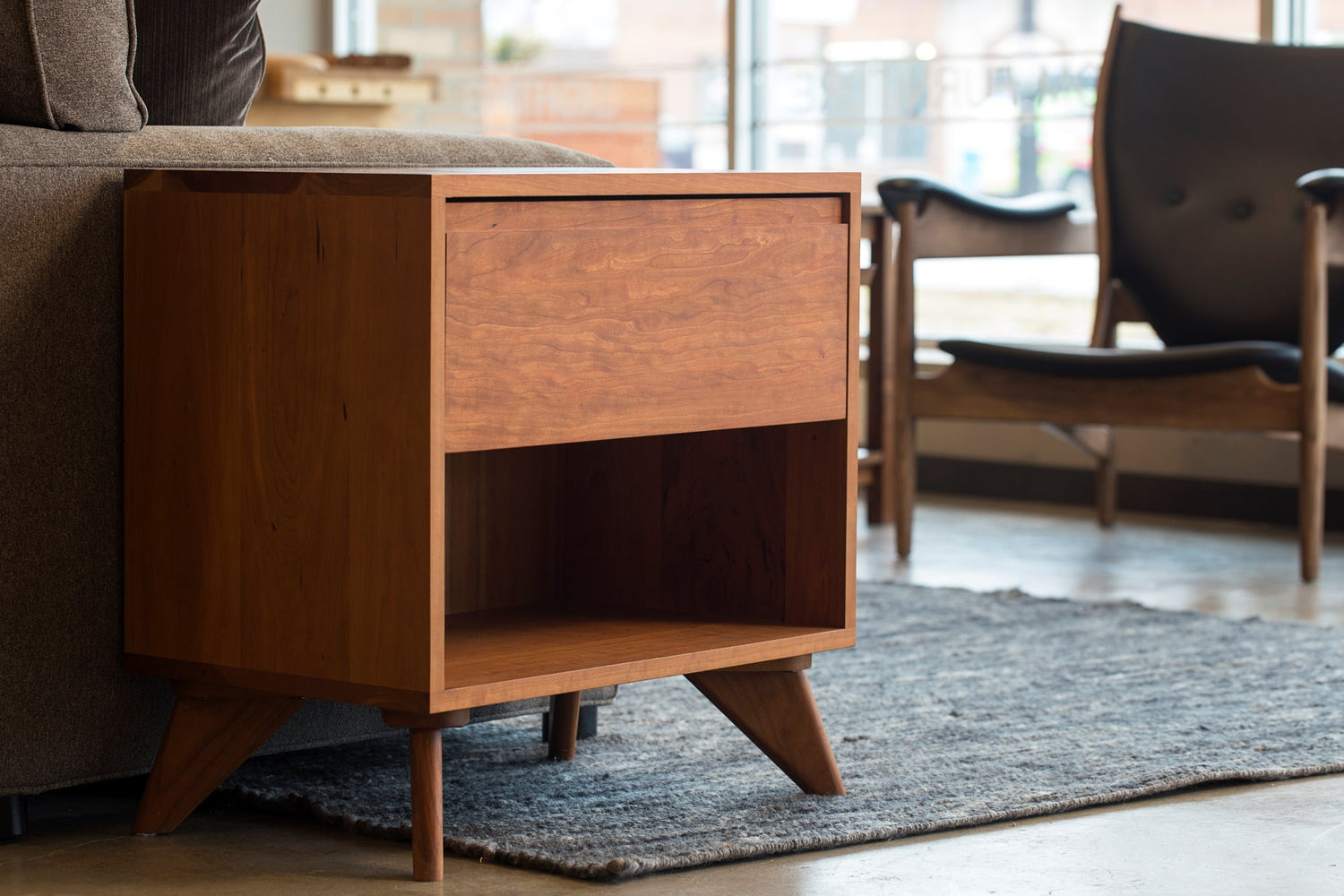
There’s furniture, and then there’s fine furniture. It’s a small difference–this one word–but it changes everything about how a piece of furniture is perceived. One is manufactured quickly in an assembly line; the other is cut and shaped by hand, piece by piece, joint by joint, with care and attention. Fine furniture, to us, is the latter.
Most furniture today is built around convenience and quantity, with little regard for how the piece holds up in twenty years. After all, it is easy to replace. Fine furniture is the antithesis of this approach. It’s a slower craft, with no assembly line, just a furniture maker at a bench, working with skills and knowledge passed down through generations. A piece of fine furniture reflects the difference in process in the way parts are joined, the general quality of the material, and even how it feels in your hands.
In short, fine furniture is a piece built with artistry and guided by tradition. But as a buyer, what specifically should you look for when choosing fine furniture?
Recognize Fine Furniture with These Signs
Spotting fine furniture is partly instinctive. Something “genuine” and well-crafted feels different from something mass-produced, even before you know exactly why. That instinct only gets sharper once you learn the specific features to look for:
Solid, Natural Hardwood
To us, natural hardwood is the hallmark of fine furniture. This is the material we build every piece from. Other respected makers produce quality work using different materials, but solid hardwood is the core requirement of our craft.
First, look at the end grain, which is the cut end of a board where you can see the circular growth rings. Particleboard and veneered wood do not display this natural continuity. Second, on a well-made piece, the individual boards should visually complement one another. Wood is natural, so some variation in color and pattern is expected. But a careful maker hand-selects every board so those variations appear harmonious, so the piece feels like one cohesive object instead of a stack of mismatched lumber. Grain-matching takes time and effort.
Rare species like ebony or true mahogany are luxurious, and it is easy to assume that a sense of rarity is required in fine furniture. It is not. The Amish did not craft furniture with exotic lumber; neither did the Shakers, and instead used local hardwoods such as maple, oak, and cherry. Sam Maloof built some of the most sought-after rocking chairs in American history out of claro and black walnut. Thomas Moser spent decades working mostly with cherry and walnut, occasionally ash and maple. Domestic hardwood in the right hands is every bit as fine as anything imported. What matters is the woodworking skill of a craftsman.


Every joint tells a story. Here’s a closer look at our handcrafted joinery, featured across both our core collection and custom pieces.
Artistry and Finesse
A piece of furniture is primarily functional—a dresser provides storage, a chair supports a person’s weight. But fine furniture carries evidence of intentional design. Someone considered the curves of a chair’s armrest or the way the tenons are wedged at a table’s corner. The way these details are built is not strictly for function’s sake. These subtle signs of artistry are placed there because a craftsman took the time to build them in.
Clean, Dependable Joinery
Look closely at where two pieces of wood meet. On fine furniture, you should not see gaps or the dark shadow lines that appear when a joint fits loosely. Screws and bolts appear sometimes, and that is fine when they serve a purpose, such as reinforcing a heavy stress point or acting as a deliberate visual element. What you do not want is a piece structurally dependent on metal hardware the way many mass-produced pieces are.
Weight and Feel
Fine furniture is not necessarily heavy, but it is dense and stable. Slide a drawer shut, and it does not rattle; push on a table leg, and it does not give. Real joinery and solid timber offer a structural stability that particleboard and staples simply cannot fake, no matter how convincing a veneer looks from a few feet away.
Oil-Based Finishes
Fine furniture often relies on finishes that penetrate rather than coat. Instead of thick layers of polyurethane, fine furniture is often finished with an oil-based blend like Danish oil. Applied in successive thin coats by hand, the oil gets absorbed into the wood fibers, protecting the material while preserving its natural tactile grain. It takes far more time, but it preserves the character of natural hardwood.
The Reality of Cost
The price gap between mass-produced items and fine furniture reflects a fundamentally different build process. You are paying for time and dedicated labor—with one craftsman or a small team working on your piece from cutting the board to applying the finish. Natural hardwood carries a higher cost, and hand-cutting joinery requires skilled labor that takes hours. The price tag simply reflects the real input of material and craftsmanship.
T.Y. Fine Furniture Craftsmanship

Fine furniture is what we build every day in our workshop in Columbus, Ohio. Every piece is made to order; nothing is pulled off a warehouse shelf. A single craftsman from our small team of 10 oversees your build from choosing the boards to applying the finish.
We craft furniture strictly from American hardwoods and protect every piece using our own organic wood finish instead of an industrial, polyurethane-based finish. The combination of one-on-one craftsmanship, natural hardwood, and a proprietary blend of wood finish helps ensure that every piece of fine furniture that leaves our shop is ready to last decades, even generations.
Explore our custom furniture collection and get in touch with our team today to start designing your unique piece.
FAQs
Where can I find fine furniture like durable luxury sofas?
How do you identify solid wood in fine furniture?
Check the end grain. Solid wood shows continuous grain running through the piece, while veneer shows a thin layer over a different material underneath, often visible at an edge or corner. Solid wood also feels denser and doesn't have the uniform, repeating grain pattern common to veneer or laminate.