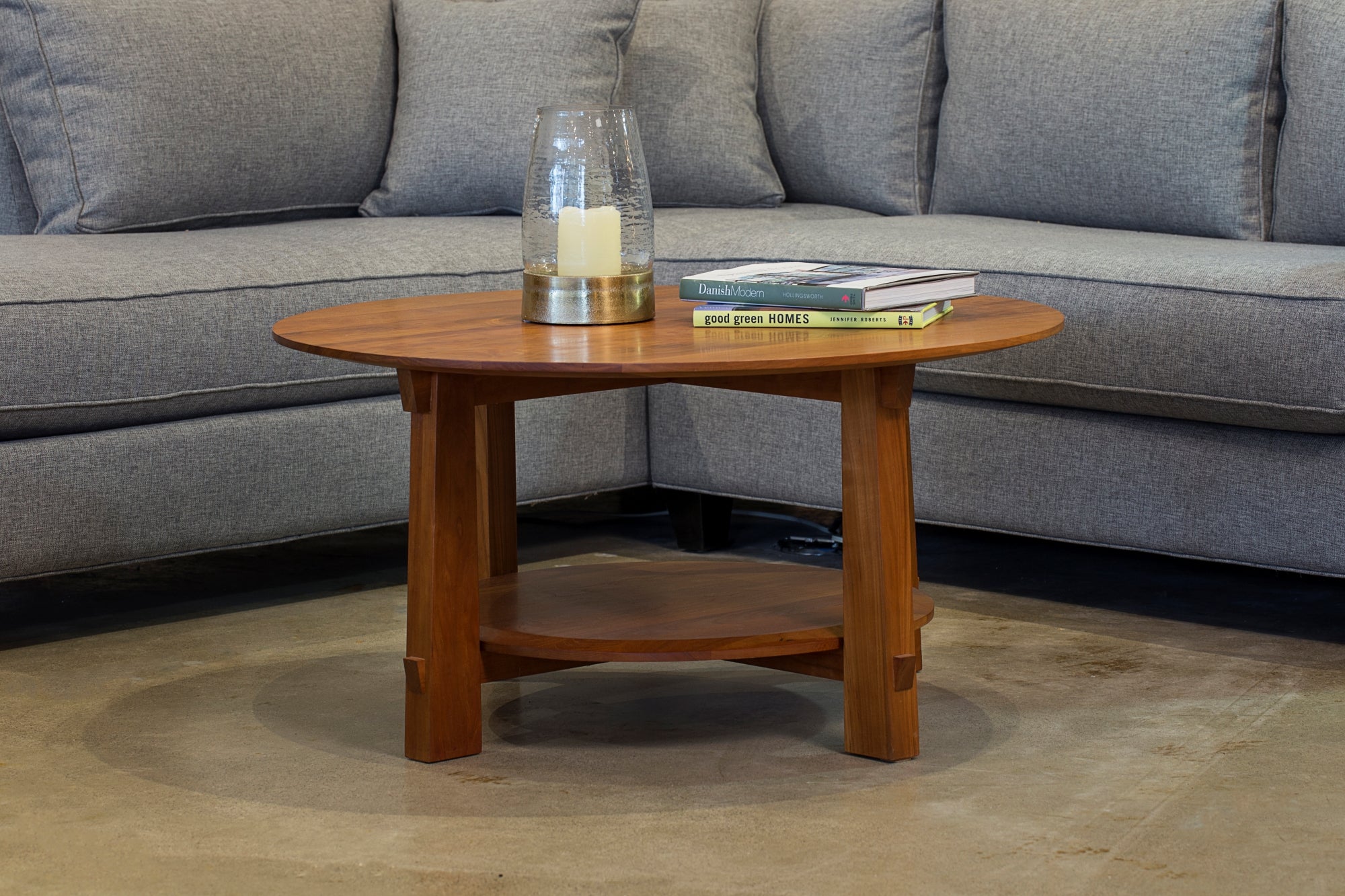
Linseed oil is one of the most popular finishes for wood furniture. As a drying oil, it seeps into the wood grain and leaves a subtle satin sheen on the surface, qualities that help preserve the natural beauty of wood. It is also regarded as one of the more earth-friendly finishing options, thanks to its origins as a plant-based oil derived from flax seeds.
However, the linseed oil most people see in stores today is almost always the industrial version, often blended with metallic driers that compromise its food-grade quality. Moreover, there are different variations of linseed, including boiled linseed oil and raw linseed oil, which can make things slightly confusing.
So, what then is the difference between boiled linseed oil and raw linseed oil? Which option is safer and more natural? Here’s a closer look at what distinguishes one from the other:
What is Linseed Oil?
Linseed oil comes from the seeds of the flax plant, known scientifically as Linum usitatissimum. In its purest form, it is essentially the same oil that’s commonly known as flaxseed oil.
Over time, however, the terms have evolved. Flaxseed oil is generally associated with food-grade products used in cooking and dietary supplements. Meanwhile, linseed oil typically refers to the industrial type, the one used in woodworking as a drying oil.
When applied to a wood surface, linseed oil penetrates the grain and gradually hardens into a protective finish as it reacts to oxygen. It does not sit on the surface with a glossy sheen, the way polyurethane-based finishes do. Instead, it develops a subtle, satin sheen that highlights the wood’s natural character. Over time, the finish develops a warmer, amber, or golden tint. This effect occurs across all variants and is especially visible on lighter woods like maple.
What is Boiled Linseed Oil?
“Boiled” is a little misleading because the boiled linseed oil we know of today isn’t actually boiled. The term may have originated from an earlier method that “kickstarts” the oil’s polymerization by heating raw linseed oil for several days, without oxygen. This process changes the oil’s molecular structure, allowing it to cure significantly faster than its raw form, even without drying agents.
Commercial boiled linseed oil, however, typically doesn’t go through this process and instead relies on siccatives or metallic driers to accelerate drying. With these additives, the curing time of linseed oil is reduced to roughly 24 to 72 hours as opposed to weeks. But their presence compromises the oil’s naturally food-grade quality. While the health risk is generally lower once the oil cures, the driers themselves are toxic during manufacturing and application. Some drying agents, like cobalt, are suspected carcinogens and water pollutants.
What is Raw Linseed Oil?
Raw linseed oil is the oil in its most unprocessed state. In the woodworking world, raw linseed oil is one of the original drying oils, often discussed alongside pure tung oil. Of course, in its most natural form, the oil is entirely free from drying agents.
The main difference between raw and boiled linseed oil is the latter’s reliance on siccatives, which greatly affects the drying time. While raw linseed oil eventually cures through oxidation, the process is considerably slow. It may take anywhere from two to ten weeks to dry fully, depending on conditions. In some cases, complete curing can take even longer.
Because of this slow drying process, some woodworkers choose polymerized linseed oil instead. As described earlier, polymerizing the oil through controlled heating improves its drying performance. It cures faster than the raw oil, though not as quickly as boiled linseed oil with its metallic driers.
Does Raw Linseed Oil Go Rancid?
One concern that occasionally comes up is whether raw linseed oil can go rancid. When applied properly, pure linseed oil typically does not become rancid on wood surfaces because it is a drying oil. Rather than remaining wet indefinitely, it gradually cures. But problems can arise when the oil is applied too heavily. Thick, wet layers can remain uncured for extended periods, potentially attracting moisture and contaminating the oil. The key is applying it in thin coats and giving it plenty of time to cure. Hand-rubbing this finish on wood furniture, as simple as the process may seem, takes skill and patience.
Summary: Boiled Linseed Oil vs Raw Linseed Oil
Boiled Linseed Oil |
Raw Linseed Oil |
|
|
Composition |
Contains siccatives or metallic driers and other drying agents |
Pure, unaltered oil from flaxseeds |
|
Cure time |
24 to 72 hours |
2 to 10 weeks |
|
Food-grade |
No |
Yes, in its purest form |
|
Best for |
Projects requiring a quick turnover |
Traditional, slow-paced work and fine furniture |
Which One Should You Choose?
Raw linseed oil is the safer and more natural option between the two, mainly because nothing is added to alter its composition. It appeals especially to fine furniture enthusiasts, craftspeople, and anyone seeking a finish that stays true to the material’s original composition. The trade-off is patience. The oil can take weeks, sometimes even months, to fully cure. But for those who value a traditional, low-impact finish and a more natural approach to craftsmanship, the wait is often worth it.
For most furniture projects requiring a quick turnaround, boiled linseed oil is the more practical choice. Its faster curing time makes application easier and allows the finishing phase to be completed in days rather than weeks. That convenience does come at a cost, though, since the metallic driers that speed up curing are also what make it unsuitable for food-grade applications.
The middle ground between the two options is polymerized linseed oil. It offers faster drying times than raw linseed oil while having a more natural composition than most modern boiled linseed oils.
At T.Y. Fine Furniture, our solid wood pieces are built to last a lifetime, and even more. The finish we apply is just as important as our choice of hardwood and construction methods. This is why we only use our own signature VOC-free organic wood finish. It's a blend that developed over time, rooted in an understanding of how different finishes interact with natural wood.

Bring out your handcrafted, solid wood furniture's natural beauty with our non-toxic, zero-VOC food-grade finish. BUY HERE →