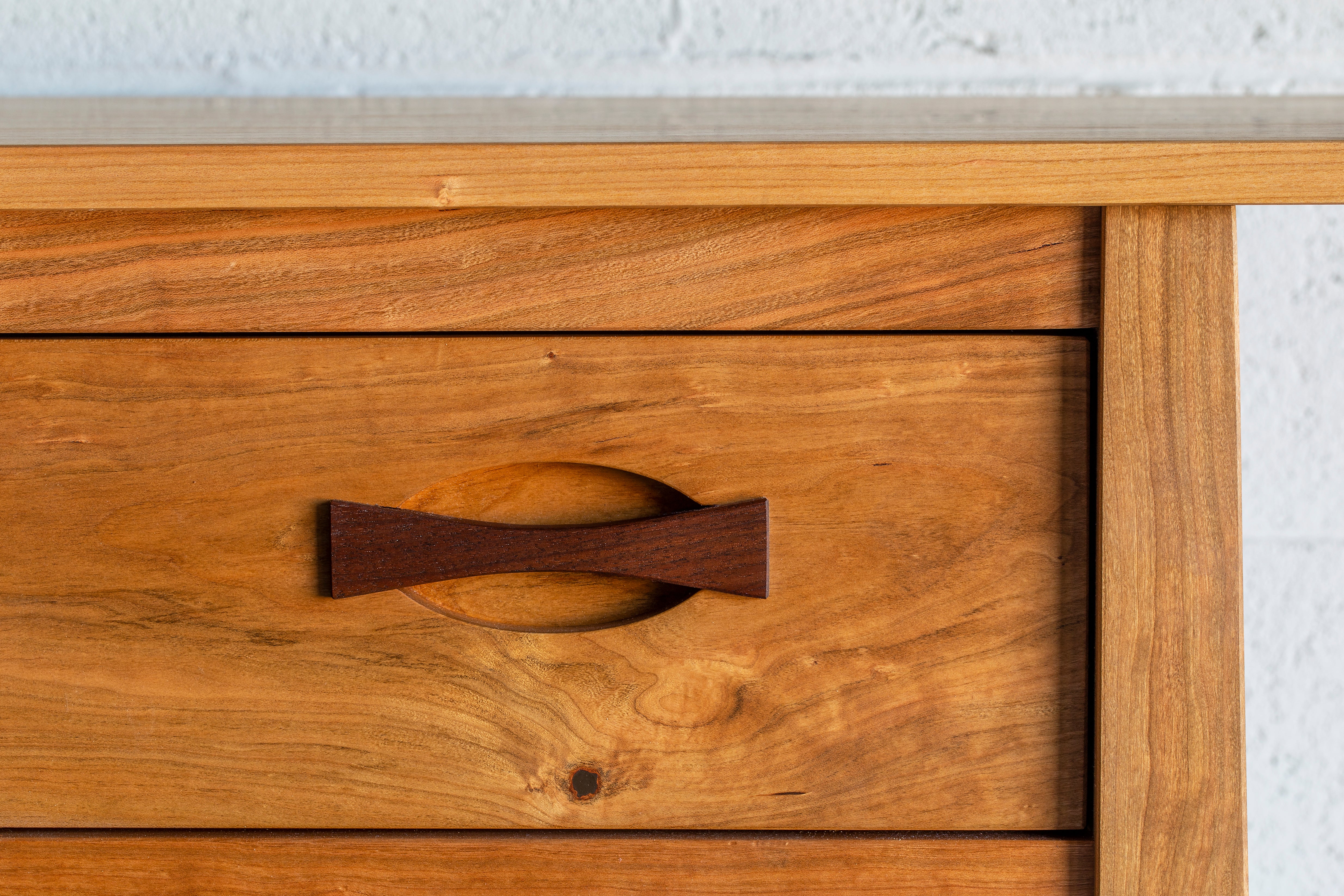
A quick search for “solid wood furniture near me” will show you dozens of local shops and makers in your area. Yet many shoppers still gravitate toward big-box stores. While large chains do offer cheaper options, price isn’t always the main motivator. Sometimes, it comes down to habit. They are simply the name brands people know.
However, buying solid wood furniture from local stores offers advantages large chains simply cannot match, especially when those pieces are built by local craftspeople. Still, not every furniture maker in the area builds to the same standard, which is why proper vetting is important.
Read on to explore why shopping for solid wood furniture near you matters, and learn a practical checklist to vet any local furniture maker before you invest.
The Local Furniture Maker Vetting Checklist
Use this checklist when visiting a showroom or reviewing a furniture maker’s catalog.
Hardwood vs. Engineered Wood
- Does the furniture maker use natural hardwood?
- Can you see a continuous end grain?
- Are the hardwoods sourced locally?
- Can the wood be sanded down and refinished in the future?
- Is it easy to maintain or touch up scratches over time?
Traditional Joinery and Craftsmanship
- Are drawer boxes built with dovetail joints?
- Are the legs and frames connected using a mortise-and-tenon joint?
- Is the piece free from hidden plastic clips, cheap metal brackets, or heavy glue?
- Does the surface feel natural, or is there a thick, glossy layer?
Shop Service and Reputation
- What are past clients saying in the reviews?
- Does the shop have an average rating of more than four stars?
- Does the team respond to your inquiries well?
- Is the team quick to answer questions, open about the process, and clear about expectations?
- Does the shop stand behind their work if an issue arises, responding professionally and taking responsibility?
- Does the furniture come with a warranty?
Uses Natural Hardwood
Reputable local furniture makers primarily work with natural hardwood, such as Cherry, Walnut, Maple, and White Oak. They are incredibly durable, and each species has its own distinct character that is easy to distinguish from engineered wood alternatives. The most obvious clue is the end grain.
Check the edges on a piece of furniture. On real solid wood, you can see the end grain. It’s the exposed cut end of a board where you can see the tree’s growth rings. On flatsawn wood, the end grain shows curves and arcs, which you can imagine are part of the concentric rings. Quality furniture is often built with quartersawn wood, and the end grain can appear as straight, closely spaced parallel lines that are nearly perpendicular to the surface of the board.
Another sign that the furniture is solid wood is perhaps the ease of maintenance. Ask how the piece handles refinishing and spot repairs. Veneers are thin, and sanding them, especially if you’re inexperienced, risks peeling. Laminate cannot be sanded and refinished at all–once damaged, it is permanent.
Solid hardwood finished with an organic oil finish, however, is simple to touch up. Scratches can be buffed out, and the entire piece can be safely sanded down and refinished whenever needed.
Not real solid wood:
✦ The back edge of the material reveals compressed wood fibers
✦ Continuous repetition of grain patterns that wrap the edges
✦ Edge-banding or strips of veneer or laminate wrapping the edges
To learn more about veneer and laminate, check out this post →
Builds With Traditional Joinery
Quality craftsmanship relies on real wood-to-wood joinery that handles daily use and natural wood movement. Look for drawers joined with interlocking dovetails or finger joints rather than staples, nails, and screws. For major weight-bearing connections, such as the legs and rails on chairs or bed frames, they are ideally joined by mortise and tenon joints.
Another mark of craftsmanship is the quality of the finish. It should feel smooth and natural, with the wood grain peeking through instead of being coated with a thick, plastic-like layer. Some furniture makers use a glossy, polyurethane-based finish that traps everything good about wood under a film.
In our shop, we use our own Organic Wood Finish made from a blend of food-grade oils and waxes with zero VOC emissions. This finish protects the wood without stripping off (or covering) its natural character. It also helps the material to develop a lovely patina over time.
Offers Good Service
Before placing an order, look for a consistent history of strong client reviews across different platforms. Pay close attention to how the team communicates: a trustworthy shop answers technical questions directly, explains their materials clearly, and sets realistic lead times. Just as important, look at how they handle problems. A reputable local furniture maker takes full accountability for their work, offering clear communication and solutions to mistakes, if any. There must also be a warranty that protects against defects in the joinery and other structural components.
Why Shop for Locally-Made Solid Wood Furniture

Better Quality
Search for “furniture store near me” and check each of the shops featured in the results. Sometimes you might even find local small businesses specializing in handcrafted furniture, and these stores are where you’ll get the highest-quality furniture or custom-made furniture pieces.
Local furniture makers are pretty hands-on in creating each piece. The workmanship is better because they build each piece by hand, and their passion for the craft brings about a kind of finesse that you can’t see in furniture built mainly by machines.
For local artisans, every purchase counts, which is why they make it their utmost priority to make and sell the finest pieces. They know that selling substandard products can significantly impact their reputation, so they tend to go the extra mile to ensure that clients don’t have any reason to complain.
Better for the Environment
Shopping for furniture at local shops is a more environmentally conscious choice, especially when the furniture is locally made.
Here’s how local furniture makers mitigate environmental impact. Large furniture companies often rely on a long chain of international shipping, from sourcing the material all the way to delivering the finished products. Local makers, especially here in Ohio, source their wood regionally. Because they only need to move timber and finished pieces over short distances, buying local dramatically reduces fuel consumption and carbon emissions.
Local furniture makers also tend to source materials and use natural hardwood instead of engineered wood held together by toxic adhesives with high levels of volatile organic compounds (VOCs). VOCs are not only potentially harmful to our health, but are also bad for the environment.
Better for the Community
When you shop at a local furniture store, for instance, T.Y. Fine Furniture, your purchase directly supports local wages and strengthens the tax base that funds public infrastructure. Because local makers also tend to source timber and supplies from nearby sawmills and vendors, your dollar supports multiple local businesses at once. This creates a sustainable cycle that supports people and keeps the local economy strong.
Save Money
One advantage of shopping for solid wood furniture from stores near you is saving money.
Locally made furniture from small businesses can cost a little more upfront. However, you save money over time because you have invested in high-quality furniture that lasts longer. Unlike fast furniture, which unfortunately has a short lifespan, you don’t need to replace it often.
Moreover, you can simply contact the furniture maker if you have a complaint; you don’t have to shell out money to return the item or pay the restocking fee. Many local furniture stores also provide free delivery or pickup. On the other hand, large furniture stores ask for hefty delivery fees and have meticulous (sometimes unfriendly) policies on returning items.
***
The next time you search for “solid wood furniture stores near me,” don’t overlook the local shops that pop out in the results. These are where you might find unique furniture pieces with great quality. While they may be a bit more expensive, you get more value for your money–and end up supporting local artisans and the community.
If you’re going to spend money on furniture anyway, why not make sure it gets invested in a more meaningful way?
FAQs
Why should I consider buying solid wood furniture near me?
Buying solid wood furniture locally offers several advantages. You can personally inspect the materials, customize sizes and wood species to fit your needs, and avoid the high costs of long-distance shipping. Moreover, purchasing from a local furniture maker not only supports the local economy but also results in furniture with a smaller carbon footprint.
How can I tell if a piece of furniture is solid wood?
Check the weight, texture, and end grain. Real solid wood is heavy and feels stable, with natural grain variations rather than repeating patterns. To be sure, look at the end grain. If the pattern wraps continuously around the edge like paper, it is a thin veneer or plastic laminate over engineered wood.
How can I ensure I’m buying from a good local furniture maker?
Check the reviews. Hear what people have to say about the shop. Talk to the team and get a feel for how they interact with you. If you can, go to their showroom and inspect the details of the furniture on display. Look for traditional joinery like dovetail drawers and mortise-and-tenon frames.
Is it worth buying solid wood furniture locally?
Yes. While locally made solid wood furniture may cost more upfront than mass-produced options, it offers better value over time. You can re-sand, repair, and refinish solid wood pieces for decades, saving you from having to replace wobbly, broken furniture every 5 to 10 years.
Featured Photo by Davide Armanti from Pexels